
A soft starter initial voltage setting establishes the beginning of a voltage-controlled starting ramp. It must provide enough motor torque to begin the intended movement without imposing unnecessary current or mechanical disturbance. There is no universal percentage that works for every motor and load. Confirm what the parameter means in the exact starter manual, review the motor and driven machine, and validate the proposed setting during an approved commissioning test. A quiet motor that has not begun accelerating is not evidence of a gentle, successful start.
This guide addresses the initial sustained starting level. A short kick-start pulse, current limiting and the ramp duration are separate functions that need their own review.
Identify the setting before adjusting it
Different controllers can describe their initial starting effort as voltage, torque or another control quantity. Similar percentages on two displays may therefore represent different things. Record the parameter name, units, permitted range, control mode and manual revision before comparing settings. Do not copy a number from another installation solely because its motor has the same power rating.
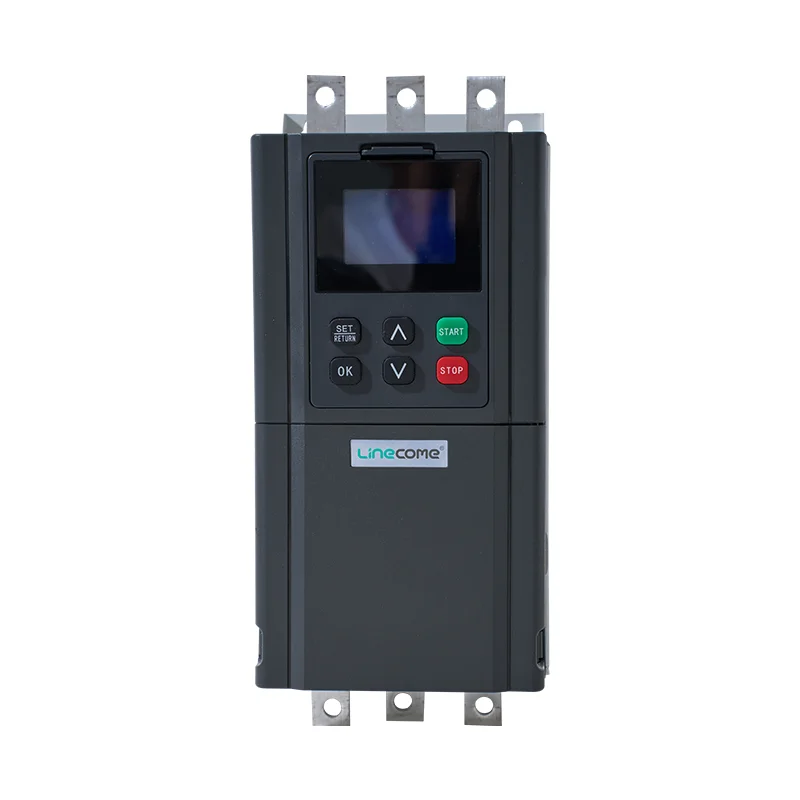
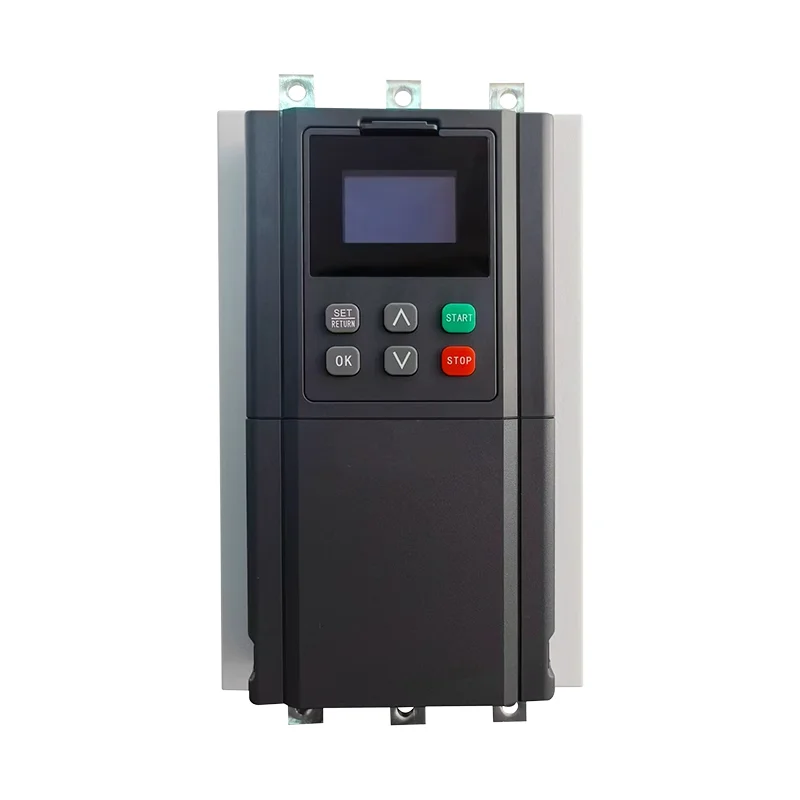
For an equipment inquiry, the NR1000 built-in-bypass soft starter is a relevant LINECOME product family. Its website photograph identifies the equipment appearance; it does not establish the parameter range or an approved setting for a particular motor. Request the supplied unit’s instructions and configuration record. The broader soft starter operating explanation provides background on reduced-voltage starting.
A useful first distinction is between the intended initial level and what the equipment actually produces under load. A configured percentage is a command inside a controller. The motor terminal waveform, incoming supply and selected control algorithm determine the electrical conditions experienced by the motor.
Understand the torque tradeoff
For a conventional induction motor at a comparable operating point and fixed frequency, torque varies approximately with the square of applied voltage. The US Department of Energy’s off-design voltage tip sheet explains that reduced voltage lowers torque capability and can lengthen acceleration. That principle helps explain why reducing starting voltage too far can prevent useful movement.
For an illustrative calculation only, let the voltage ratio be 0.50. The corresponding approximate torque ratio is 0.50 × 0.50 = 0.25, or 25% of the full-voltage torque at the same comparison point. At a voltage ratio of 0.60, the estimate becomes 0.36, or 36%. These are fractions of the corresponding motor torque, not percentages of rated running torque and not recommended starter settings.
A phase-controlled starter does not produce a clean adjustable sine wave, and motor characteristics change during acceleration. The square-law comparison is an engineering approximation, not a complete model of the starting waveform. It cannot determine an exact starting current, starting time or safe commissioning value by itself.
Build a record of the actual starting requirement
Prepare the review around the driven machine rather than the starter keypad. Identify whether the machine starts empty, partially loaded or under its normal process load. Ask whether temperature, seal condition, material accumulation or mechanical adjustment changes the initial resistance. A setting accepted on an empty conveyor may not demonstrate that the loaded production cycle is acceptable.
Obtain the motor nameplate, connection information, rated supply and any available starting torque data. Describe the coupling, gearbox and process condition. Identify the maximum acceptable electrical disturbance and the mechanical limits of the driven equipment. Where reliable load data are unavailable, record that uncertainty and agree how the equipment supplier will establish an acceptable test condition.
Before any inspection or adjustment that exposes hazardous parts, use the applicable isolation procedure. The HSE guidance on safe electrical isolation addresses isolation before work. A stopped motor or a low starting-voltage setting does not create a safe maintenance boundary.
Keep initial voltage separate from the other start controls
Initial voltage describes where a particular voltage ramp begins. Ramp duration describes the commanded transition toward the next stage. A current limit can constrain how the controller advances. A kick-start function, when fitted and appropriate, applies a different initial action for a defined interval. Changing several of these together makes it difficult to identify why the start changed.
For the pulse function, use the separate guide to soft starter kick start. For repeated starting duty, review starts per hour and recovery time. Those questions influence the overall application, but neither supplies a universal initial-voltage percentage.
Create a change sheet with one proposed adjustment per test step. Preserve the original values and the reason for the change. If the unit offers several start algorithms, state which algorithm is active. A report that says only “voltage increased” leaves the next technician unable to reconstruct the test or determine whether another limiting function controlled the result.
Compare symptoms with evidence
The following table is a commissioning review aid, not a live-work procedure or a parameter prescription. The voltage and torque principle above explains why a low command deserves investigation; the actual response must be checked against the supplied equipment instructions.
| Observed starting behavior | Evidence to collect | Decision to review |
|---|---|---|
| Command is present but no useful movement begins | Controller state, permitted observation of motion, process loading and incoming supply condition | Whether available breakaway torque is sufficient and the machine is free to move |
| Movement starts with an abrupt mechanical disturbance | Commanded starting mode, initial setting and coupling or process response | Whether the initial effort is unnecessarily high or another function is active |
| Initial movement is acceptable but acceleration stops later | Time-correlated current, speed or process observations and control-state changes | Ramp, load torque and current-limit interaction rather than initial voltage alone |
| Cold start succeeds but a later production start fails | Thermal state, loading differences, start count and recovery interval | Whether the accepted duty includes the real operating cycle |
| Controller indicates completion without the expected machine result | Independent operating feedback and bypass or run-state indication | Whether electrical state and useful mechanical operation agree |
Plan a controlled comparison
Agree who authorizes the test, who observes the machine and who can stop it. Define the normal load condition, permitted test duration and conditions requiring immediate termination. Confirm that guards, process permissions and protection remain effective. Do not defeat an interlock to obtain a cleaner measurement.
Start from the equipment supplier’s approved baseline. Compare the observed response with the documented acceptance requirement, then decide whether an adjustment is justified. The responsible commissioning specialist should select any permitted change within the exact manual’s limits. This article intentionally provides no universal percentage increment because the appropriate method depends on the controller and machine.
Record the time from command to first useful movement separately from the time to stable operation. Also record supply behavior, relevant controller states and the process response. Where measurements are required, qualified personnel should select instruments suitable for the waveform and the electrical installation. An unsupported meter reading can create false confidence about a phase-controlled output.
Decide when to stop changing the initial setting
If useful movement never begins, do not keep repeating starts while searching for a successful percentage. Preserve the evidence, allow the required recovery and investigate the cause. Mechanical obstruction, incorrect motor connection, supply weakness and unsuitable application duty can require different remedies. A higher starting command cannot establish that the equipment is correctly matched.
Likewise, a successful first movement followed by a later stall calls for a broader acceleration review. The motor-not-accelerating troubleshooting guide covers that wider symptom. Keep that investigation separate from a planned initial-setting optimization so that an existing fault is not mistaken for a routine adjustment opportunity.
The final setting should be supported by a repeatable operating result within the agreed limits. “It started once” is weaker evidence than a recorded normal-duty test with the expected load, acceptable process response and no unexplained protective operation. Do not claim a measured reduction in current or stress unless the comparison actually measured those quantities.
Specify the handover evidence
For procurement, provide the motor data, starting connection, supply information, driven-load description, operating temperature range and expected restart pattern. Ask the supplier to identify the selected starter, the active starting method and the documents supporting that selection. Where the project has a maximum permissible supply disturbance, state how compliance will be checked rather than asking for a vague “smooth start.”
For handover, retain the original and accepted parameter files, manual revision, test load, observations and responsible sign-off. Include any restrictions, such as a load condition that was unavailable during testing. Record whether the completed test covered only commissioning conditions or the full production duty. This prevents a partial test from becoming an unsupported operating promise.
A useful evidence package also identifies what requires a new review. Replacing the motor, changing the driven load or altering the supply can invalidate the original comparison. Retain the starting record with the machine documents so the next change can be assessed against the conditions under which the setting was accepted.
Further learning: what reduced-voltage starting changes
The RealPars lesson below introduces soft-starting principles. It helps distinguish controlled starting from continuous speed regulation. It does not provide an NR1000 commissioning value, a permissible testing interval or a substitute for the supplied manual.
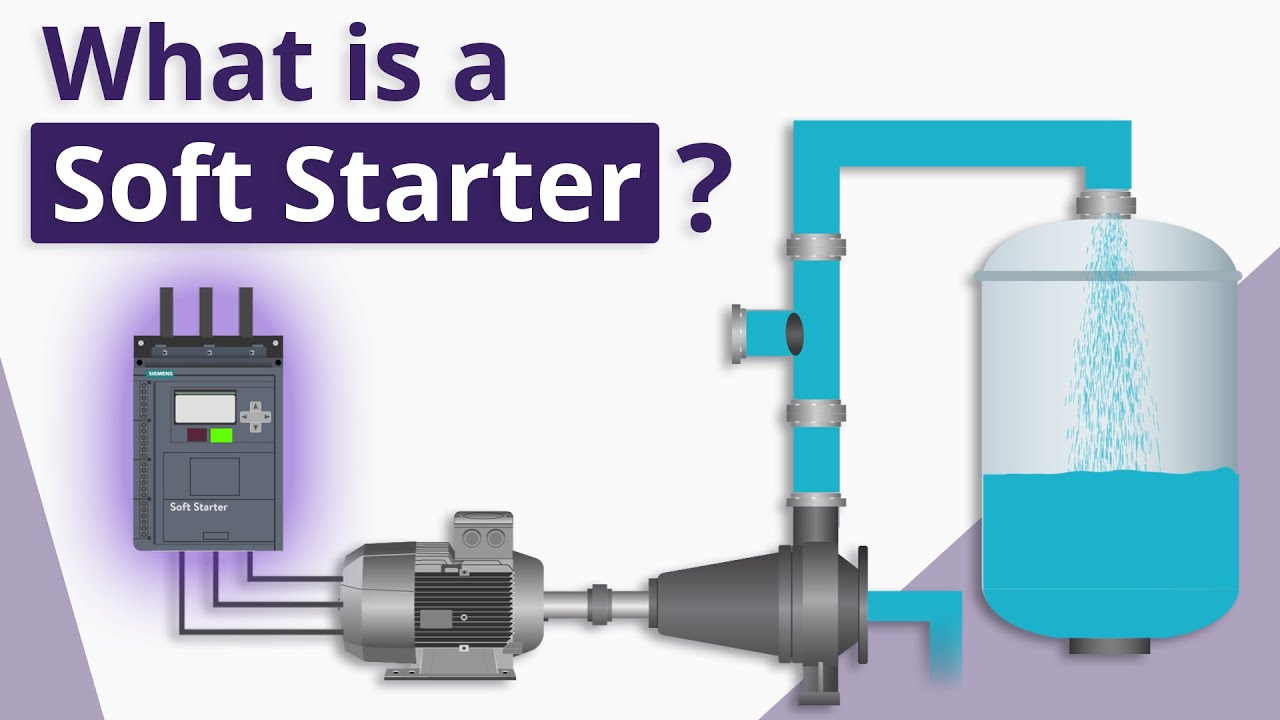
Video by RealPars. Watch What is a Soft Starter? (For Absolute Beginners) on YouTube.
Frequently asked questions
Is a lower initial voltage always better?
No. An initial level that cannot produce useful acceleration can prolong an unsuccessful start. The accepted value needs to balance the actual load requirement, electrical disturbance and permitted equipment duty, with evidence from the approved test.
Can the torque example select a setting for my motor?
No. It demonstrates an approximate voltage-to-torque relationship at a comparable operating point. It does not model the complete controller waveform, load torque curve, protection or thermal duty needed to select a setting.
Should initial voltage be changed when the motor stalls near full speed?
Investigate the complete acceleration record first. A later stall may involve loading, supply conditions or another controlling function. Preserve the initial-setting evidence and review the wider start rather than assuming the first parameter is responsible.