
VFD jog speed is a temporary speed reference used for a defined setup or positioning movement when the drive supports that function. Accepting it requires more than entering a low frequency: verify who owns the command, which direction is permitted, how the drive responds when the command is released, and how the machine stops. A jog input is not automatically a safety function, and a low speed does not make access to moving parts safe. Use the exact drive instructions and the machine’s approved operating procedure before testing motion.
This guide addresses command behavior and commissioning evidence. It does not provide universal terminal assignments, parameter numbers or permission to bypass guarding.
Define the movement before selecting a frequency
Write down why movement is required and what the operator needs to observe. A setup task may need a short controlled movement, a direction check or an alignment operation. These are different requirements from continuous production running. Decide whether a speed-controlled drive is suitable for the required repeatability; a frequency command alone cannot guarantee an exact shaft position or travel distance.
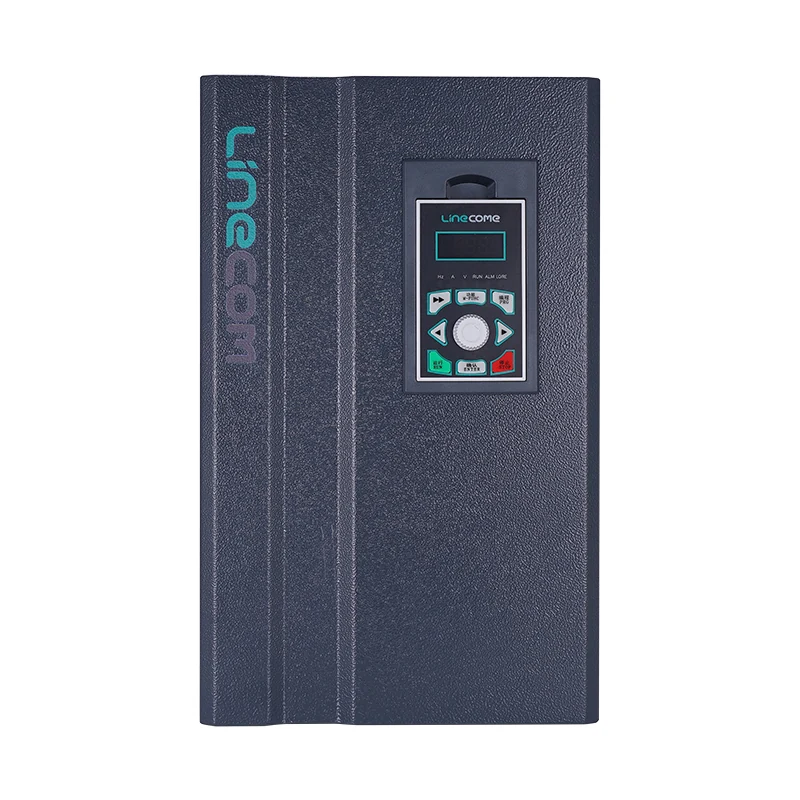
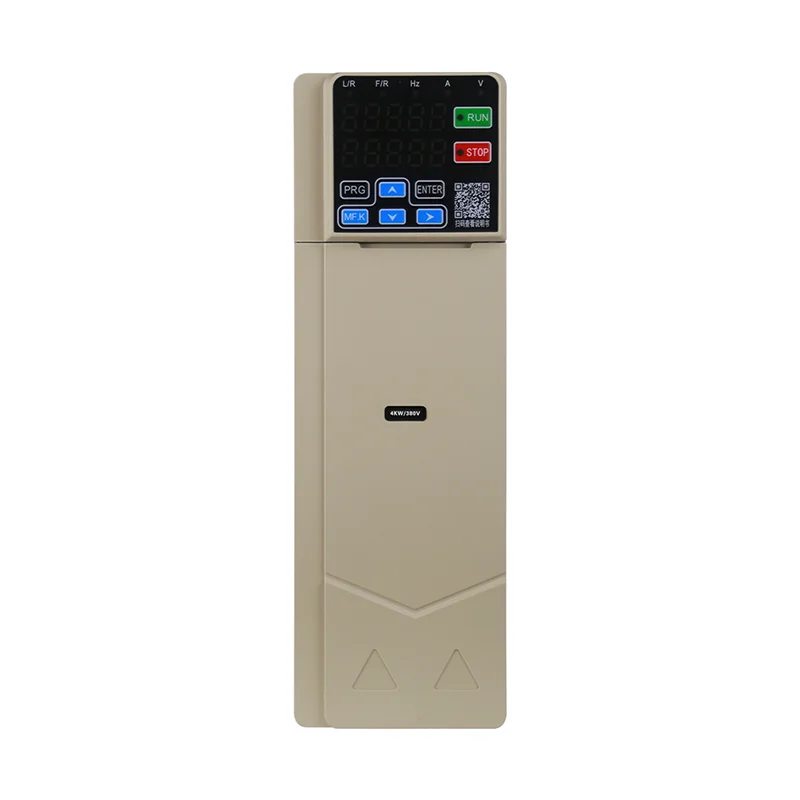
The LNC860S vector VFD is a relevant LINECOME drive family for an equipment inquiry. Its exterior photograph does not establish a jog feature, terminal assignment or validated setup mode. Request the instructions for the supplied unit, including hardware and firmware identification. For operating principles, the VFD explanation provides broader background.
Specify the mechanical output, not only motor frequency. A gearbox, belt, screw or drum converts shaft motion into a different movement at the working point. The person approving setup motion needs that relationship, the load behavior and the stopping requirement. A frequency that seems modest on a keypad can still produce significant movement through the installed mechanism.
Distinguish a drive function from a machine operating mode
In traditional motor-control terminology, jogging and inching describe momentary movement. Usage varies across documents and equipment. The educational lecture below discusses conventional jog circuits. A VFD’s electronic jog implementation must be checked in its own manual; do not transplant a contactor circuit directly onto a drive output.
A drive may provide a jog reference, a command input and associated ramp behavior. A machine setup mode also needs the surrounding permissions, operator controls, access arrangements and risk controls. The presence of a jog parameter does not establish that these machine requirements have been satisfied.
Keep the functional specification separate from any safety-performance claim. If the application requires safely limited speed, monitored motion or another safety subfunction, the responsible designer must specify and validate the appropriate system. An ordinary low-frequency reference does not establish a certified speed limit. The separate guide to safe torque off explains why stopping-related safety requirements need their own review.
Establish command ownership and priority
List every possible source of motion commands: keypad, terminal inputs, network controller and any local station. Then identify which source can request jog and how that request interacts with normal Run, Stop and direction commands. Do not assume the priority is identical to the priority used during ordinary production operation.
The commissioning record should answer a practical question: if a normal run request is already active, what does requesting jog do? Depending on the equipment and configuration, it may be rejected, select another reference or produce another documented result. The exact supplied instructions determine the expected response; the acceptance test confirms the configured machine behaves accordingly.
Also define what happens when control ownership changes. Returning from local to remote operation should follow the approved restart policy. A remote request left active during a local test must not become an unexplained motion command afterward. Record the final state of both the drive and the supervisory controller.
Check speed, direction and ramp behavior separately
A jog reference can be expressed in frequency, speed or another unit. Record the actual units and scaling before comparing a display value with a required movement. Confirm whether configured minimum and maximum limits affect the jog function, and whether direction comes from a separate input or the sign of a reference. These are equipment-specific questions.
Check whether jogging has its own acceleration and deceleration settings. A normal-run ramp may not control the jog movement. Conversely, a separate parameter does not guarantee that it applies in every selected control mode. Use the manual’s function description and a recorded observation to establish what is active.
The acceleration and deceleration guide addresses the broader ramp relationship. The manual speed-potentiometer guide addresses a normal reference interface. A working potentiometer does not prove that jog uses the same source or that releasing a jog command restores the intended reference.
Make release behavior an explicit acceptance condition
“Release to stop” should describe an observable machine result, not merely a change in a controller bit. Define what happens when the button or request is released, which stopping method is used, and what residual movement is acceptable for the task. Include a clear response when the button signal remains active because of a fault or configuration error.
Do not describe ordinary deceleration as instantaneous stopping. The moving load contains energy, and its behavior depends on the drive, motor, transmission and external forces. A coast stop, a controlled ramp and a brake sequence produce different results. A machine that can move under gravity or stored energy needs a specific engineering review.
The HSE report on a tissue-machine blockage injury describes the serious consequences of jogging machinery while someone clears material by hand. The incident is a reminder that a momentary command does not make an entrapment zone safe. Follow the applicable isolation and machine procedures for clearing or maintenance work.
Use a test matrix instead of a single button press
The table below is an acceptance-planning aid. It specifies questions to resolve rather than universal drive behavior. The expected response must come from the exact manual and the approved machine sequence.
| Test condition | Behavior to specify before the test | Evidence to retain |
|---|---|---|
| Jog requested from the permitted station | Accepted source, reference and direction | Source state, active command and observed movement |
| Jog request released | Intended stop method and permitted residual motion | Command transition and actual stopping result |
| Normal Run and Jog both requested | Defined priority or rejection behavior | Both input states and the active operating state |
| Jog requested in the opposite direction | Whether reversal is permitted and under what conditions | Direction indication and approved observed response |
| Local control returned to remote | Required command reset and restart permission | Local and remote states before and after transfer |
| Stop or protective condition occurs during jog | Defined stopping and recovery sequence | Event, drive state and subsequent restart behavior |
| Control supply or communication is lost | Required response and recovery restrictions | Loss condition, output behavior and restored state |
Prepare the machine and the observation method
Agree a test boundary with the responsible operator and commissioning personnel. Confirm the load condition, allowed motion, observation position and means of terminating the test. Keep guards and protective devices effective according to the approved procedure. This guide does not authorize access to a danger zone during motion.
When physical work requires isolation, apply the appropriate energy controls. The HSE electrical-isolation guidance describes the electrical work boundary. A stopped display, an inactive jog input or a selected local mode is not proof that the equipment is safe to touch.
Record the configuration before testing. Where the task depends on actual speed, direction or travel, select a suitable independent observation or measurement method. The drive’s commanded frequency is useful evidence of its instruction, but it does not independently verify shaft movement or the working-point position. Keep observers clear of exposed motion and use the approved measurement arrangement.
Interpret an unsuccessful jog test without guessing
If the command is rejected, first compare the active operating state with the documented permissions and priority. Do not immediately raise the frequency or bypass an input. The issue may be ownership, an active stop, an unavailable operating mode or an incorrect configuration rather than inadequate reference speed.
If the command is accepted but the expected movement does not occur, preserve the drive state, fault record and mechanical conditions. A low-frequency command may be insufficient for the intended task, but the cause also may involve a brake, load constraint or motor configuration. The appropriate next investigation depends on the equipment and the approved test boundary.
If movement continues after release, terminate the test through the approved procedure and investigate the command chain and stopping configuration. Do not accept the result merely because the displayed jog bit has cleared. The acceptance objective is the defined machine response, including what happens when a competing request remains present.
Specify the inquiry and handover package
An equipment inquiry should identify the motor, driven mechanism, load condition, control sources, required setup motion and surrounding machine safeguards. State whether the need is occasional direction verification, repeated positioning or another duty. If the process requires accurate positioning, describe the required accuracy and feedback rather than assuming that a timed frequency command can deliver it.
Ask the supplier to identify supported jog behavior, control-source priority, direction handling, relevant limits and the applicable documents. Request confirmation of what the proposal includes at drive level and what the machine designer must provide around it. This makes the scope reviewable without implying that one parameter completes a machine operating mode.
At handover, retain the accepted settings, test matrix, observations and unresolved restrictions. Record any simulated cases separately from physical motion tests. Confirm that temporary commands and test wiring have been removed or restored, normal source selection is correct and the intended restart permissions remain in place. A saved parameter file and a completed behavior record together provide a better maintenance reference than a note saying “jog works.”
Further learning: momentary motor control
Jim Pytel’s lecture below explains conventional motor-starter jogging and the importance of the command circuit. Use it as background for understanding momentary operation. Its contactor examples are not instructions to switch a VFD motor output, nor do they establish LNC860S parameters or a safe machine setup mode.
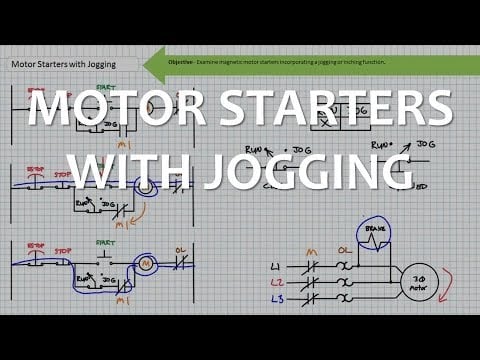
Video by Jim Pytel. Watch Motor Starters with Jogging (Full Lecture) on YouTube.
Frequently asked questions
Is there a universally safe jog frequency?
No. The acceptable movement depends on the mechanism, load, access conditions and required safeguards. Establish the machine requirement first and verify the exact drive configuration against it.
Does releasing the jog input guarantee an immediate stop?
No. It removes or changes a command according to the drive configuration. The actual stopping response also depends on the selected stop behavior and the moving machine. Verify the agreed result during acceptance.
Can the keypad jog function replace a setup-mode safety system?
No. An ordinary keypad function does not establish monitored speed, protected access or the required machine safety performance. Those requirements need a separate specification and validation appropriate to the machine.