
Soft starter kick start is a brief increase in applied motor voltage at the beginning of a start, intended to overcome a verified initial resistance to movement before the normal starting sequence continues. It can help a suitable load break away, but it also changes current, shaft loading and supply disturbance. Confirm that the exact starter supports the function and establish its interaction with current limiting before enabling it. A motor that will not turn may have a mechanical fault; increasing the starting pulse is not an acceptable substitute for finding that fault.
For a plant buyer, the useful question is whether a short pulse improves an otherwise healthy starting process within the motor, machine and supply limits. The answer requires a recorded baseline and an approved comparison, rather than a copied percentage from another installation.
Separate kick start from the normal starting ramp
A voltage ramp gradually changes the voltage applied during starting. Its initial voltage is the starting level for that sequence. Kick start adds a distinct short interval intended to help the motor begin moving. The pulse may be followed by a lower voltage level and then the normal ramp; the exact sequence depends on the starter. Neither the pulse nor the ramp creates continuous variable-frequency speed control.
A longer ramp is not equivalent to a stronger breakaway pulse. If available torque remains below the torque needed to begin movement, extending time may simply prolong heating without producing useful acceleration. Conversely, a load that already begins smoothly may gain nothing from a pulse and may experience an unnecessary mechanical shock. Document the observed motion before choosing which parameter deserves investigation.
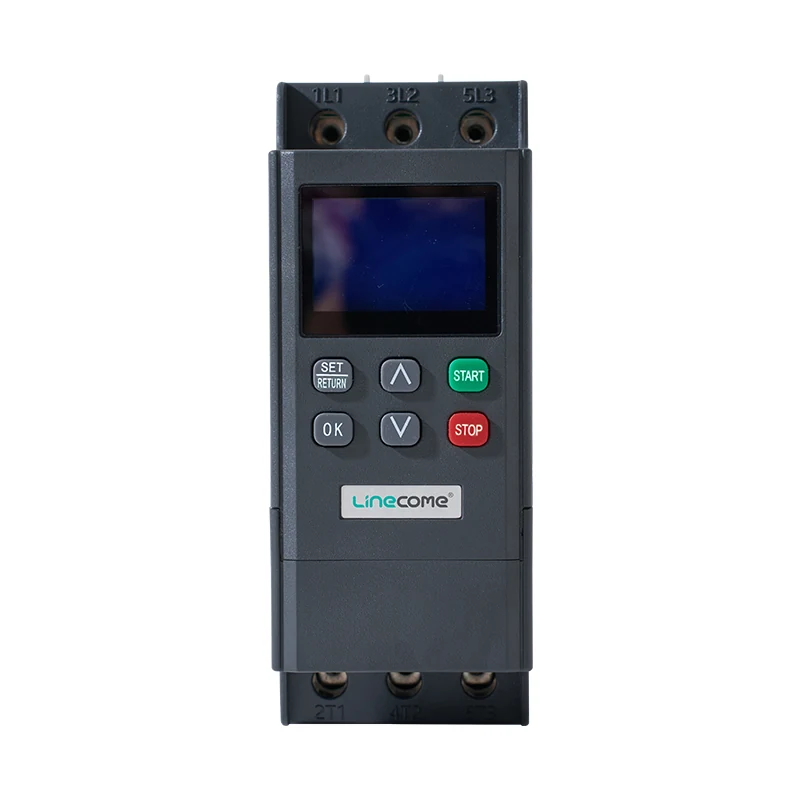
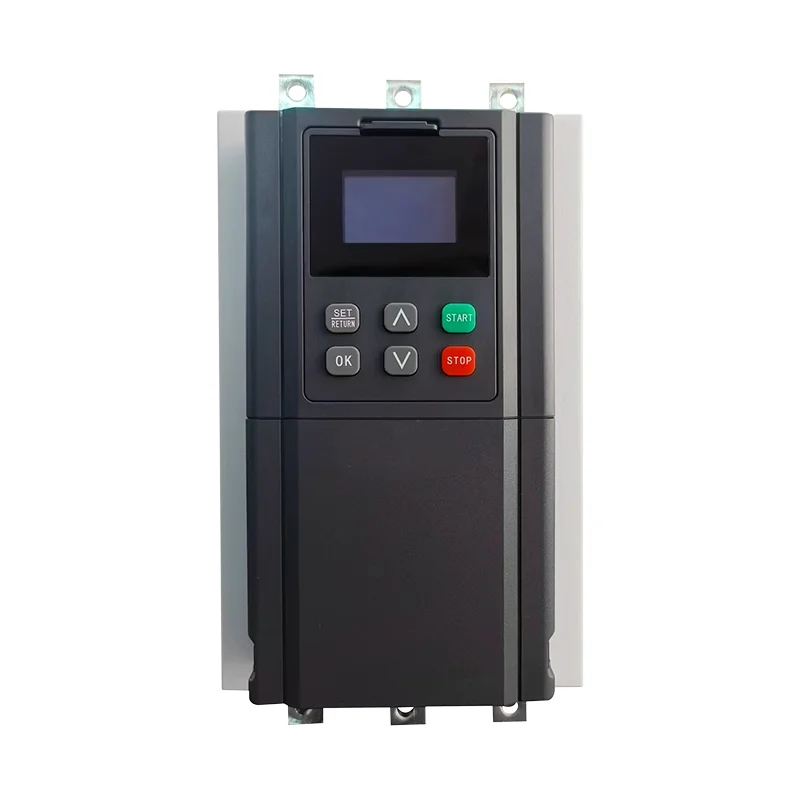
The NR1000 built-in bypass soft starter is a relevant LINECOME product family for a reduced-voltage starting enquiry. Its product page describes the construction and starting role. This article does not establish a kick-start setting range, parameter number or operating capability for a particular NR1000 unit. Obtain the exact model manual and written application confirmation for the proposed motor and load.
Establish why the load resists movement
Distinguish normal process breakaway friction from deterioration. A conveyor may start differently when empty, normally loaded or carrying material after an extended stop. A pump may have different hydraulic conditions following maintenance. A gearbox, bearing or driven assembly that has become abnormally stiff deserves a mechanical investigation, particularly when an established installation suddenly needs more starting effort.
Record the last successful operating condition, recent maintenance, process material, stop duration and whether the shaft begins moving promptly. Information about speed or movement should come from an approved observation method with guards and exclusion areas in place. Never reach into the machine to check whether the pulse worked. Inspection that exposes hazardous movement or stored energy requires the site’s isolation procedure.
The CCOHS lockout guidance explains the distinction between stopping equipment and controlling hazardous energy. A keypad stop or removed run command does not by itself establish a safe mechanical inspection condition. Qualified personnel should identify electrical, hydraulic, pneumatic and gravity-related energy before examining the driven equipment.
Use the torque relationship carefully
At a comparable starting condition, reducing the voltage applied to a squirrel-cage induction motor substantially reduces its available starting torque. The British Columbia motor-control training module explains the approximate square relationship between starting torque and voltage for the stated induction-motor comparison. It helps explain why a small voltage change can materially affect breakaway.
That relationship is a teaching approximation, not a setting calculator for a phase-controlled soft starter. Actual performance depends on the motor, waveform, supply impedance, control method and load. Do not convert an approximate torque ratio into a promise of acceleration, a safe shaft load or a permissible current. Obtain the motor and driven-equipment limits and compare measured behavior with the supplier’s application assessment.
A pulse that begins motion also does not prove that the motor will accelerate through the rest of the speed range. The available accelerating torque must remain adequate after the pulse ends. If motion starts and then stalls, examine the transition into the normal ramp and the load requirement rather than automatically increasing pulse duration.
Check the function before changing a parameter
The following decision table is a commissioning checklist, not a set of universal settings. Its torque context is the training reference above; the exact starter manual governs function availability and parameter interactions.
| Question | Evidence to collect | Decision before a trial |
|---|---|---|
| Is breakaway resistance normal? | Mechanical condition, process load and recent history | Repair abnormal resistance before changing starting effort |
| Does this unit support a pulse? | Exact model, firmware and manual section | Do not infer support from a similar keypad or family name |
| What happens to current limiting? | Documented pulse and protection sequence | Obtain an approved supply and protection assessment |
| Does acceleration continue afterward? | Time-aligned motion and current record | Review the normal ramp if movement is not sustained |
| Can the machine accept the transient? | Coupling, gearbox, belt and process limits | Agree on mechanical stop criteria before energizing |
| Can another start be attempted? | Motor temperature, starter duty and start history | Respect cooling and starts-per-hour limits |
Treat current and supply disturbance as separate acceptance items
Do not assume that a current limit used during the normal ramp applies in the same way during kick start. Manufacturers implement these sequences differently. A function name is insufficient evidence. Ask the supplier to identify the pulse voltage reference, duration behavior, current-limit interaction and protective functions that remain active. If that information is unavailable, keep the proposed change unapproved.
A short transient can still affect a weak supply or another process on the same feeder. Record voltage and current at the agreed measurement points using suitable equipment and qualified personnel. The review should distinguish starter input current, motor current, instrument averaging and recorded peak values. A slow panel indication may fail to capture the event that matters to the supply study.
Keep the original protection arrangement in place. A successful start obtained only after defeating protection is not an acceptable demonstration. If the trial causes a trip, preserve the first event and its timing. Use the separate soft starter fault-history guide to build that record before resetting or changing several settings together.
Plan a controlled comparison
Begin with an approved baseline: exact motor data, normal process load, existing settings, start duration and relevant current and voltage observations. Confirm the motor is cool enough for the planned duty and that the starter is ready. The trial plan should name the person permitted to stop the test and define conditions such as no movement, abnormal noise, excessive supply disturbance or unacceptable vibration.
Change only the parameter authorized by the application review. Follow the exact manual for permissible combinations, save the previous configuration and record the new value. Avoid alternating multiple pulse levels and ramp times without a cooling plan. Repeated unsuccessful starts can accumulate heat even when each attempt looks brief.
Compare equivalent load states. An empty conveyor start cannot demonstrate loaded breakaway performance. An unusually easy test condition may conceal the reason the pulse was proposed. After an acceptable cold trial, the engineer should determine whether additional representative conditions are necessary and safe. Acceptance should cover the intended operating envelope rather than the single best start.
Diagnose what happens after the pulse
There are several useful outcomes. Prompt movement followed by smooth acceleration may support the proposed function, subject to the electrical and mechanical checks. A sudden jerk followed by normal acceleration may indicate that the transient is unnecessarily severe. No movement requires a stop and renewed investigation. Movement followed by loss of acceleration points toward the remaining torque requirement, ramp behavior or supply limitation.
Do not treat bypass closure as proof that breakaway settings were correct. Bypass belongs to a later operating state and has its own command and feedback requirements. The broader soft-starter operating sequence explains that distinction. Likewise, the starts-per-hour assessment addresses cumulative duty that a single successful pulse cannot establish.
The records should show why the chosen configuration is better than the baseline. Useful evidence includes consistent movement, acceptable acceleration time, no unexpected process disturbance and compliance with the approved thermal and supply limits. “It started” is too narrow when the original objective included protecting a gearbox or avoiding feeder voltage disturbance.
Specify the enquiry and handover package
Provide the starter supplier with motor nameplate information, load type, driven-equipment limitations, normal and difficult starting conditions, supply details and current starting records. Ask whether the selected product supports the proposed breakaway function and which documentation applies to its firmware. Request an assessment of the whole starting sequence, including what follows the pulse.
The handover package should identify the approved parameter file, original settings, trial conditions, observations and remaining operating restrictions. Operators need a clear response if breakaway deteriorates: preserve evidence and report the change rather than progressively increasing the pulse. Maintenance staff should know where the accepted baseline is stored and who can authorize a revision.
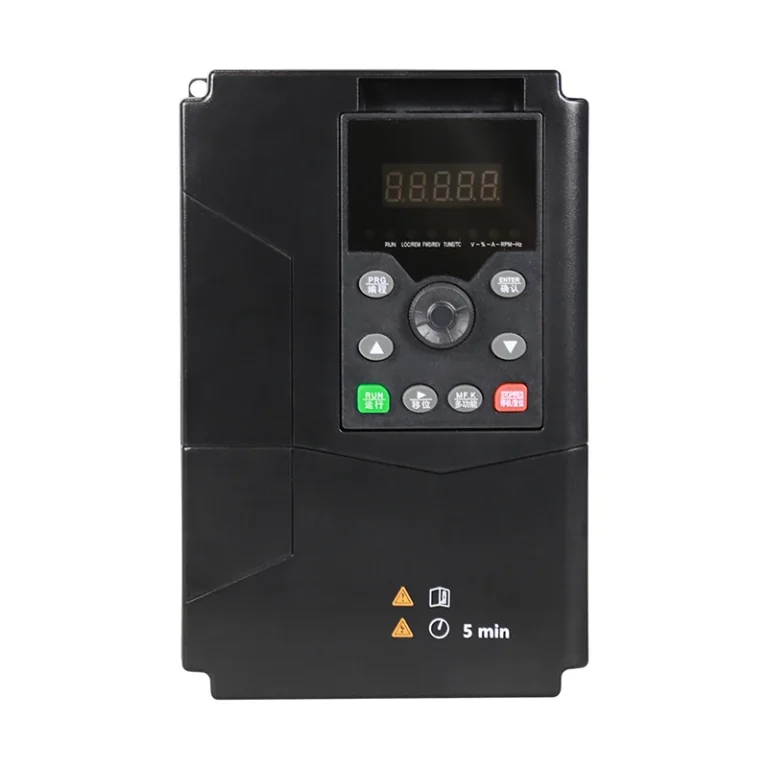
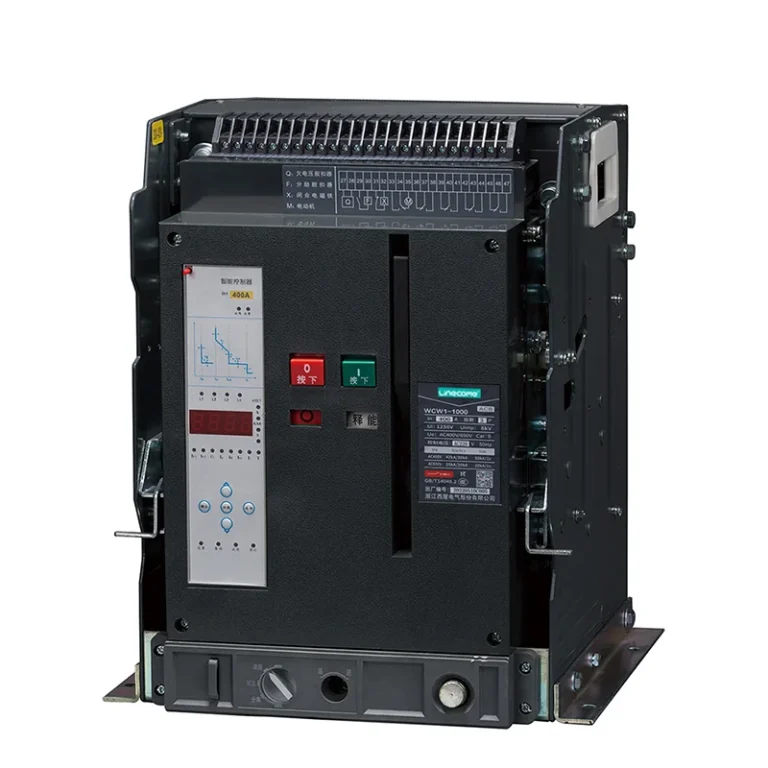
A retrofit deserves a fresh assessment when the motor, coupling, process material or supply changes. A setting accepted for the old arrangement is not automatically transferable. Ask for application confirmation using the exact supplied equipment, not just the advertised power range or the exterior photographs shown here.
Further learning: reduced-voltage starting
The RealPars lesson below introduces how a soft starter changes motor starting. It supports the distinction between a starter and a speed drive; it does not provide a kick-start commissioning procedure or settings for a LINECOME model.
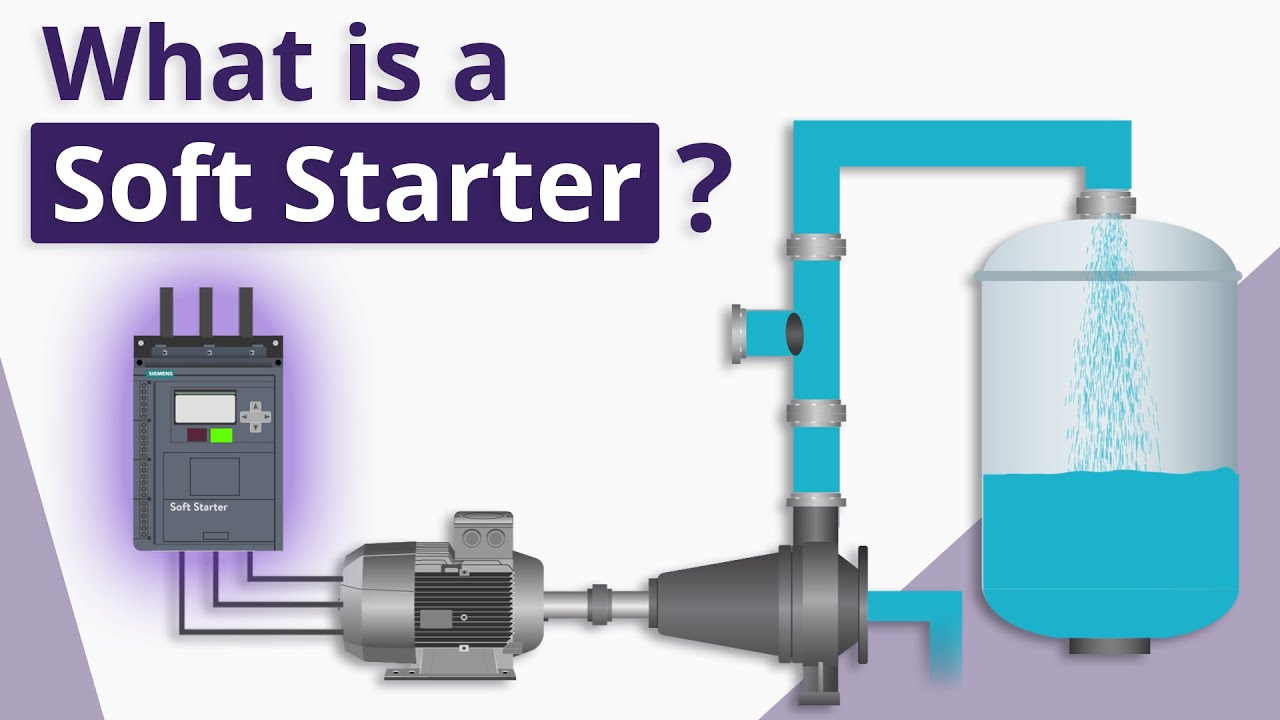
Video by RealPars. Watch What is a Soft Starter? (For Absolute Beginners) on YouTube.
Frequently asked questions
Should kick start be enabled on every soft starter?
No. Use it only when the exact unit supports it and an application review shows a benefit for normal breakaway resistance. Loads that already start acceptably may experience additional current or mechanical disturbance without a useful improvement.
Can a longer kick-start pulse clear a jammed machine?
A suspected jam requires investigation under the appropriate hazardous-energy controls. Do not use repeated or stronger pulses as a clearing method unless a specific engineered machine procedure explicitly permits that operation and controls its risks.
Does a successful pulse prove the starter is correctly sized?
No. Starting capacity, acceleration duty, cooling, starts per hour, protection and running conditions still require verification. The whole operating cycle must fit the selected starter and motor, including the period after the pulse ends.