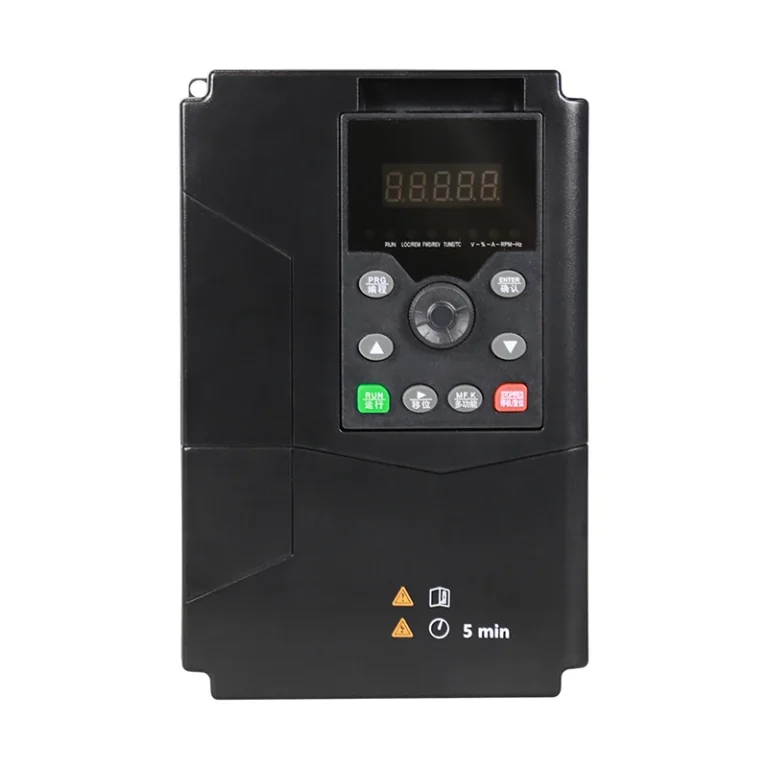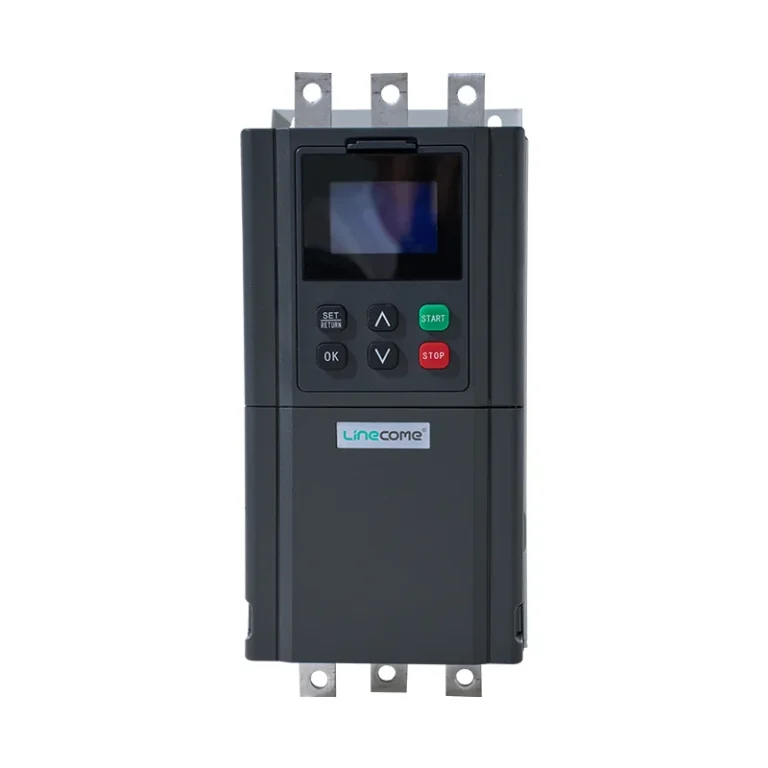

50 to 60 hz frequency converter searches usually mean one of two jobs: feed a motor the frequency on its nameplate when the plant utility differs, or buy a cabinet that changes frequency for a whole circuit. For motor loads, a frequency converter 50 to 60 hz decision often comes down to a properly sized variable frequency drive (VFD) programmed to 50 Hz or 60 Hz output, not only to a large rotary converter in the motor room.
Use the Variable Frequency Drive hub when you want to compare drive families after you confirm the motor nameplate frequency and voltage.
 .
When 50 Hz and 60 Hz equipment meet the wrong grid
Relocated machines keep their design frequency even when the wall supply changes. A skid built for 50 Hz utility in Europe still carries 50 Hz on the motor nameplate when it lands in a 60 Hz North American plant, and export shipments can show the opposite pattern.
Buyers feel the mismatch first on motors, pumps, and fan trains because those loads are tuned to synchronous speed at a rated frequency. Control panels that include transformers, timing relays, or 60 Hz-only electronics add a second layer—those auxiliaries may need their own conversion strategy instead of sharing one VFD output.
Motor nameplate frequency vs line frequency: speed, torque, and heat
Treat synchronous speed as a nameplate problem first.
Motor speed tracks supply frequency when pole count stays fixed, so a 50hz vs 60hz motor discussion is really a nameplate match problem. If you connect a 50 Hz-rated motor directly to 60 Hz mains without changing anything else, synchronous speed rises by about twenty percent, which can push air and torque demands beyond what the machine was mechanically balanced for.
Voltage must stay coordinated with frequency for induction motors. Drives and converters that hold an appropriate volts-per-hertz relationship reduce the chance of saturating or starving flux, but they do not replace mechanical overspeed checks or cooling limits at the lowest speed you plan to run.
| Symptom | Likely cause when frequency differs | First response |
|---|---|---|
| Higher than expected RPM | Line frequency above motor nameplate | Stop direct connection; plan conversion or resize |
| Overheating at rated load | Flux or cooling mismatch | Match frequency and voltage; verify fan on motor |
| Weak starting torque | Voltage/frequency profile wrong | Program base frequency to nameplate; retune drive |
How a VFD acts as a 50 to 60 Hz frequency converter on the motor circuit
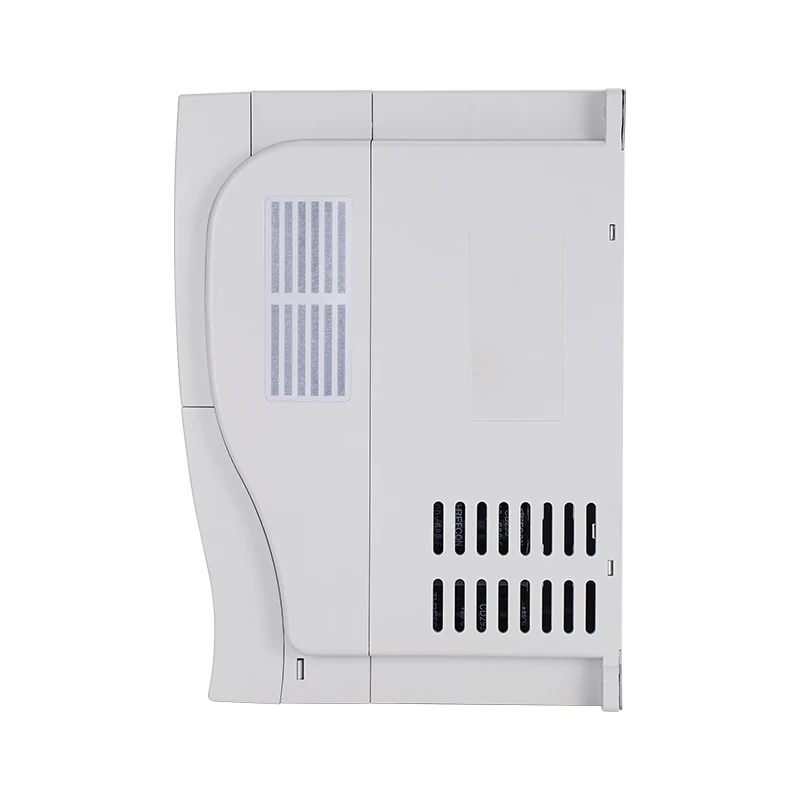
A VFD rectifies incoming AC, regulates a DC bus, and reinverts at the frequency reference you command, so the motor terminals can see 50 Hz while the plant feed remains 60 Hz when the drive and motor are sized correctly. That behavior is why procurement teams colloquially call the drive a frequency converter even though the inverter is only one stage inside the cabinet.
The motor circuit approach works when your load is the motor (or motor-driven pump/fan) and you can place protection and cabling per the drive manual. It does not automatically convert frequency for every branch circuit in a imported control panel unless each load has an appropriate converter path.
 .
Rotary, static, and VFD options compared for motor loads
Dedicated frequency converters still matter when you must feed multiple loads or when regulations and customer specs name a rotary or static converter. The table below stays at the motor-load level—facility engineers may size larger static converters when transformers and auxiliaries also need a new frequency.
| Approach | Best fit | Trade-off |
|---|---|---|
| VFD on motor branch | Single motor or pump/fan with adjustable speed need | Adds harmonics/EMC tasks; does not fix non-motor electronics |
| Rotary (motor-generator) | Mixed legacy loads that expect a stiff 60 Hz or 50 Hz bus | Footprint, noise, maintenance |
| Static solid-state converter | Clean frequency change for a defined kVA block | Cost; requires accurate load survey |
| Motor rewind / replacement | Very old motors or extreme duty mismatch | Downtime; new nameplate becomes source of truth |
Department of Energy material on adjustable-speed drives reminds readers that matching motor speed to load requirements pays off in fan and pump duty, which overlaps many frequency-conversion retrofits even when the immediate goal is simply to reach 50 Hz base speed on a 60 Hz feed.
Commissioning 50 Hz or 60 Hz output on a general-purpose drive
Program base frequency from the motor stamp, not from wall-meter habit alone.
Commissioning starts with entering motor nameplate frequency, voltage, and current into the drive, then setting the base output to 50 Hz or 60 Hz as required by the application—not by guessing from the utility alone. Acceleration ramps, braking, and thermal limits still apply; changing frequency does not remove the need to verify lowest-speed cooling.
V/Hz control (listed as V/F on many catalogs) or vector mode should match the load type. Constant-torque machines need different tuning patience than fan curves, but the frequency target still comes from the motor stamp. Document the final parameters on the commissioning sheet so maintenance inherits the same 50 Hz or 60 Hz reference after turnover.
Pre-buy checklist: nameplate, auxiliaries, and non-motor loads
Photographs and notes reduce wrong-SKU orders before conversion hardware ships.
Collect photos of the motor nameplate showing rated frequency, voltage, full-load amps, and insulation class before you quote any 50 to 60 hz frequency converter. Add transformer nameplates on control circuits, note any 60 Hz-only timers or contactor coils, and list electronics that expect utility frequency outside the motor branch.
Important: Community threads on motor imports repeat the same warning—control electronics and transformers may fail even when the motor is corrected with a drive. Treat non-motor loads as a separate line item in the RFQ instead of assuming one VFD output feeds the entire imported panel.
IEC 60038 is the standards pointer many spec writers use when they talk about nominal 50 Hz and 60 Hz supply classes; your local utility still defines what appears at the disconnect, so the checklist should capture measured plant voltage and frequency alongside nameplate targets.
 .
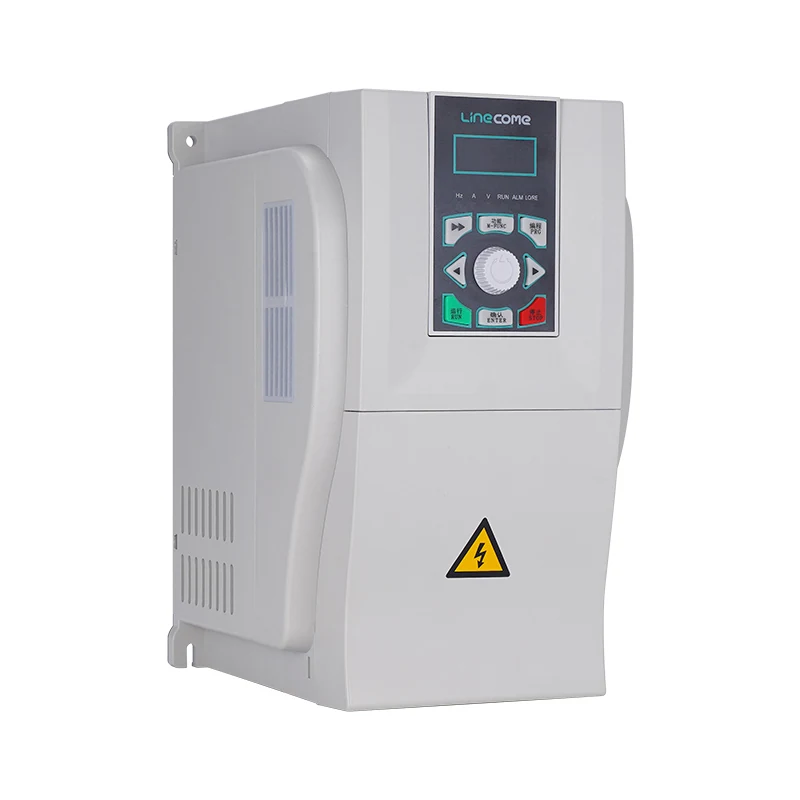
Matching LNC820 general-purpose VFDs — product fit for 50/60 Hz motor duty
Published series tables still require a row match to your motor amps and voltage class.
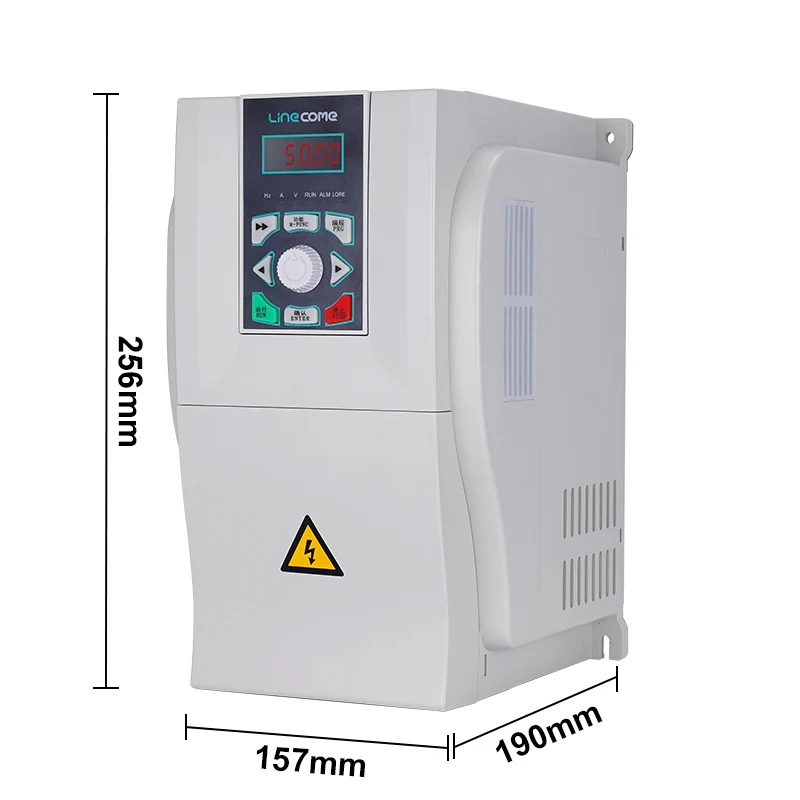
When the application is a motor branch and you want a catalog-backed example from this site, the public LNC820 general-purpose VFD series page lists output frequency 0–500 Hz, control modes V/F control and open-loop vector (SVC), and RS485 on the overview copy for the series. Those figures describe the published LNC820 family table, not every conceivable import scenario.
Match the ordered model row to input voltage, output current, and enclosure for your kW, then program base frequency to the motor nameplate—50 Hz for the imported machine or 60 Hz when you export toward North American utility practice. Built-in braking unit availability on 0.75–22 kW models appears in overview copy; confirm braking energy for high-inertia loads before you rely on deceleration ramps alone.
| Public LNC820 page item | Why it matters for 50/60 Hz projects | Your project still must verify |
|---|---|---|
| 0–500 Hz output frequency range | Shows electronic frequency command range | Continuous torque at target Hz, motor cooling, mechanical overspeed |
| V/F and SVC modes | Links to commissioning section | Motor data entry, load type, tuning time |
| RS485 on overview copy | Integration path for SCADA | Register map, baud, fault handling |
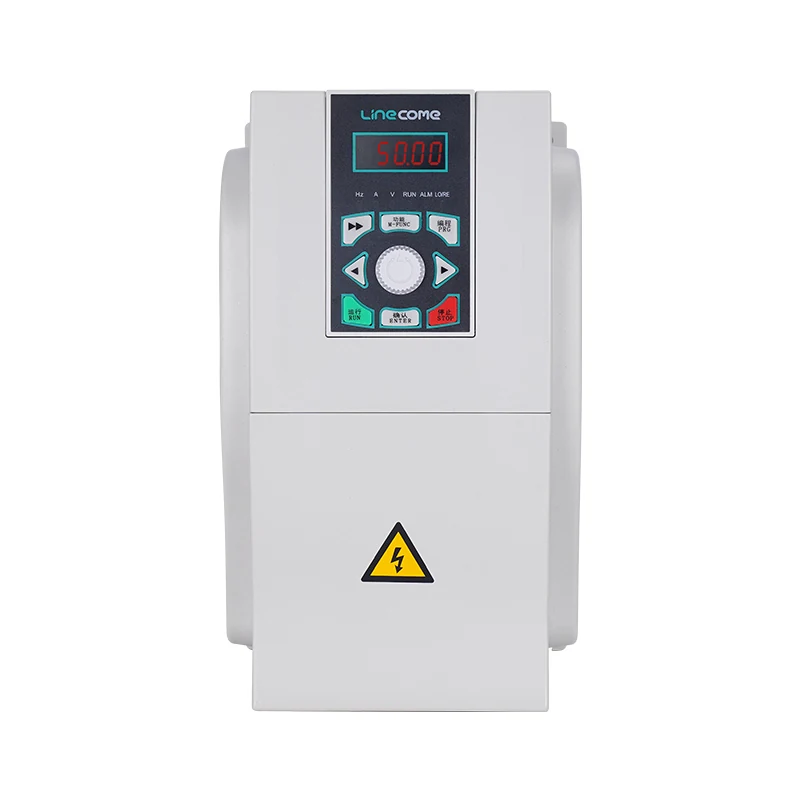 .
Share nameplate photos and target frequency with the supplier when you need help picking the kW row inside the LNC820 range. If the load only needs a one-time soft start at fixed utility frequency with no mismatch, compare other starters in the VFD hub before you buy conversion hardware.
Frequently Asked Questions
These answers stay at the buyer level; field wiring belongs in the install manual for the model you order.
Can a VFD convert 50 Hz to 60 Hz for an entire imported control panel?
Usually no. A VFD on the motor circuit adjusts frequency at the motor terminals it feeds. Contactors, transformers, and 60 Hz-only electronics on the same imported panel still need their own compatible supply or a facility-level converter sized for that kVA.
What happens if I connect a 50 Hz motor directly to 60 Hz mains?
Synchronous speed rises with frequency, so torque and cooling demands can move outside the design unless the mechanical load limits RPM. Risk depends on duration, load type, and nameplate voltage—stop and plan conversion rather than hoping the machine will “settle in.”
Is a VFD the same thing as a frequency converter?
Colloquially, buyers use both terms for motor supplies. Technically, a frequency converter can mean dedicated 50/60 Hz hardware for a circuit, while a VFD is an adjustable drive that includes an inverter stage and motor control features beyond a fixed conversion ratio.
Do I need a motor rated for both 50 Hz and 60 Hz?
You need the motor’s actual rated frequency on the nameplate to match what you will apply at the terminals after conversion. Dual-rated motors exist on some nameplates; if yours lists only 50 Hz, program or convert to 50 Hz unless a qualified engineer approves a different duty.
Will running at the wrong frequency always destroy the motor immediately?
Not always instantly, but overheating, overspeed, and nuisance trips are common enough that treat mismatches as stop conditions. Document what you measured—line frequency, motor frequency target, and current—before you restart.
What nameplate photos should I send before ordering a converter?
Send motor frequency, voltage, full-load amps, insulation class, and a photo of any existing drive or starter label. Add transformer and control-power labels when auxiliaries remain on the imported panel so the supplier knows whether you need motor-branch hardware only.
References
External references support frequency and drive-mechanism claims in this guide.