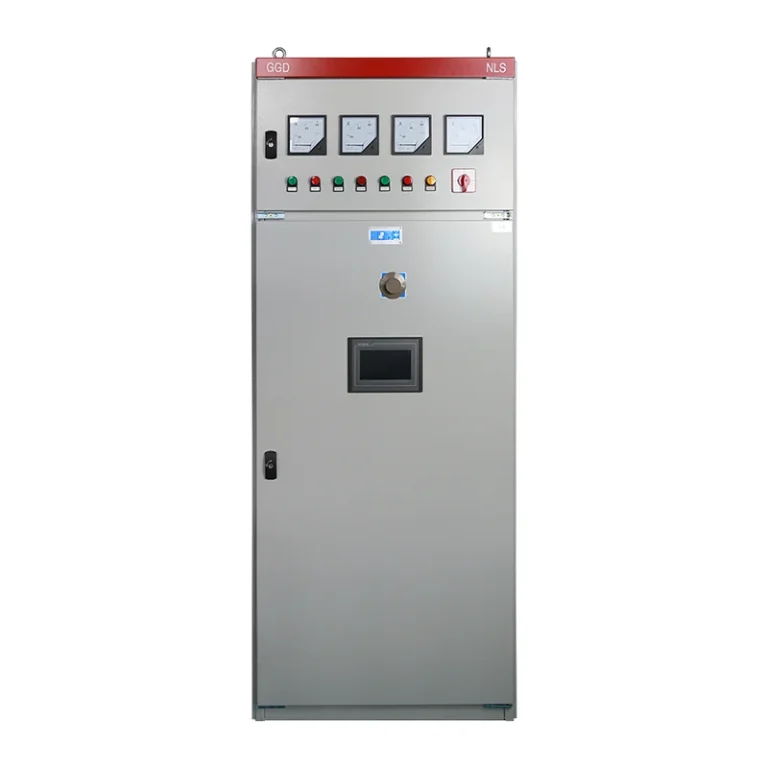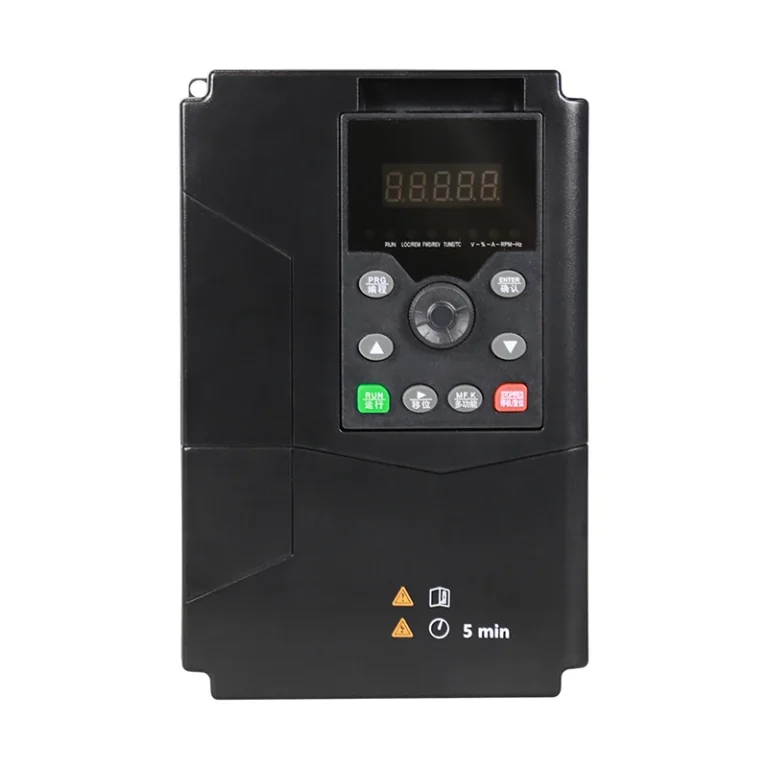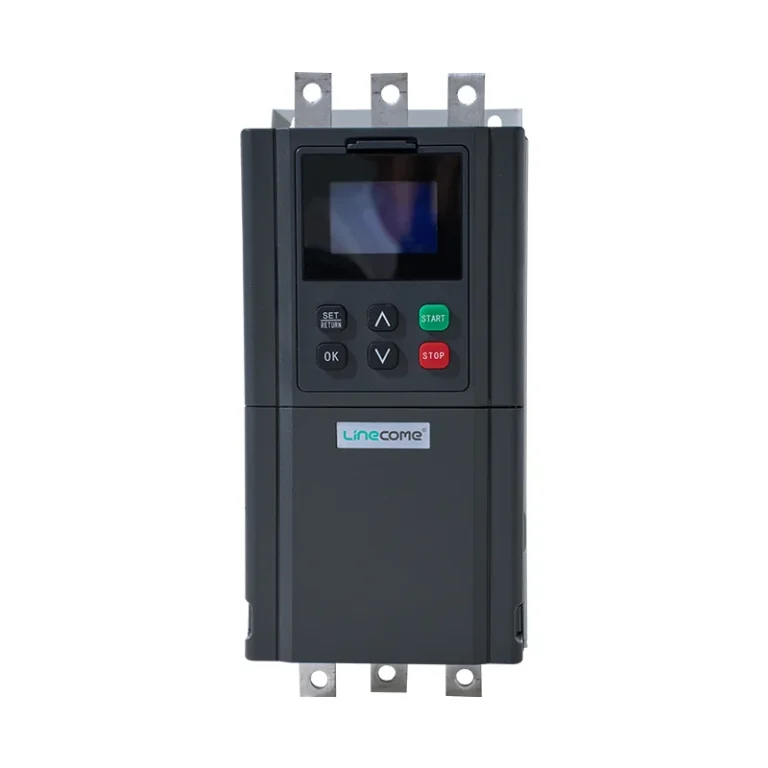

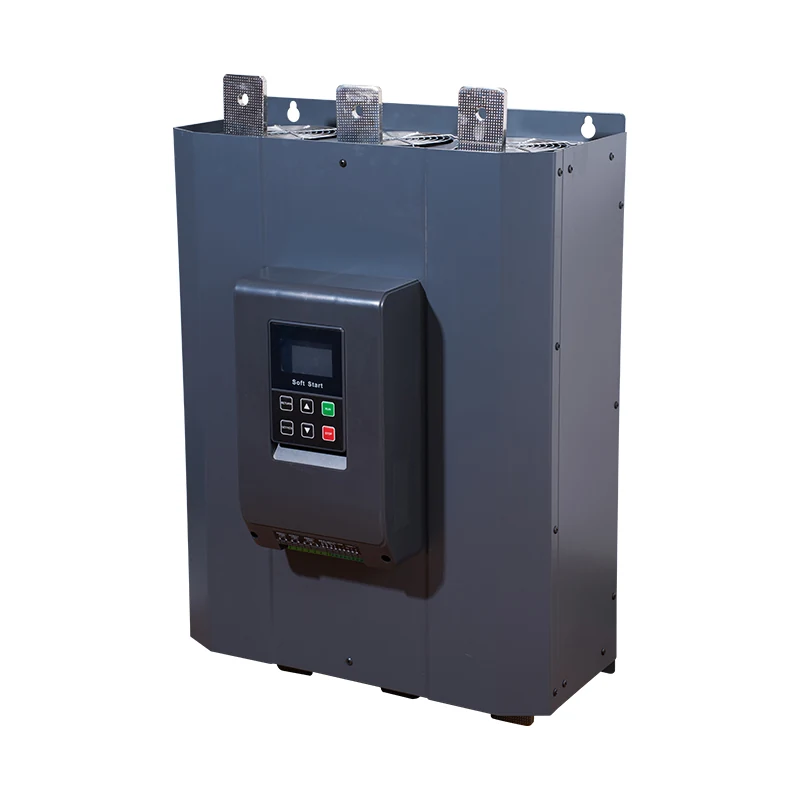
Current limit vs soft starter is not a single catalog row—buyers use “current limit” for reactor steps, breaker let-through designs, drive acceleration caps, and SCR ramps that all touch inrush differently. Solid-state soft starters limit motor terminal voltage over a timed ramp using thyristors, which is the path you want when repetitive pump and fan starts need adjustable acceleration rather than one fixed impedance step.
Use the Soft Starter hub to browse online, bypass, and cabinet families after you decide whether your project needs semiconductor soft start or a simpler fixed limit method.
 .
What “current limit” means in motor quotes (and what it is not)
In motor RFQs, “current limit” may mean a reactor step, a breaker’s fault let-through design, or a drive parameter—not automatically an SCR soft starter. Supplier brochures often reuse the phrase across unlike devices, which is why inrush current soft starter searches land on both impedance starters and thyristor catalogs.
A current limiting reactor motor start inserts series inductance so the motor sees reduced voltage during an intentional start step. That is true current limiting in the impedance sense, but it is not the same as a programmable ramp.
A current-limiting breaker on the branch limits peak let-through under short-circuit conditions; its rated ampacity governs normal load current, not a gentle acceleration profile for every start command.
Important: Community editors on Talk:Inrush current warn that inrush (energization surge) is easy to confuse with running overload when buyers pick starters—source: U-02; size protection for both phenomena separately.
Current limiting reactor and fixed-tap starts explained
A series reactor or autotransformer tap inserts impedance so the motor sees reduced voltage during a single start step before run connection. Encyclopedia notes on reactors describe inductive impedance restricting how quickly current can rise when voltage is applied across an inductive load.
Fixed-tap schemes trade fine control for simplicity. You get one or two discrete inrush reductions, then the motor runs at full line voltage when the contactor transfers. That can be enough for occasional starts on relatively stable utility feeds.
Reactor starts do not give you a continuous torque profile across dozens of starts per hour. If your process needs repeatable ramp times, a soft starter or drive usually enters the conversation.
How solid-state soft starters limit inrush with an SCR ramp
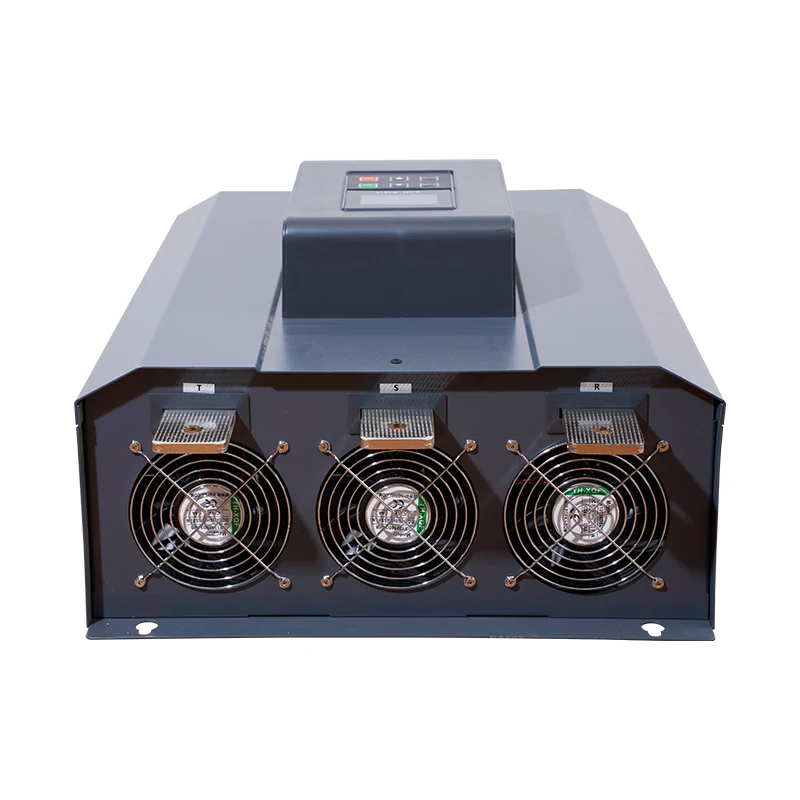
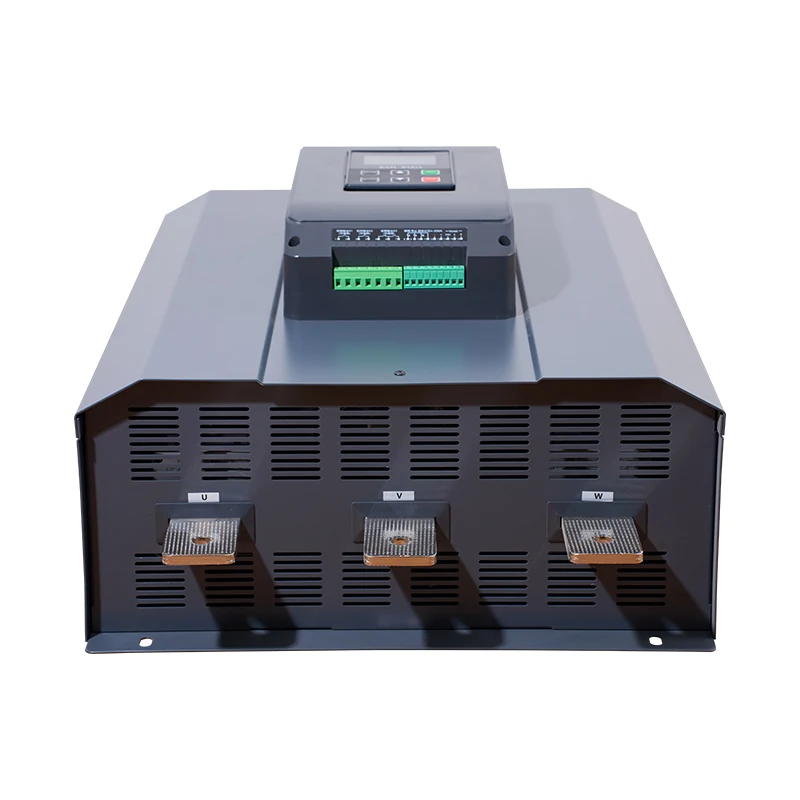
Soft starters use thyristors to increase terminal voltage over a timed ramp, which limits inrush and torque shock compared with direct-on-line starting. Encyclopedia descriptions of motor soft starters tie that behavior to silicon-controlled rectifiers (SCRs) that control voltage—and therefore current—during the start interval.
Many industrial designs add a bypass contactor after the ramp so semiconductors do not carry full-load current continuously. The starter still “limits current” during start, even though run mode looks like a conventional feed through the bypass path.
Because ramp time and initial voltage are adjustable on most solid-state units, soft starters fit applications where water hammer, belt slip, or high inertia would punish a single-step reactor start.
Current limit methods vs soft starter — side-by-side comparison
Reactors and taps trade coarse steps for simplicity; SCR soft starters trade cost for adjustable ramps and monitoring on repetitive pump and fan starts. Use the matrix as an RFQ router, then confirm details with motor nameplate data and your local code practice.
| Method | What it limits | Control during start | Typical duty fit | What it does not replace |
|---|---|---|---|---|
| Series reactor / choke | Available voltage/current via impedance | Fixed step | Occasional starts, coarse limit OK | Adjustable torque profile every start |
| Autotransformer / tap | Voltage by tap position | One or two steps | Legacy reduced-voltage specs | Continuous ramp programming |
| Current-limiting MCB | Fault let-through peaks | None on normal starts | Branch protection | Soft-start profile |
| VFD current limit parameter | Output current during acceleration | Frequency + voltage ramp | Variable speed needed | Reduced-voltage-only spec by itself |
| SCR soft starter | Terminal voltage ramp | Timed thyristor control | Frequent pump/fan starts | Full plant harmonic study (still required) |
No single universal inrush reduction percentage applies to every motor and starter combination—motor design, load inertia, and utility stiffness all move the measured amps.
 .
When fixed current limiting (reactor or tap) is enough
Fixed impedance starts can suffice when one inrush reduction step is acceptable and you do not need adjustable acceleration or torque profiles. Seasonal equipment that starts a few times per day, or motors with generous utility headroom, often match reactor or tap economics.
If operators only need “less spike than DOL” and can accept a defined step change in torque, reactor hardware stays attractive. Document the tap or reactor rating on the one-line diagram so future maintenance knows the start is intentionally reduced-voltage.
When start frequency rises or product quality depends on smooth acceleration, the comparison usually shifts toward SCR soft starters or drives—see the next section before you freeze a reactor BOM.
When a soft starter beats current limiting alone
Choose an SCR soft starter when starts are frequent, water hammer or belt slip matters, or you want semiconductor-controlled ramps with published protection and monitoring. Thyristor ramps limit inrush while letting you tune acceleration time to the driven load rather than accepting a single impedance step.
Soft starters also centralize start-related faults—phase loss, overload, and stall patterns—into one controller that maintenance already recognizes on pump skids. That integration is harder to replicate with a reactor plus separate overload relay unless you engineer it deliberately.
From the field: Maintenance forums repeat that a current-limiting breaker does not behave like a soft starter on every start command—source: U-01 community themes; verify branch protection separately from start control.
VFD current limit setting vs soft starter (different jobs)
A VFD can cap acceleration current while changing frequency, but it is not a drop-in substitute for every reduced-voltage-only specification. Drives add rectifier and inverter stages, harmonics considerations, and commissioning time that a soft starter project may not need when speed remains fixed at line frequency.
When the application already needs adjustable speed, programming a VFD current limit during ramp makes sense. When speed stays at fixed line frequency but starts are harsh, an SCR soft starter often matches the spec sheet without converting the entire branch to variable frequency.
Independent articles comparing soft starters and VFDs emphasize cost and complexity: drives win when speed control is part of the process; soft starters win when the goal is controlled starting at fixed speed.
 .
Online soft starter fit when SCR control wins (ZR800 example)
When comparison concludes SCR soft start beats reactor-only or breaker-only assumptions, match motor voltage and amp band to a published online soft starter row. The public ZR800 online soft starter series page documents comprehensive protection and monitoring aimed at pump and fan duty—not a substitute for reactor sizing calculations on your one-line.
The public ZR800 overview lists twelve protection functions (including inverse-time overload and configurable fault enable/disable for supervised commissioning) plus monitoring of current, voltage, phase sequence angle, frequency, and cumulative runtime, with 4–20 mA output at 0.5% linear accuracy on its published feature table.
| Public ZR800 page item | Why it matters after you choose soft start over reactor-only | Your project still must verify |
|---|---|---|
| 12 protection functions on feature list | Aligns starter faults with plant expectations | Motor FLA, duty cycle, enclosure |
| Configurable fault enable/disable | Commissioning flexibility | Local safety rules for bypass |
| 4–20 mA output, 0.5% linear accuracy (feature list) | Trending start stress | Loop power, signal scaling |
| Online soft starter topology | In-line reduced-voltage start | Cable length, bypass strategy |
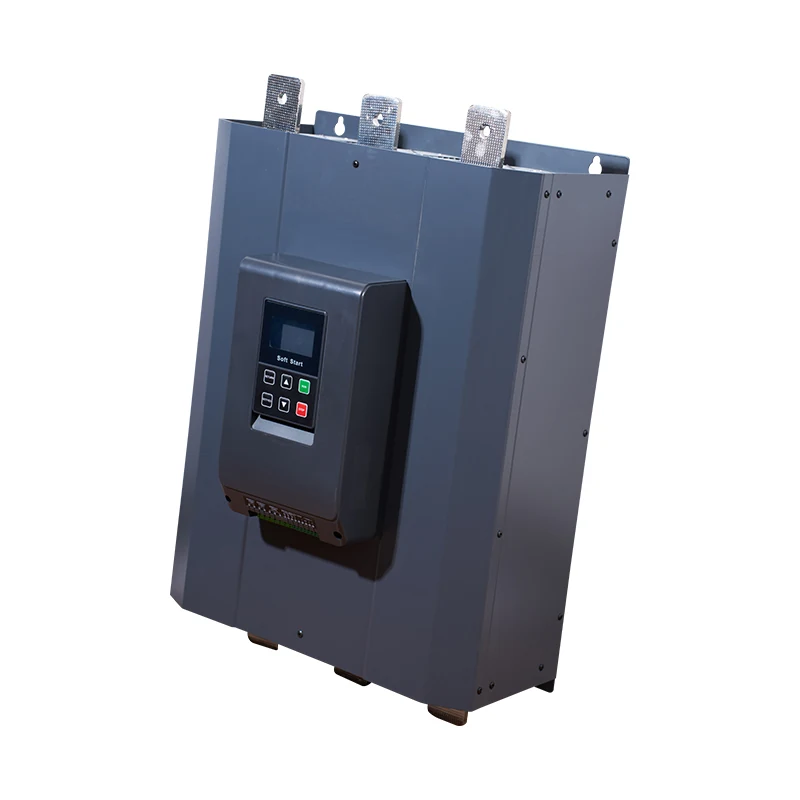 .
Continue specification on the ZR800 18.5–90 kW online soft starter product page for the voltage and power band that matches your motor nameplate, then share expected starts per hour and utility conditions with the supplier if you need a firm soft starter SKU rather than a reactor tap assumption.
Frequently Asked Questions
These answers summarize the comparison points for specifiers—they do not replace motor data sheets, coordination studies, or your site electrical safety program.
Does a soft starter limit current?
Yes during the start interval, by ramping voltage (and thus current) with thyristors rather than applying full line voltage instantly. It limits inrush relative to direct-on-line starting; running current still follows the load.
Is a current limiting breaker the same as a soft starter?
No. Current-limiting breakers address fault let-through and branch protection; they do not program motor acceleration on each start command.
Can a VFD current limit replace a soft starter?
Sometimes when you already need a drive for speed control, but not when the specification calls for reduced-voltage starting at fixed frequency without full VFD infrastructure.
What is a current limiting reactor for motors?
A series inductor (choke) that reduces available voltage to the motor during a defined start step before transfer to full voltage.
When should I use a reactor instead of a soft starter?
When a single coarse inrush step is acceptable, starts are infrequent, and budget favors simple impedance hardware over adjustable SCR control.
How much inrush does a soft starter reduce?
Reduction depends on motor, load, ramp settings, and utility—there is no one percentage for all installations; use nameplate current and measured starts during commissioning.
References
- Motor soft starter (SCR reduced-voltage starting principles)
- Inrush current (energization surge and mitigation context)
- Reactor (electricity) (series impedance and current rise)
- Miniature circuit breaker (current-limiting let-through vs continuous rating)
- Talk:Inrush current (community inrush vs overload naming concerns)