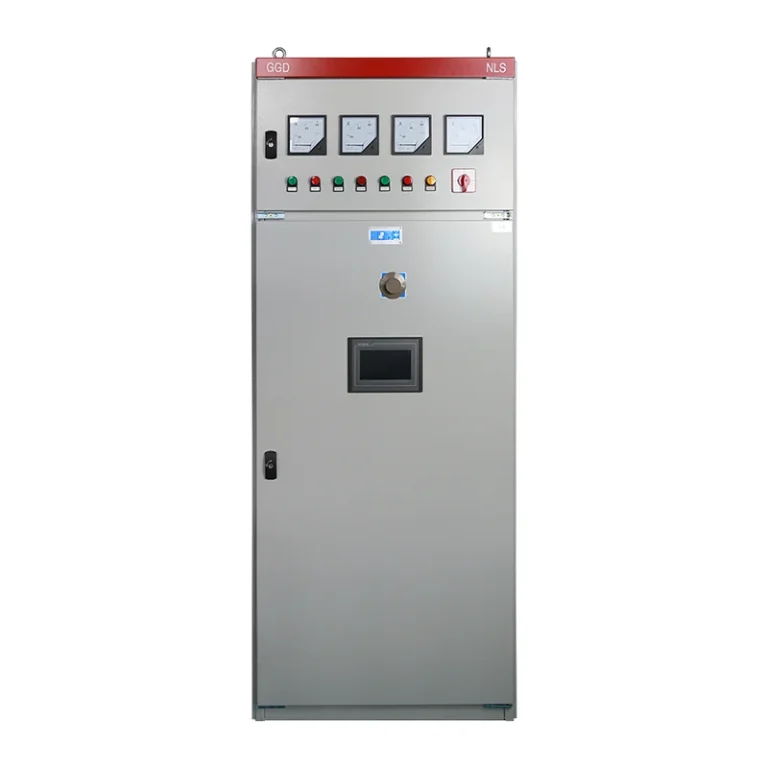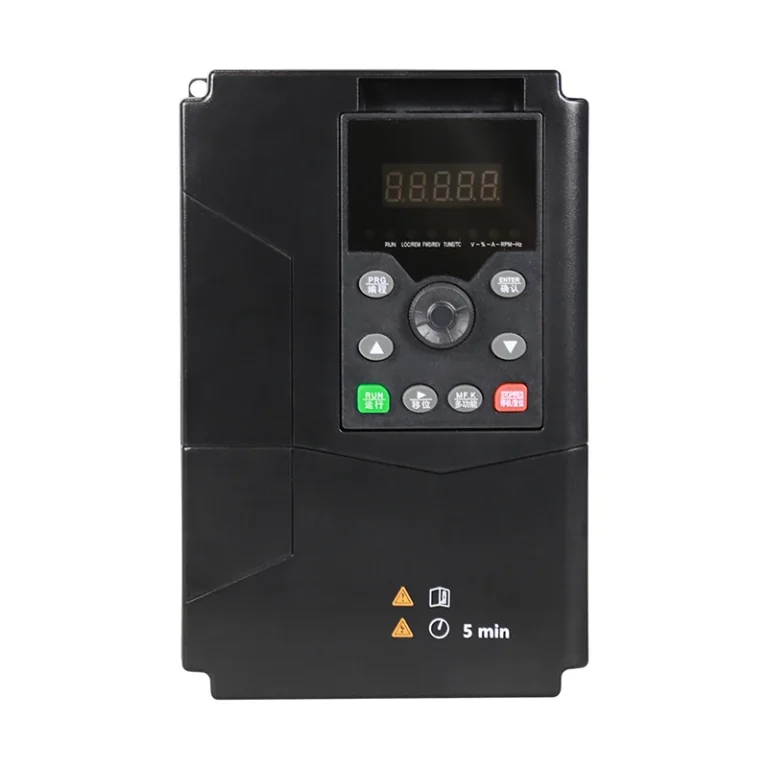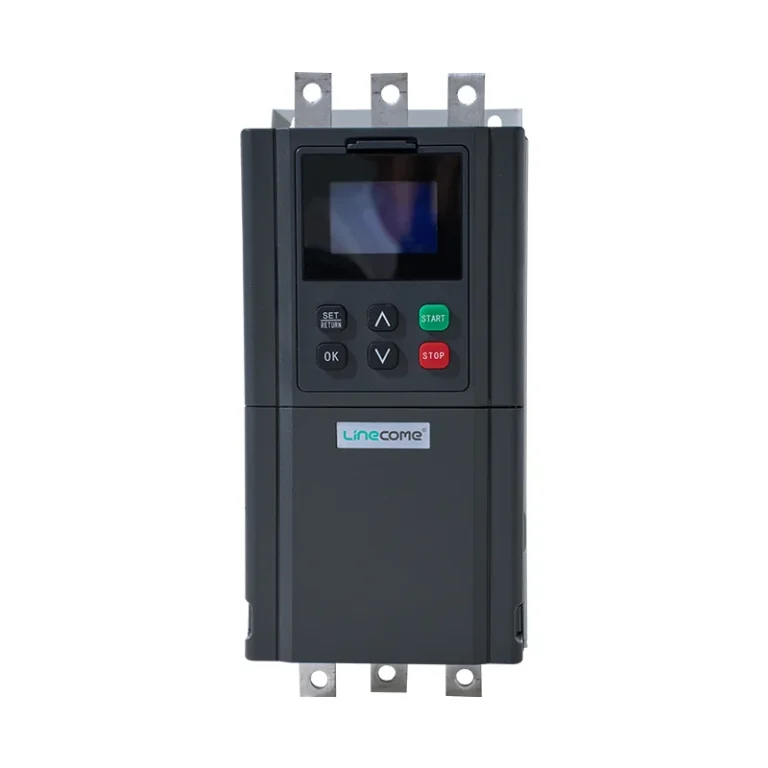

The main advantages of vfd use on industrial motors are load-matched speed, controlled acceleration, flexible process control, and drive-side fault limits—payoffs you only capture when the machine actually needs to run slower, faster, or ramped compared with a fixed line frequency. The same advantages of variable frequency drive adoption show up whether procurement writes “AC drive” or “adjustable-speed drive” on the requisition.
Use the Variable Frequency Drive hub to compare drive families after you decide those benefits apply to your load. For internal power-stage detail, see the published how a VFD works guide; for hoist-only brake and inching benefits, see benefits of a VFD on an electric motor hoist—this page stays on general machinery advantages.
 .
Why plants specify VFDs instead of fixed-speed starters
VFDs earn panel space when speed must change with production, not when a motor never leaves one RPM.
Across-the-line starters and contactors are still valid when the process is truly fixed-speed and never throttled. A variable frequency drive adds value when operators throttle fans or pumps, synchronize conveyor speeds, or need repeatable ramp profiles that contactors cannot reproduce without extra mechanical stages.
Maintenance teams usually feel the decision during retrofits: if the complaint is “we only need softer starts,” a soft starter conversation may suffice; if the complaint is “we need to run at 40% speed on second shift,” the advantage conversation shifts to a VFD.
Energy and load-matching advantages in fan, pump, and throttled machinery
Fan/pump load duty is where variable frequency drive (VFD) energy stories are strongest: those variable-torque loads often draw less power at reduced speed, which is why adjustable-speed drives appear on throttled processes—not on every constant-torque line at full speed forever.
Department of Energy material on adjustable-speed drives emphasizes matching motor speed to load requirements in fan and pump duty. That is the honest scope for “energy advantage”: variable-torque loads where throttling by valve or damper wastes energy at full motor speed.
Constant-torque applications—many conveyors, extruders, and hoists at full torque—may still justify a VFD for control and ramps without promising automatic bill reduction at every speed point.
| Application class | Typical VFD advantage | Verify before you claim savings |
|---|---|---|
| Centrifugal fan with damper control | Speed tracking can reduce power at partial flow | Confirm duty is throttle-heavy; measure baseline kW |
| Centrifugal pump with valve throttling | Similar partial-flow story | Check minimum speed cooling and NPSH margins |
| Fixed-speed conveyor at one RPM | Control/soft start may help; energy story weak | Ask whether speed ever changes |
| Compressor or constant-torque process | Often needs engineering review | Do not assume fan/pump curves apply |
 .
Soft starting, inrush reduction, and mechanical stress advantages
Each acceleration ramp you program limits inrush current and eases torque steps into belts, couplings, and gearboxes compared with snapping a motor to line speed.
Encyclopedic summaries of variable frequency drives note controlled starting as a core benefit: the drive ramps frequency and voltage rather than applying full line voltage instantly. That reduces peak inrush relative to across-the-line starts when ramps are configured conservatively.
Mechanical advantages follow the same ramp: sprockets, belts, and gearbox teeth see smaller step changes in torque, which can reduce nuisance maintenance on fragile lines—provided acceleration times are tuned for the load, not copied from a default parameter.
Soft starters still win on simplicity when only inrush reduction is required and speed never changes; the FAQ below contrasts that boundary without replacing a dedicated soft-starter selection article.
Process flexibility: ramps, multi-speed, PID, and communication hooks
Multi-speed profiles, built-in PID on catalog drives, and serial field links let one VFD replace stacks of contactors when the recipe changes with production.
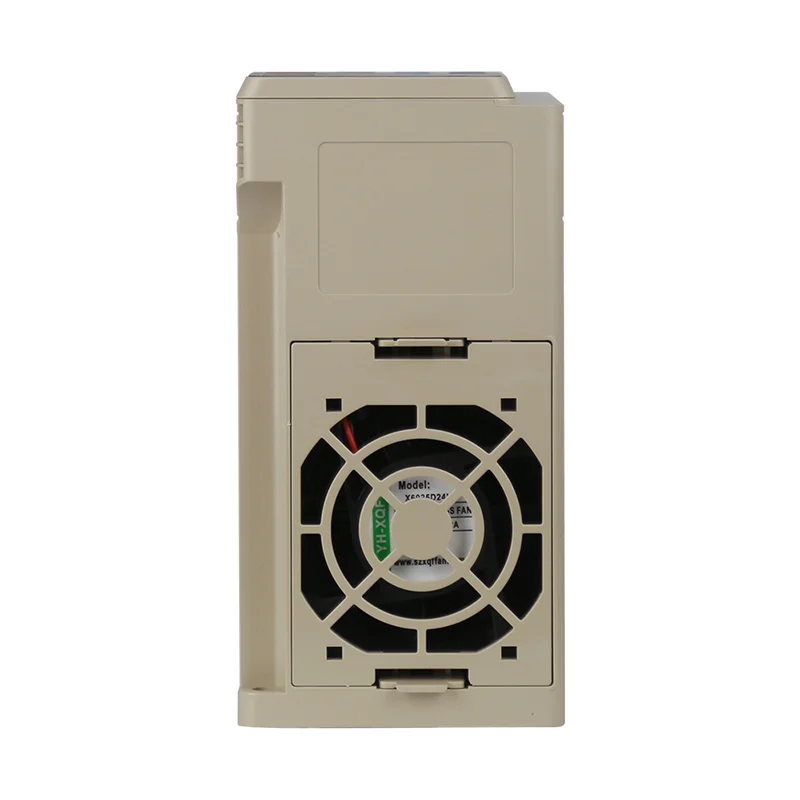
Public LNC610 specifications list built-in PID loop capability for closed-loop process control, up to 16-speed operation through built-in PLC or terminals, and acceleration/deceleration time range 0.1–6500.0 s on the series table. Those are advantages in RFQ language: fewer external controllers when your loop fits drive-side PID limits.
Integrators still document sensor range, fail-safe behavior, and who owns tuning after startup—catalog PID is an advantage only when the loop fits the drive’s I/O and response expectations.
Vector modes (open-loop SVC on both LNC610 and LNC820 public tables) help low-speed torque tasks compared with pure V/Hz when nameplate data is entered—still not a substitute for encoder applications that need full closed-loop servo performance.
 .
Motor and drive protection advantages maintenance teams notice
Overcurrent, overvoltage, and stall-related drive limits can trip before the machine damages itself—if parameters match the motor data you entered.
The public LNC610 table documents overload capacity for G-type machines: 150% of rated output current for 60 s, plus over-current, over-voltage, under-voltage, and overload protection functions in the protection list. Those features are advantages only when commissioning engineers enter correct motor nameplate amps and tune thresholds instead of leaving factory defaults.
Protection is not immunity: a mis-sized drive or wrong motor class still fails in the field; advantages articles should not promise that any catalog row replaces motor thermal design.
When a VFD is not worth the advantages (honest boundaries)
Fixed-speed loads with no throttle, strict simplicity requirements, or unresolved harmonics and motor compatibility issues may be better served by soft starters or mechanical redesign—not a drive by default.
Community discussion around VFD articles repeatedly separates “why drives help” from harmonics, filtering, cable length, and bearing-current concerns. Treat those as trade-offs, not footnotes: advantages shrink when the plant cannot accommodate filtered power or when the motor insulation class is unknown for inverter duty.
Important: Advantages of deployment do not override nameplate reality—if the motor never varies speed and the plant will not maintain drive electronics, the business case for a VFD weakens even when marketing lists long benefit bullets.
Frequency-mismatch projects (50 Hz motor on 60 Hz utility) belong in the 50 to 60 Hz frequency converter buyer guide, not in a general advantages list—link laterally when import duty drives the conversation.
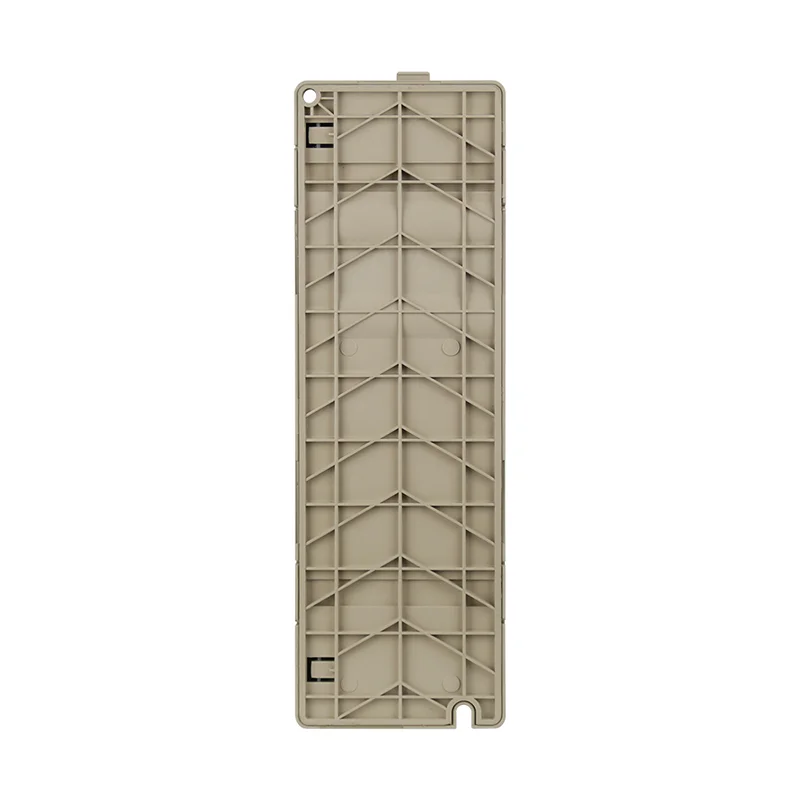
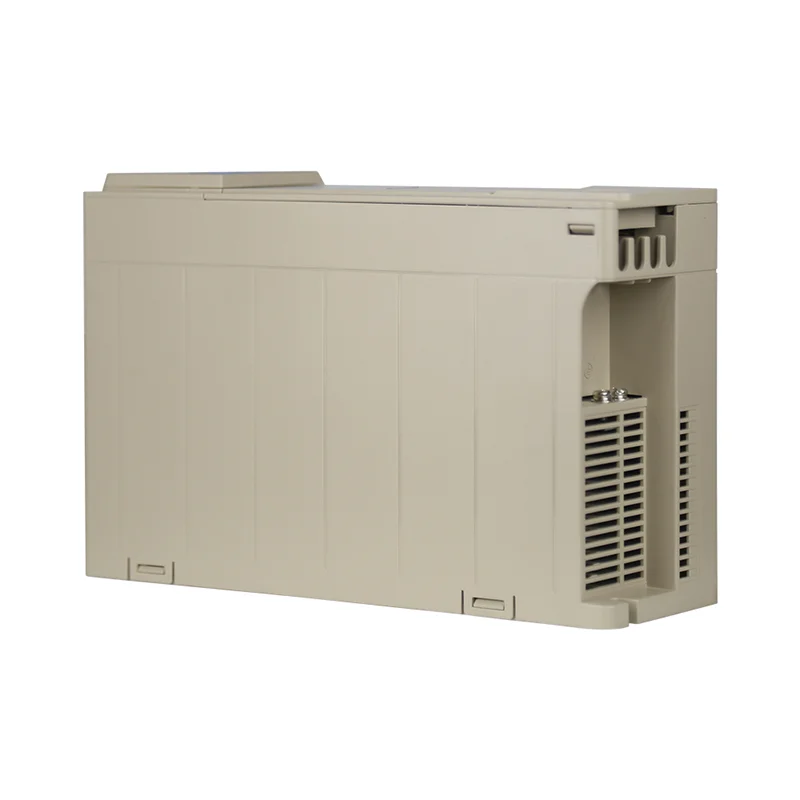
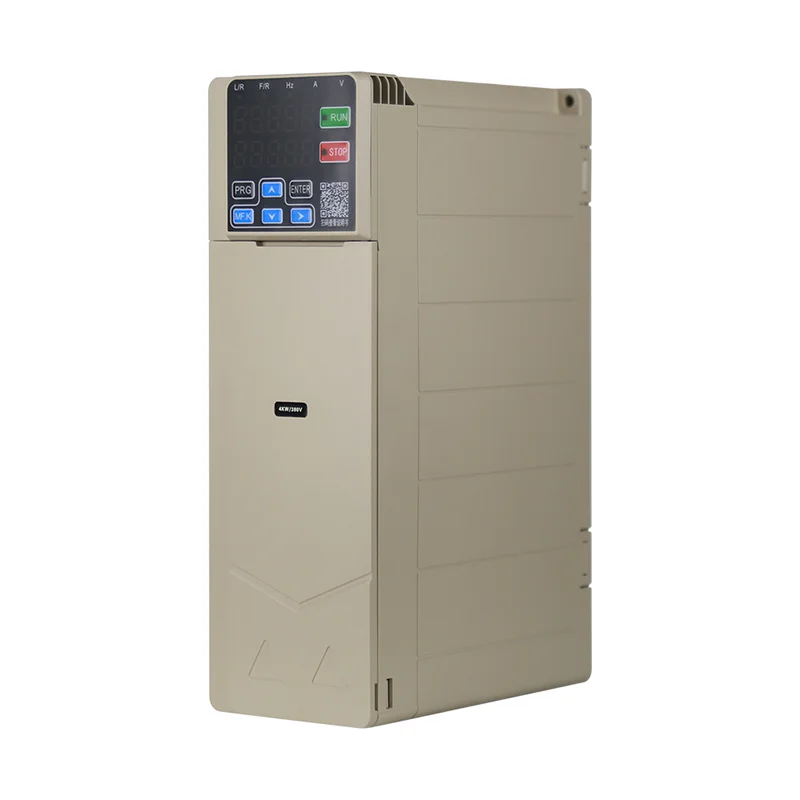
Matching LNC610 and LNC820 general-purpose drives — product fit by application
Public series tables still require a row match to your motor voltage, amps, and duty—not every advantage applies to every SKU.
When you want catalog-backed examples from this site, the LNC610 general-purpose VFD series page lists output frequency 0–500 Hz, V/F control and open-loop vector (SVC), standard Modbus, built-in PID, and notes the 610 series is not equipped with a braking unit by default—order braking hardware when deceleration energy matters.
The LNC820 general-purpose VFD series page lists the same 0–500 Hz class and SVC modes on public tables, with RS485 on overview copy and built-in braking unit availability on 0.75–22 kW models in series marketing—useful when regenerative deceleration is part of the advantage story.
| Public catalog theme | LNC610 (published page) | LNC820 (published series page) | Your project still verifies |
|---|---|---|---|
| Output frequency range | 0–500 Hz table | 0–500 Hz table | Minimum speed cooling, mechanical overspeed |
| Process loop | Built-in PID called out | PID per series table where listed | Sensor scaling, tuning time |
| Field integration | Modbus on LNC610 overview | RS485 on LNC820 overview | Register map, baud, faults |
| Deceleration / braking | Braking unit not default on 610 | Built-in braking unit on many kW rows | Inertia, duty cycle, resistor if needed |
 .
 .
Share motor nameplate photos, duty type (fan/pump vs constant torque), and whether you need braking or fieldbus when you ask the supplier to confirm LNC610 versus LNC820 inside the published kW bands.
Frequently Asked Questions
These answers stay at buyer level; commissioning steps live in the manual for the model you order.
Does a VFD always save energy?
No. Energy advantage is strongest on throttled fan and pump loads where speed reduction lowers power demand. Constant-torque processes may still justify a VFD for control and ramps without promising lower kWh at every operating point.
VFD vs soft starter — when is soft start enough?
When the motor always runs at line speed and you only need to limit inrush and mechanical shock at start, a soft starter may deliver enough advantage. Once speed must change during production, soft starters cannot replace VFD process benefits.
Can any motor run on a VFD?
No. Motor nameplate voltage, frequency, insulation class, and duty matter. Unknown old motors need engineering review; inverter-duty nameplates reduce compatibility guesswork.
What are the main disadvantages of a VFD?
Harmonics and EMC considerations, higher upfront cost and maintenance versus contactors, parameter complexity, and motor/cable compatibility work. Advantages shrink when those costs are ignored.
Do VFDs reduce wear on belts and gearboxes?
Controlled ramps can reduce shock compared with hard starts when acceleration times are tuned. They do not fix misalignment or overloaded mechanics.
How is this different from hoist-specific VFD benefits?
Hoist articles focus on lift/brake/inching duty. This guide covers general fan, pump, conveyor, and machinery advantages; read the hoist application guide when the load is an industrial electric motor hoist.
References
External references support benefit and scope claims in this guide.