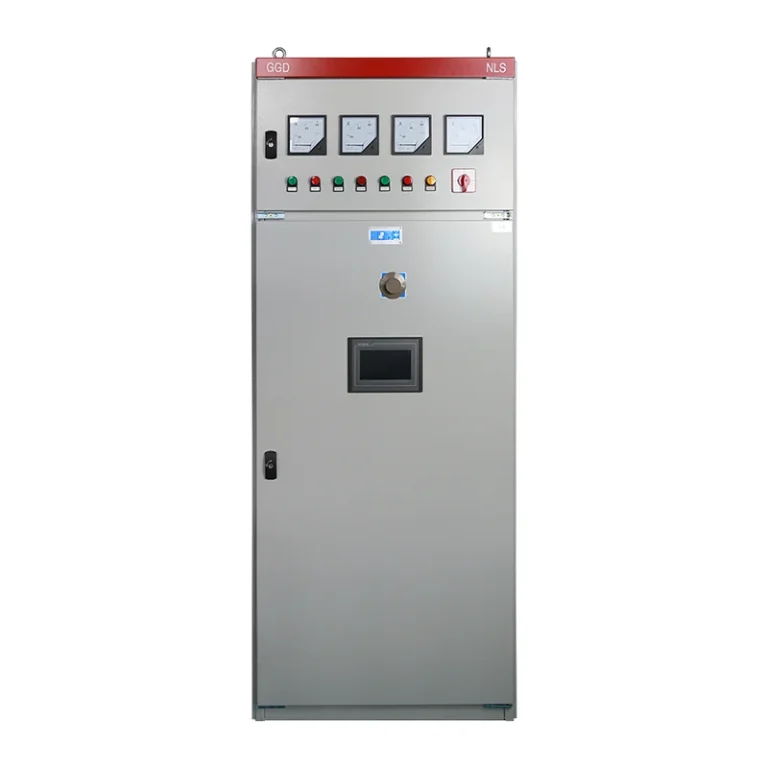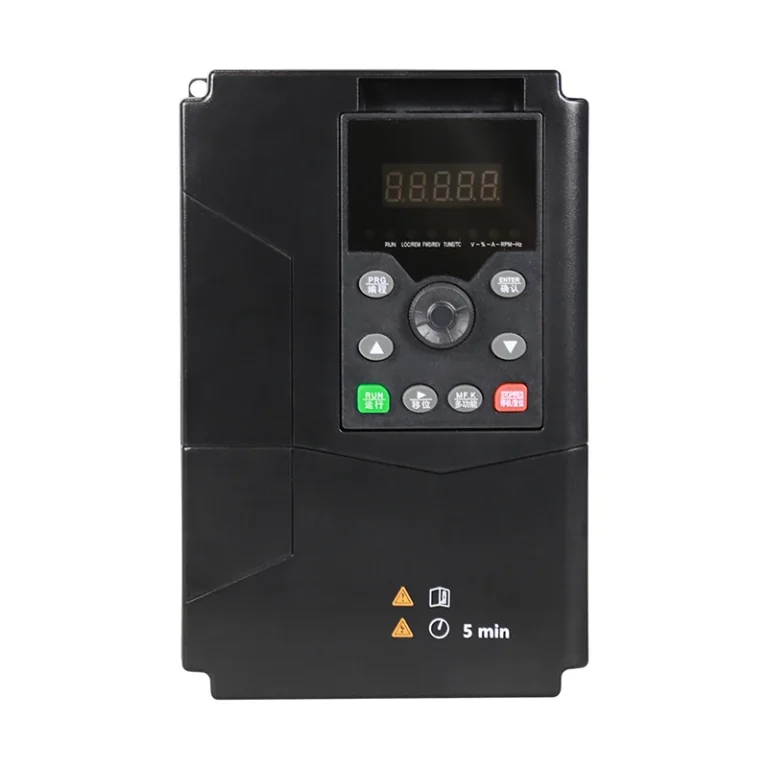

400 hz to 60hz frequency converter hardware is specialized power equipment that accepts a 400 Hz upstream bus, common on aircraft ground-power and some shipboard distribution, and delivers 60 Hz power at the load terminals your motor or cabinet nameplate expects. It is not the same procurement problem as converting between 50 Hz and 60 Hz utility grids, and a general-purpose variable frequency drive (VFD) listed for 50/60 Hz input is not automatically qualified for a 400 Hz feed.
Procurement teams sometimes shorten the RFQ string to 400 hz to 60 hz converter; the engineering requirement stays the same: prove input frequency rating on the exact model row before you tie it to a 400 Hz bus.
Start from the Variable Frequency Drive hub, then read the published 50 to 60 Hz frequency converter buyer guide and frequency converter from 60 Hz to 50 Hz pages for utility-mismatch workflows—this page covers 400 Hz source to 60 Hz load compatibility only.
Enclosure context for 400 Hz to 60 Hz planning: 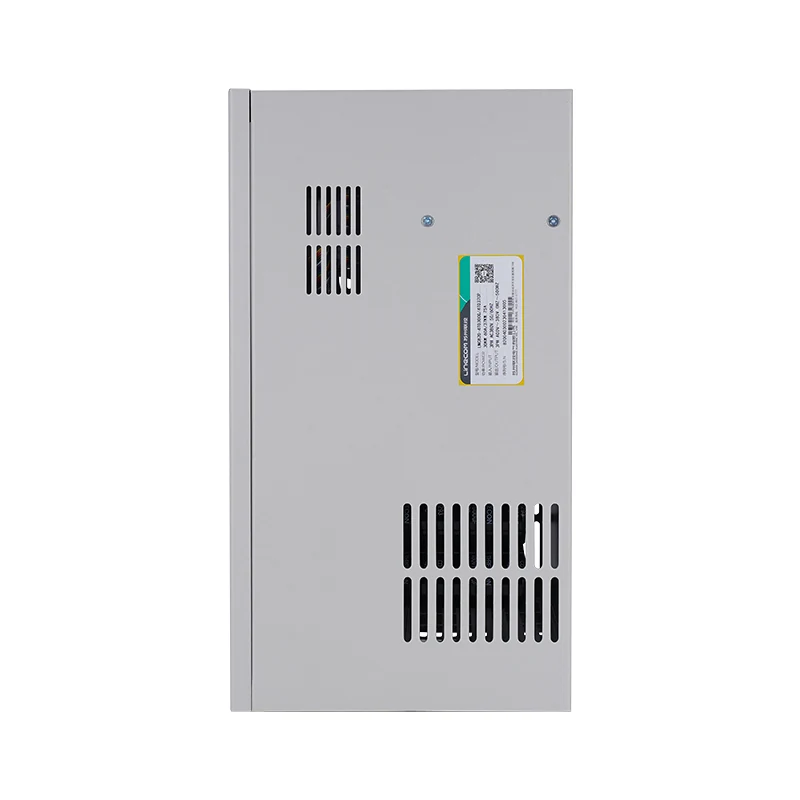 .
Why 400 Hz supply sources differ from 50 Hz versus 60 Hz mismatch
400 Hz distribution exists because aircraft and some marine systems target lighter magnetics and faster motor speeds at the cost of a specialized supply class. 50 Hz and 60 Hz utility grids, by contrast, dominate land-based industrial plants documented in encyclopedic summaries of utility frequency. Mixing the two conversation threads leads to quoting the wrong hardware category.
The buyer job here is source-frequency compatibility: verify what frequency your upstream bus actually presents before you talk about programming a motor output.
Aircraft ground power and shipboard buses buyers describe
Ground support and shipboard buyers often describe a 400 Hz feed that must energize 60 Hz motor loads, test sets, or small plant branches derived from avionics-style distribution. Wikipedia summaries of aircraft ground power note high-frequency mobile supplies used to start and service aircraft, distinct from factory mains at 50 Hz or 60 Hz.
Hangar teams track aircraft ground power frequency on GPU placards because a cart labeled for 400 Hz service must not be treated like a 60 Hz plant socket when you scope downstream conversion. Document voltage class, phase, kVA or current, and whether the load is a single motor branch or a mixed panel before you select converter topology.
Integrators who also maintain standard factory drives should keep two RFQ folders: one for 400 Hz bus work and another for land-based 50/60 Hz projects linked from the sibling blog posts above.
What a 400 Hz to 60 Hz frequency converter must prove on the data sheet
A qualified 400 Hz to 60 Hz frequency converter data sheet should state input frequency range that explicitly includes 400 Hz, output frequency held at 60 Hz (or adjustable toward 60 Hz within listed limits), voltage regulation behavior, and continuous current at your load power factor. Without an input-frequency line that includes 400 Hz, the device is not evidence for this application—even if marketing copy calls it a “frequency converter.”
Treat missing input frequency rating data as a hard stop in procurement: ask the vendor for published input frequency limits in writing before you place a purchase order.
Ask for continuous and peak current at 400 Hz input, not only nominal 60 Hz output amps, because rectifier and bus capacitor stress differs from 50/60 Hz industrial feeds even when output targets look similar on marketing sheets.
Why a general-purpose VFD is not automatically a 400 hz to 60hz frequency converter
Motor drives marketed as general-purpose VFDs are often specified to rectify 50/60 Hz industrial mains, then synthesize adjustable output for a motor. That chain does not automatically certify the front end for a 400 Hz bus. Community repair threads frequently confuse “frequency converter” language on motor circuits with aircraft-ground 400 Hz supplies—different input stress on rectifiers and DC bus capacitors.
Use precise RFQ language: you need 400 Hz input compatibility at the line terminals, not only 0–500 Hz output programming on a 60 Hz default input class.
Check published input-frequency ratings before any product sentence
Check published input-frequency ratings before any product sentence appears in your internal requisition. If the public page only documents 50/60 Hz three-phase input, that SKU is a 60 Hz or 50 Hz plant tool—not a 400 Hz feed converter—until the manufacturer publishes 400 Hz input data for the exact model row.
This gate protects you from installing a drive that might appear electrically “close enough” in kW but violates input-frequency limits on the nameplate data you can actually prove.
Planning 60 Hz load output when the upstream bus stays at 400 Hz
Planning 60 Hz load output when the upstream bus stays at 400 Hz requires a converter sized for continuous duty at your load kVA, inrush if motors start across the converter, and harmonics back to the 400 Hz source. Land-based 50/60 Hz articles describe programming motor output on standard utility feeds; they do not replace this input-class review.
Field teams should still capture motor nameplate 60 Hz data, full-load amps, and starting method, then confirm the 400 Hz source impedance and grounding practice with the facility owner.
| Check before quoting | 400 Hz dedicated converter | General-purpose VFD (typical 50/60 Hz input page) |
|---|---|---|
| Input frequency published | Must include 400 Hz | Often 50/60 Hz only |
| Output held at 60 Hz | Documented regulation | Motor programming, not same as bus conversion |
| Evidence for RFQ | Vendor data sheet | Public product input row |
Wiring documentation for converter planning packets: 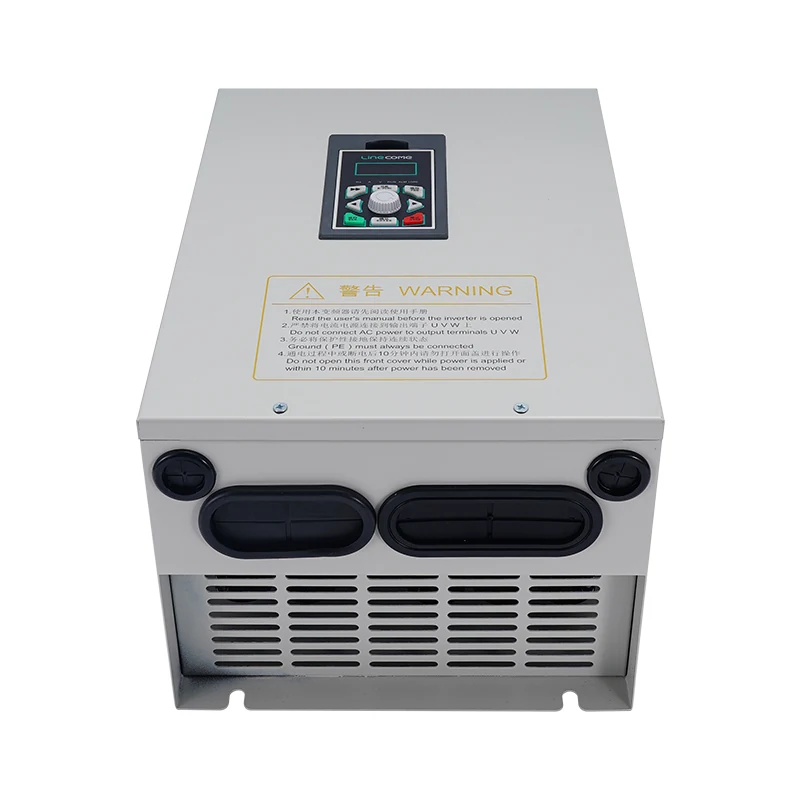 .
Additional catalog context for standard utility feeds: 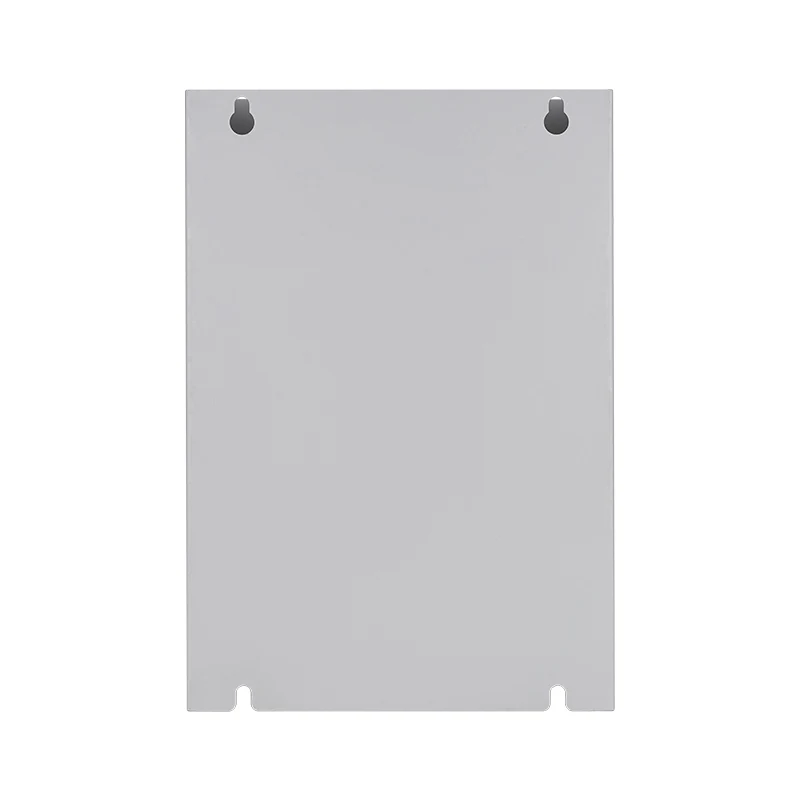 .
LNC610 catalog fit: why published 50/60 Hz input is the wrong tool on a 400 Hz feed
The following product-fit section applies only after you confirm input frequency on the public page—not as a shortcut around 400 Hz bus requirements.
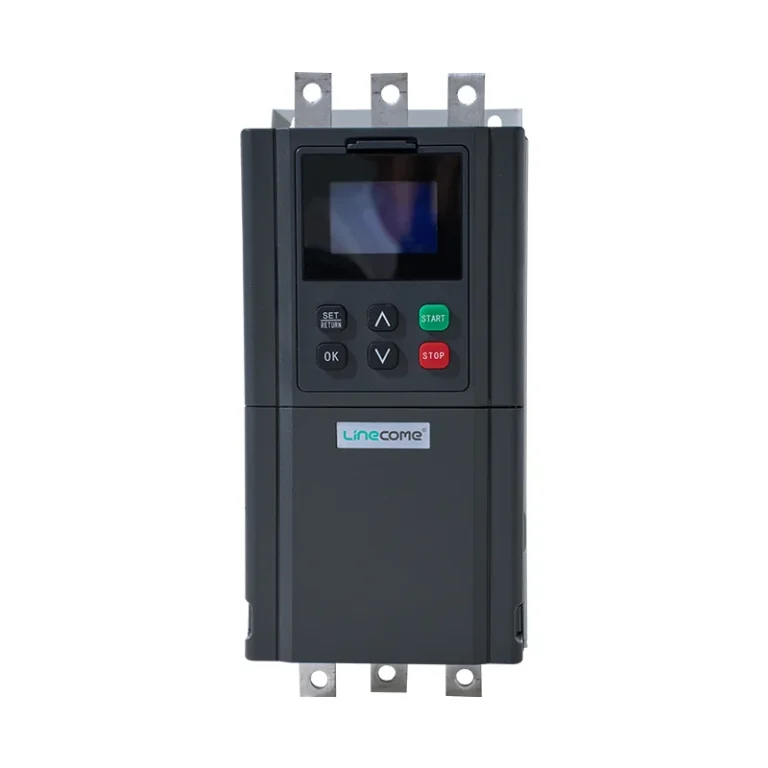
The public LNC610 general-purpose VFD series page documents three-phase input in a 50/60Hz class on the published specification table—appropriate for standard industrial mains, not for declaring 400 Hz input compatibility. For a 400 Hz upstream bus, that catalog row is the wrong tool until LINECOME publishes a model with 400 Hz input on the same page you cite.
If your real plant feed is 60 Hz utility and your motor needs 60 Hz at the terminals, an LNC610 or LNC820 general-purpose VFD series row may suit motor-branch duty after nameplate review—but that is a different question than 400 hz to 60hz frequency converter hardware on a 400 Hz source.
| Scenario | Published LNC610 input class | Fit conclusion |
|---|---|---|
| 400 Hz aircraft or shipboard bus → 60 Hz load | 50/60Hz three-phase input on public page | Do not use this catalog row as the 400 Hz feed converter |
| 60 Hz utility → 60 Hz motor branch | 50/60Hz input class on public page | May fit after motor nameplate and kW row match |
| Unknown upstream frequency | Not listed | Stop and measure bus frequency before quoting |
Size drawing for panel planning on approved 60 Hz utility projects: 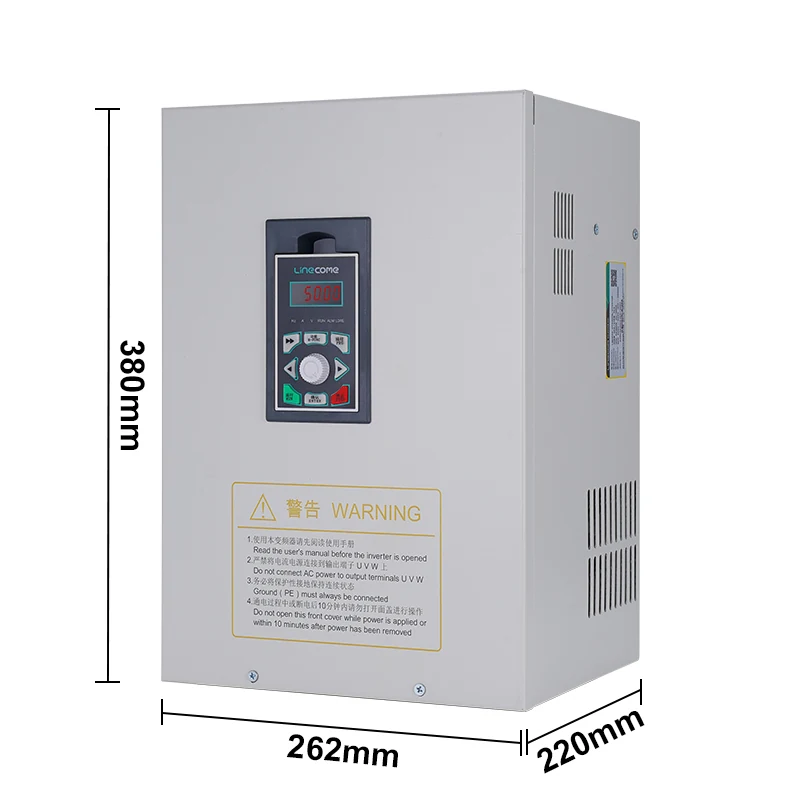 .
Important: Input-frequency limits are approval gates—do not infer 400 Hz tolerance from output frequency range alone on a 50/60 Hz input drive.
Frequently Asked Questions
Short answers below stay at selection and compatibility; they do not replace facility engineering on 400 Hz systems.
Can I use a standard VFD as a 400 hz to 60hz frequency converter?
Only if the specific model’s published input frequency range includes 400 Hz and the vendor documents 60 Hz output behavior for your load class. A 50/60 Hz input drive is not automatically qualified.
What is the difference between 400 Hz to 60 Hz and 50 Hz to 60 Hz conversion?
400 Hz to 60 Hz starts from an avionics or shipboard 400 Hz bus. 50 Hz to 60 Hz articles on this site address utility grid mismatch—see the linked 50 to 60 Hz and 60 Hz to 50 Hz guides for those jobs.
Does output frequency range prove 400 Hz input?
No. A wide programmed output range on a 50/60 Hz input drive does not certify 400 Hz rectifier front-end ratings.
What should I send a supplier for a 400 Hz source project?
Send measured bus frequency and voltage, phase, load kVA, motor nameplate 60 Hz data, starting method, and any airframe or vessel grounding constraints.
Are LNC610 drives rated for 400 Hz input?
The public LNC610 page lists 50/60Hz input on the specification table—not 400 Hz. Do not specify that row on a 400 Hz feed without different published data.
When is an LNC610 or LNC820 drive appropriate?
When the upstream supply is standard 50/60 Hz industrial mains and you are sizing a motor-branch VFD—not when the upstream bus is 400 Hz unless a future published row documents that input class.