
A single phase to 3 phase vfd (a single-phase to three-phase VFD) can run one three-phase induction motor from a single-phase shop feed when the drive’s input rating, output current, and wiring match that motor—but you must treat native single-phase models and derated three-phase-input frames as two different selection paths. This guide covers compatibility checks, derating headroom, NEC-oriented conductor planning references, RFQ fields, phase-loss risks, and when a rotary converter still wins. Confirm final ampacity and protection with the drive manual and your project engineer.
When Can a Single-Phase Supply Run a Three-Phase Motor Through a VFD?
Yes for one motor load: the drive rectifies and inverts to a three-phase output, so the motor still sees a rotating field. A variable frequency drive is meant to adjust speed and torque together, not to act as an open three-phase power strip for several machines. Keep one drive dedicated to one motor circuit unless the manufacturer documents a vfd phase converter style multi-motor arrangement, which is uncommon on general-purpose frames.
Shop retrofits usually start here because upgrading to utility three-phase service is slow and expensive. If your motor nameplate shows three-phase voltage and your panel only offers single-phase, the compatibility question is whether the drive input is rated for that single-phase feed and whether the output current covers the motor full-load amps at the duty you run.
Native Single-Phase Input Drives vs Derating a Three-Phase-Input VFD
Native single-phase input drives publish input voltage and rated input current on the nameplate or datasheet, and you should size from those columns first. Three-phase-input general-purpose drives can sometimes be fed from two line wires, but the rectifier and DC bus see higher ripple and current per leg, so manufacturers publish a lower continuous output or require a larger frame. Community maintainers frequently describe a 1 phase to 3 phase vfd derating band near 1.5–2× motor current for those frames, which matches treating the drive as undersized if you only read the three-phase HP label.
| Decision point | Native single-phase input VFD | Three-phase-input VFD on single-phase |
|---|---|---|
| Nameplate HP vs motor | Often 1:1 when amps align | Usually need next frame up |
| Input current column | Use published single-phase amps | Expect roughly 1.732× higher line current vs balanced three-phase |
| Typical integrator effort | Lower parameter work | Derating, choke, phase-loss disable per manual |
When the published table already lists “Single Phase 220V” alongside output amps, treat that as the manufacturer’s compatibility statement for small constant-torque loads. When the table is three-phase only, assume derating and accessory requirements until the manual proves otherwise.
How Much Input Derating and Output Headroom Do You Need?
Start from motor full-load amps and duty, not HP alone. For planning, single-phase line current runs about 1.732 times higher than balanced three-phase current for the same real power at the same line-to-line voltage, before you add drive losses. Many integrators combine that ratio with a derating factor near two when they must reuse a three-phase-input frame on single-phase, then compare the result to the drive’s rated input current column.
| Motor data you collect | Why it matters |
|---|---|
| Nameplate FLA and voltage | Sets minimum output current |
| Duty (fan/pump vs constant torque) | Chooses overload class |
| Available single-phase breaker and wire | Must carry drive input amps with margin |
For US panel planning, NEC Article 430.122 is the reference integrators use for conductor ampacity: input conductors sized at not less than 125% of the drive rated input current, and motor conductors at not less than 125% of motor full-load current, subject to the AHJ-adopted NEC edition in your jurisdiction. That ratio is a planning anchor, not a substitute for the project engineer of record.
Phase-Loss, DC-Bus, and Installation Risks Integrators Should Plan For
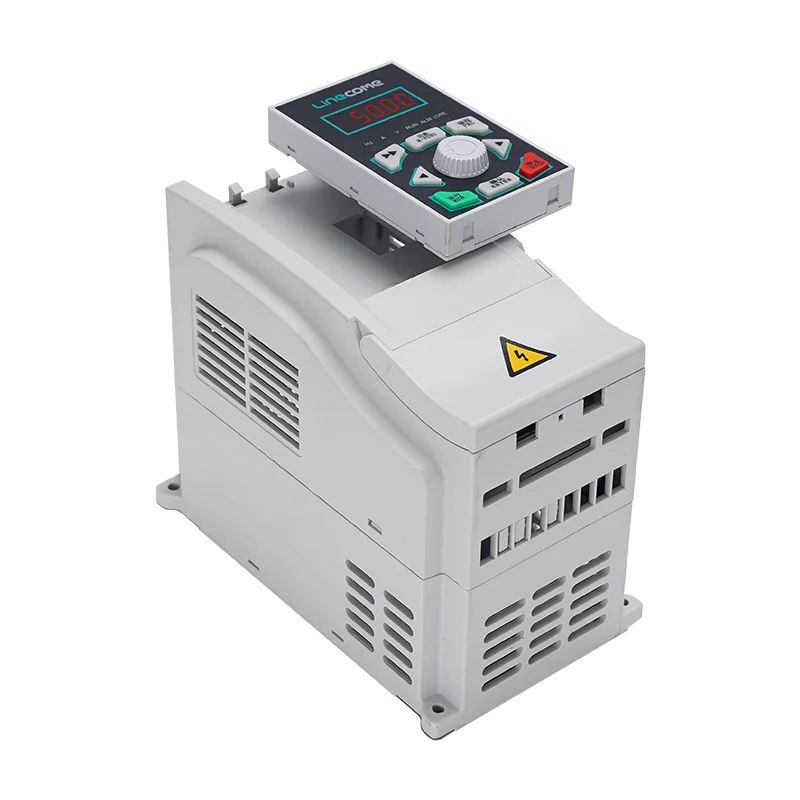
Phase-loss faults appear when the drive thinks an input phase disappeared or when the motor circuit opens while the inverter is still enabled. Field threads warn explicitly against opening a motor disconnect while the drive is running, because the resulting voltage spike can damage the motor insulation or the output transistors. Wire start/stop through drive digital inputs or safety-rated inputs such as Safe Torque Off where available, and coordinate any external contactors with the manual’s sequencing rules.
Single-phase feeds also increase harmonic content on the line side compared with balanced three-phase, which is why manuals often recommend a line reactor / DC choke when you derate a three-phase-input unit. Treat the line reactor / DC choke as part of the bill of materials whenever the manual ties it to single-phase input. Plan ventilation and filter clearance so higher ripple current does not coincide with clogged airflow on enclosed shop installs.
Important: Do not open a motor disconnect or contactor while the VFD is actively running the motor; use drive stop inputs instead to avoid phase-loss and voltage spike damage (Hobby-Machinist field discussion).
What to Put in an RFQ or Sizing Worksheet
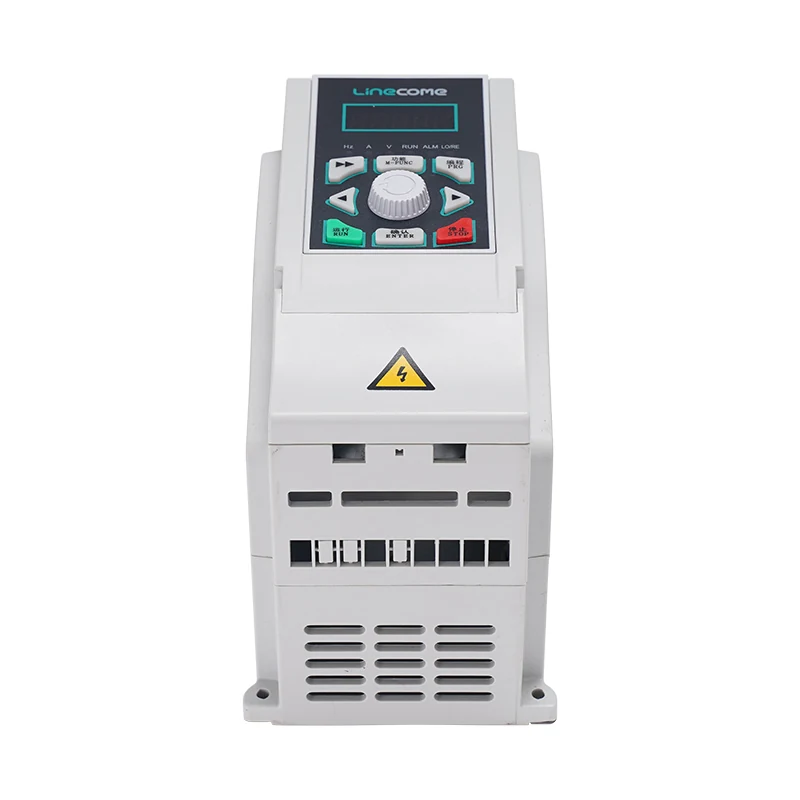
Send suppliers a compact worksheet so quotes return comparable frames. Include supply voltage and phase, available breaker ampacity, motor nameplate FLA, required output current, duty class, ambient temperature, control interface (terminal vs serial), and whether you need STO or braking resistor provisions. Ask explicitly whether the SKU is a native single-phase input model or a derated three-phase-input frame, and request the single-phase input current row from the rating table.
| RFQ field | Example entry |
|---|---|
| Line power | 240 V single-phase, 60 Hz |
| Motor | 2.2 kW three-phase, 9.6 A FLA |
| Required drive output | ≥ motor FLA at constant torque |
| Environment | Indoor, 40 °C max ambient |
VFD vs Rotary Phase Converter for Shop and OEM Retrofits
A VFD gives adjustable speed and controlled acceleration for one motor, while a rotary phase converter synthesizes a three-phase network for multiple fixed-speed loads. Choose the VFD when you need variable speed, soft starting, or one well-defined motor on single-phase supply. Choose a rotary converter when several three-phase machines must run together and none need inverter control, accepting the idle idler losses and sizing rules of that topology.
This is the practical vfd phase converter trade-off: the drive is not a substitute for a plant bus, but it can be the lowest-friction way to run a single three-phase machine from a house or light-industrial single-phase panel when amps and wiring discipline are respected.
Which LINECOME Drive Lines Fit Single-Phase-to-Three-Phase Jobs?
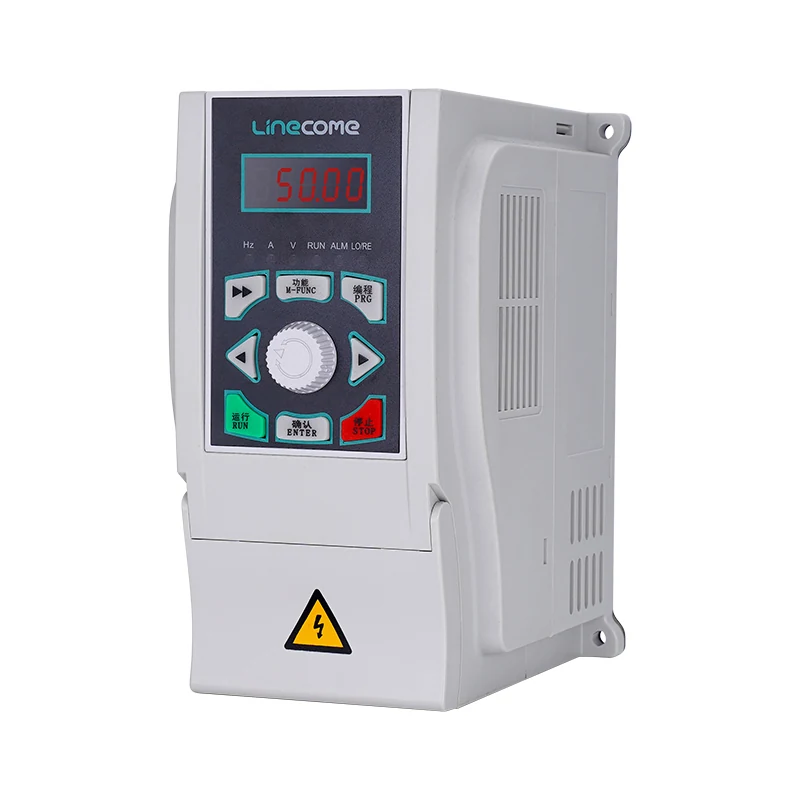
For native single-phase 220 V input in the published 0.75–2.2 kW range, the LNC820 series on the LNC820 single-phase input VFD series lists rated input and output amps on the product table—for example the LNC820-2S0007GB/2S0015PB row shows 8.2 A rated input at 0.75 kW, and the LNC820-2S0022GB/2S0040PB row shows 23 A rated input at 2.2 kW on single-phase 220 V. Match your motor FLA and duty to those columns, then confirm braking, EMC, and enclosure needs with the factory before you lock the BOM.
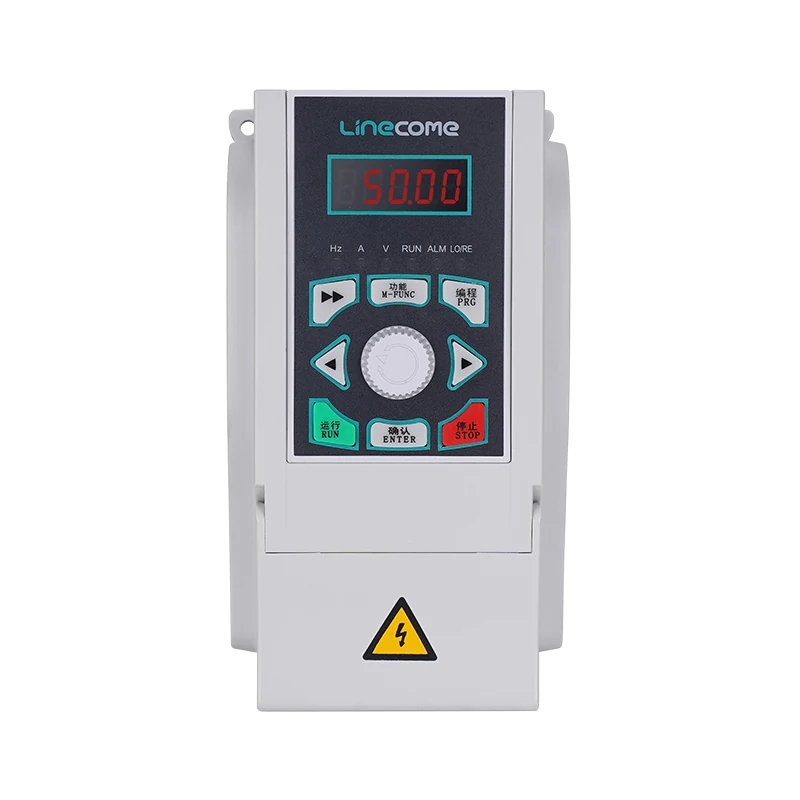
Pair this SKU path with the Variable Frequency Drive hub when you need adjacent soft starter or cabinet options for the same retrofit program.
FAQs
Can any three-phase-input VFD run on single-phase without derating?
No. A three-phase-input nameplate assumes balanced input current sharing; on single-phase you must use the manufacturer’s single-phase rating or apply documented derating and accessories. Native single-phase input models are the simpler path when they cover your motor amps.
Do I need a line reactor when I feed a VFD from single-phase?
Often yes when you derate a three-phase-input drive, because harmonic and DC-bus ripple increase on single-phase. Follow the manual for reactor or DC choke requirements rather than guessing from HP labels alone.
Is it safe to install a disconnect between the VFD and motor?
Only if it is interlocked so it cannot open under torque unless the application is a certified safety circuit. Normal practice is to stop via drive inputs; opening the motor circuit while the inverter is active risks phase-loss trips and voltage spikes.
How do I choose between a single-phase-fed VFD and upgrading to three-phase service?
If you need variable speed or one motor upgrade quickly, a correctly sized single-phase-fed VFD is usually cheaper than utility three-phase service. If you must run several fixed-speed machines simultaneously, compare against a rotary converter and panel capacity.
What happens if phase-loss protection trips on a single-phase-fed drive?
The drive may fault to protect the rectifier or detect an output interruption. Clear the fault only after verifying input fuses, motor wiring continuity, and that no contactor opened under load; then adjust phase-loss parameters only as the manual allows for intentional single-phase input.
When should I use a rotary phase converter instead of a VFD?
Use a rotary converter when multiple three-phase loads run at once without VFD control and when idle losses are acceptable. Stay with a VFD when speed control, soft start, or single-motor efficiency matters most.