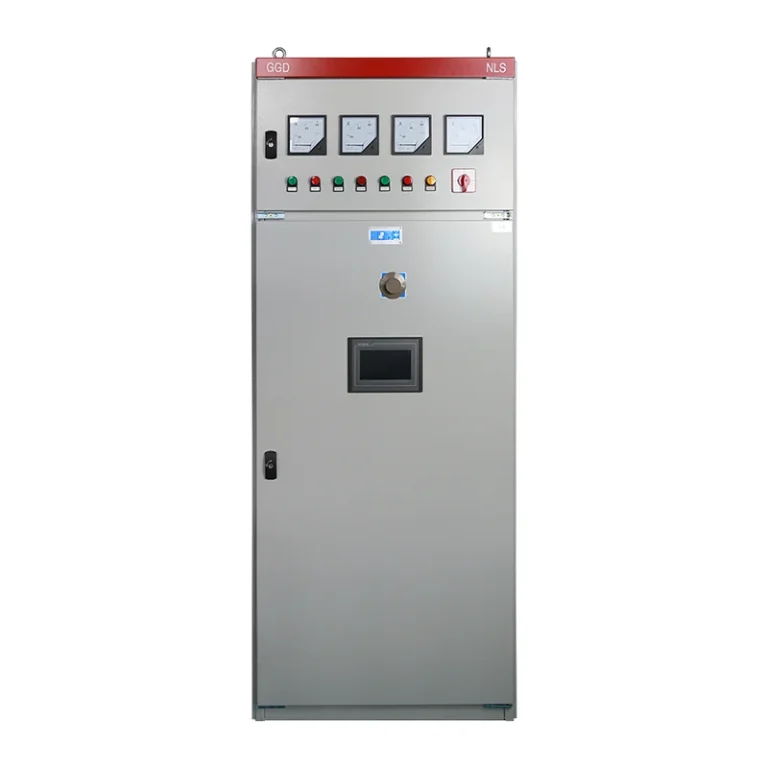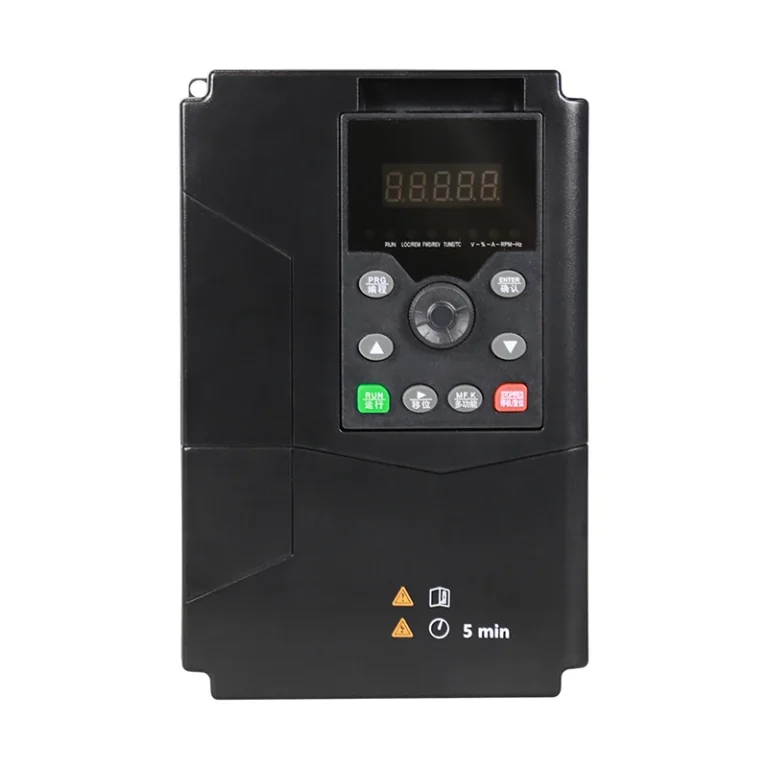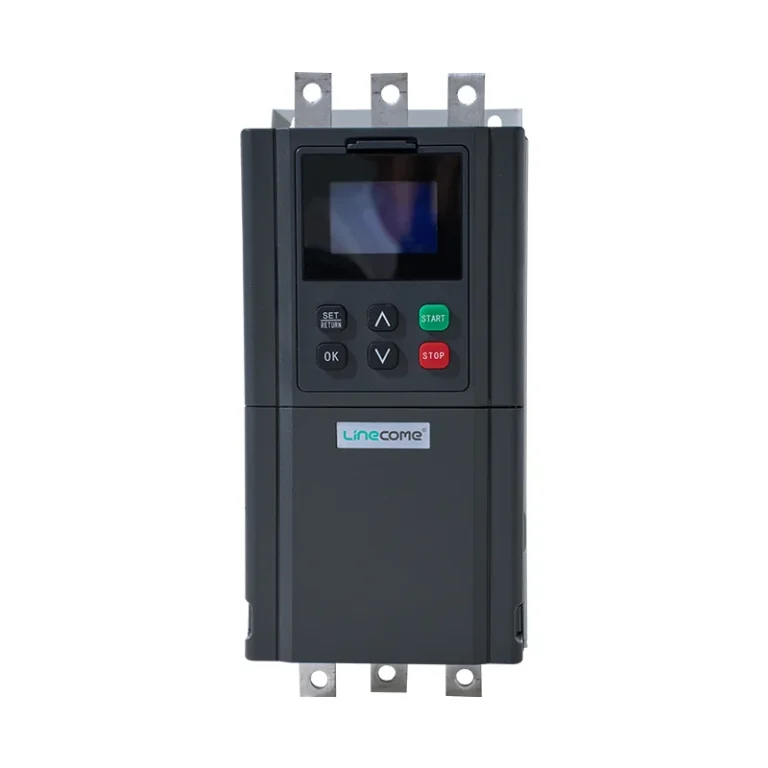

VFD altitude derating means checking whether a drive must deliver less continuous output current, or operate within different installation limits, at a higher site elevation. Use the manual for the exact drive, voltage class and frame size; do not apply a percentage copied from another product family. Review cooling, ambient temperature, switching frequency and supply-system restrictions together. A larger nominal kilowatt label alone does not establish suitability for the site. This guide helps buyers assemble the evidence needed before accepting a high-altitude motor-drive selection.
Identify the site conditions before selecting a rating
Record the actual installation elevation above mean sea level. A project city or regional description may not identify the elevation of a remote pumping station or mine. Put the elevation in the equipment schedule with units and the source of the value. Then identify whether the drive is installed indoors, outdoors, inside another enclosure or in a conditioned electrical room.
The relevant cooling-air temperature is the air reaching the equipment under the permitted installation arrangement, not automatically the weather report. Nearby equipment, recirculated exhaust and the enclosure’s heat-removal method can change that condition. Record the expected maximum operating environment and the assumptions behind it. Do not treat a cool morning commissioning test as evidence of year-round capacity.
Keep site elevation separate from temperature. Mountain locations can be cool, but low air density remains a distinct condition. Conversely, a conditioned room may improve temperature without changing ambient pressure. These distinctions help the supplier identify which published limits apply and whether additional engineering review is required.
Understand why high altitude changes the installation review
Air properties vary with pressure and temperature. The NASA atmosphere model explains the relationship between altitude, pressure and density. For an air-cooled electrical product, a change in the surrounding air can affect heat removal. The drive manufacturer’s validated limits translate that physical issue into installation conditions and usable current ratings.
A general atmosphere model explains the environmental change, but it does not provide a current correction curve for an industrial VFD. Equipment geometry, airflow and internal losses differ, so a general calculation cannot authorize operation outside a product manual.
Cooling is not the only question. The exact drive instructions may also specify maximum elevation, permitted supply arrangements or insulation-related restrictions. A current reduction cannot automatically resolve every electrical installation limit. Ask the supplier to identify these conditions separately and explain the approved solution for the stated site.
Obtain the correct manual, not just a family brochure
Match the quotation to a complete model code, supply voltage, frame size, enclosure arrangement and manual revision. Confirm the rated continuous output current and the applicable overload duty. The product’s motor-power label is a useful catalog reference, but the selection must satisfy the motor’s actual current and required operating cycle after all applicable restrictions are considered.
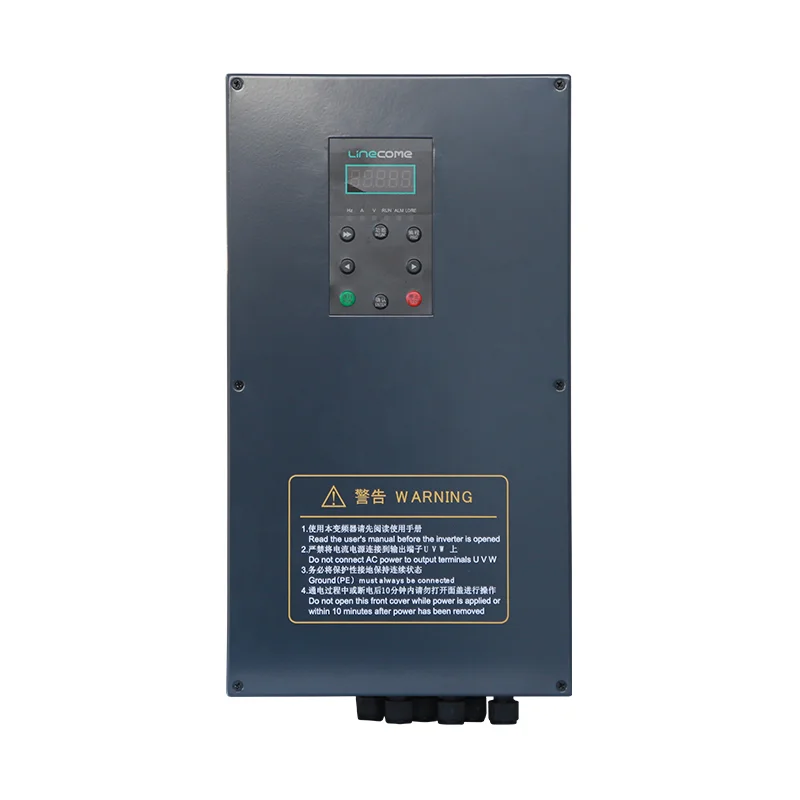
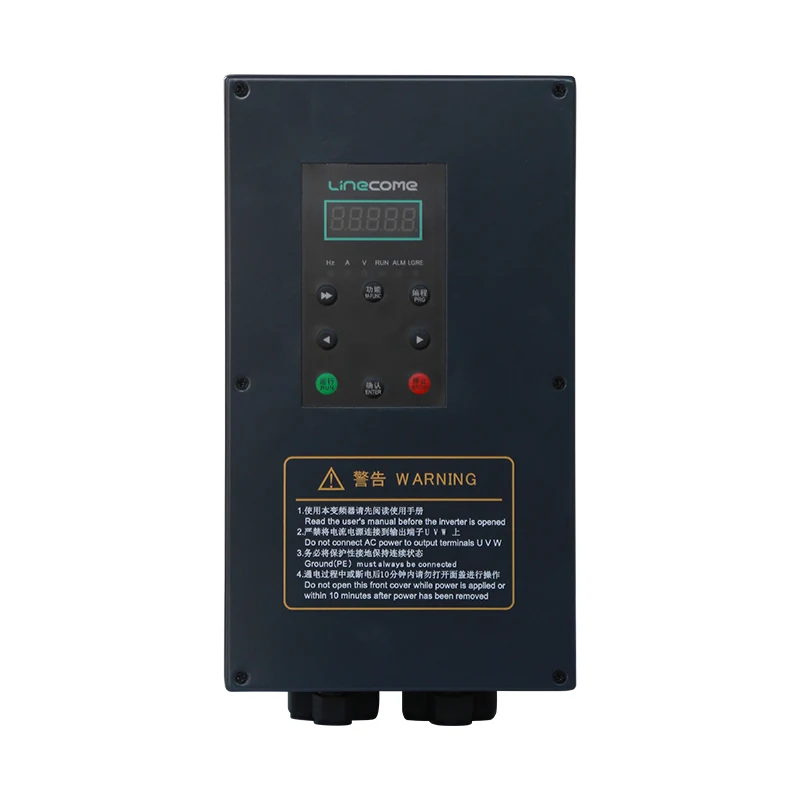
The LNC820D high-protection VFD product page is a starting point for identifying a product family. It does not by itself establish an approved altitude curve or a particular maximum elevation for every frame. Request the selected model’s instructions and written confirmation of the proposed installation. Do not infer altitude suitability from the enclosure appearance or the phrase high protection.
When reviewing other manufacturers’ manuals during preliminary research, note how they distinguish altitude, ambient temperature and switching-frequency limits. These are useful questions to ask, not values to copy. A rule valid for one enclosure type or voltage class may be inappropriate for another product even when their power labels are identical.
Build a usable-current calculation with traceable inputs
Start with the selected drive’s current rating for the required duty. List each applicable manufacturer correction and its source. Some instructions provide separate factors; others provide combined curves or specify a different selection method. Follow that method exactly. Do not multiply independent-looking percentages unless the instructions actually permit that combination.
An illustrative arithmetic example can show the decision without assigning a real product limit. Suppose a hypothetical manual explicitly permits multiplying an altitude factor of 0.90 and an ambient factor of 0.95 against a 100 A base rating. The resulting continuous capacity is 100 × 0.90 × 0.95 = 85.5 A. All three input values here are invented for explanation. They are not LNC820D specifications or an industry-wide derating formula.
If the application’s required continuous current is 88 A, that hypothetical 85.5 A result is insufficient. Choosing the next catalog size still requires repeating the review because the larger frame may have different conditions. Overload capability, duration and recovery interval also need separate verification; a continuous-current calculation alone does not prove that the drive can accelerate or handle the specified transient duty.
State the units and operating basis next to every value. Record whether the required current comes from the motor nameplate, an approved load analysis or verified operating measurements. If the application changes from a lightly loaded fan to a more demanding process, revisit the selection rather than assuming the previous margin remains available.
Review the enclosure and airflow as part of the selection
Clearance, mounting orientation and airflow paths must match the selected equipment instructions. A fan that turns is not proof that the required heat removal exists. Check the inlet and outlet paths, filters, recirculation risk and the effects of adjacent heat sources. If the drive is mounted inside a cabinet, the cabinet thermal design must support the conditions used in the drive selection.
A higher-protection enclosure can change how heat reaches the surrounding air. Do not assume that the same correction curve applies to an open chassis and an enclosed unit. Likewise, adding an external fan does not automatically restore the manufacturer’s full rating at altitude. Any compensating cooling arrangement needs an approved design and documented operating limits.
The related cabinet cooling-fan maintenance guide helps define inspection work after installation. Maintenance preserves the accepted airflow condition; it does not create permission to exceed the product’s altitude or temperature limit. Include filter access and replacement arrangements in the layout review so that the assumed condition can be maintained over time.
Check switching frequency and motor duty together
A project may request quieter operation by changing the drive’s switching frequency. That setting can change drive losses and permitted current, depending on the equipment design. Review the actual intended setting with the supplier during selection. A rating accepted at one setting should not silently be treated as valid after commissioning changes it.
The carrier-frequency selection guide covers the noise and heat tradeoff in more detail. For the altitude review, the important task is to preserve the setting associated with the accepted capacity calculation. If operators or service personnel can change it, record the permitted range and the conditions that require another review.
The motor also needs its own environmental and duty assessment. A suitable drive does not establish that the motor’s cooling, insulation or mechanical load is acceptable at the site. Ask for motor-manufacturer confirmation where required. Keep drive approval, motor approval and cabinet thermal acceptance as separate pieces of evidence in the same project package.
Use a review table to expose missing evidence
The following table is a purchase and design-review checklist. It provides qualitative decision points rather than universal altitude thresholds. The exact manual and supplier confirmation determine the limits for the selected equipment.
| Review item | Evidence required | Decision if evidence is missing |
|---|---|---|
| Installation elevation | Site value, units and location reference | Hold the environmental selection open |
| Exact drive identity | Model code, voltage class, frame and manual revision | Request a complete technical offer |
| Continuous output capability | Applicable correction method and current calculation | Do not accept the power label alone |
| Transient load duty | Required current, duration and repetition | Obtain a duty-specific selection check |
| Cooling-air temperature | Cabinet or room design assumptions | Review the thermal arrangement |
| Switching frequency | Intended setting and applicable current limits | Recheck after the setting is fixed |
| Electrical installation restrictions | Permitted elevation and supply arrangement | Seek an approved installation solution |
| Motor suitability | Motor environmental and duty confirmation | Keep motor acceptance separate |
| Maintenance condition | Accessible airflow paths and service plan | Revise layout or maintenance provisions |
A missing item is an open design question, not a reason to guess a conservative percentage. Record who must supply the answer and which selection decision depends on it. This prevents a provisional assumption from becoming an unnoticed purchase requirement.
Plan commissioning to test the accepted conditions
Commissioning should verify the installed model, configuration, clearances and cooling arrangement against the approved package. Record ambient conditions, motor load, output current and available temperature indications under the agreed test duty. Use competent personnel and suitable measurement methods; the HSE electrical equipment guidance provides the general safety context for work on electrical systems.
A short successful run cannot validate every seasonal or overload condition. State the test duration, load and environment, and identify conditions not represented. Where acceptance depends on a later hot-weather or process-duty test, keep that requirement visible. Do not infer unused current margin solely from the absence of a fault during an easy test.
Retain the final capacity calculation, supplier confirmation, configuration backup and commissioning report together. Record subsequent changes to cooling, load or switching frequency. The general industrial VFD guide explains the drive’s role in the system; this environmental record establishes why the selected unit was considered suitable for a particular elevated site.
Further learning: what the drive controls
The educational video below introduces VFD operation and motor-speed control. It provides context for the output-current and duty discussion; it does not supply an altitude correction or replace the selected drive’s installation instructions.
Video by RealPars. Watch What is a VFD? (Variable Frequency Drive) on YouTube.
Frequently asked questions
Can I use the same altitude percentage for every VFD?
No. Limits can depend on model, voltage class, frame, enclosure and operating conditions. Use the exact instructions and the manufacturer’s stated method for combining altitude with other restrictions.
Does a cool mountain environment eliminate the need for altitude review?
No. Temperature and altitude are separate inputs. Cooler air may help one aspect of thermal operation, but it does not automatically remove pressure-related or electrical installation restrictions. Obtain approval for the actual combined conditions.
Is selecting a larger kilowatt rating enough?
No. Verify corrected continuous current, overload duty, cooling arrangement and electrical restrictions for the proposed larger model. Also confirm the motor and cabinet suitability; a bigger power label does not answer those questions.