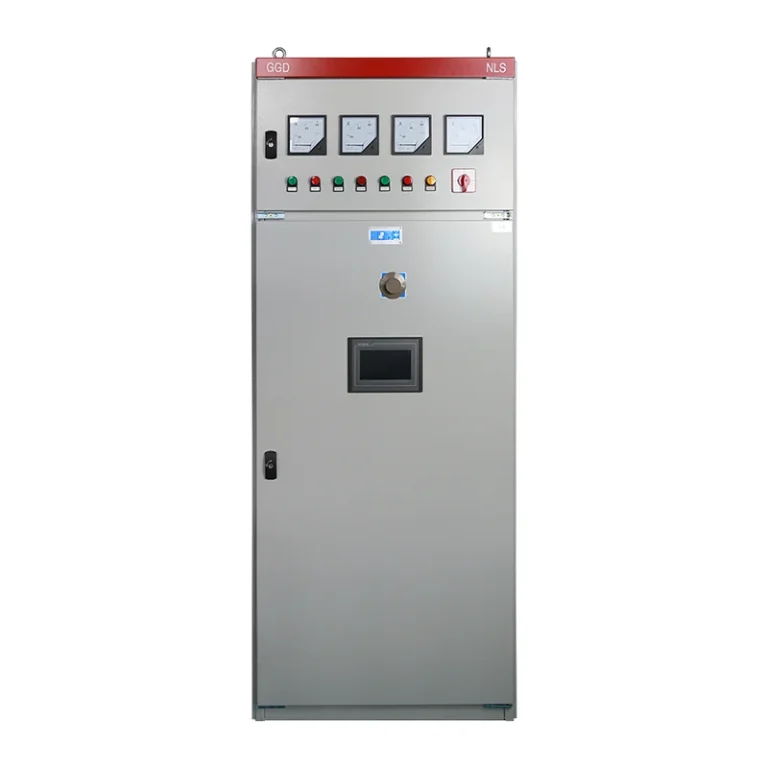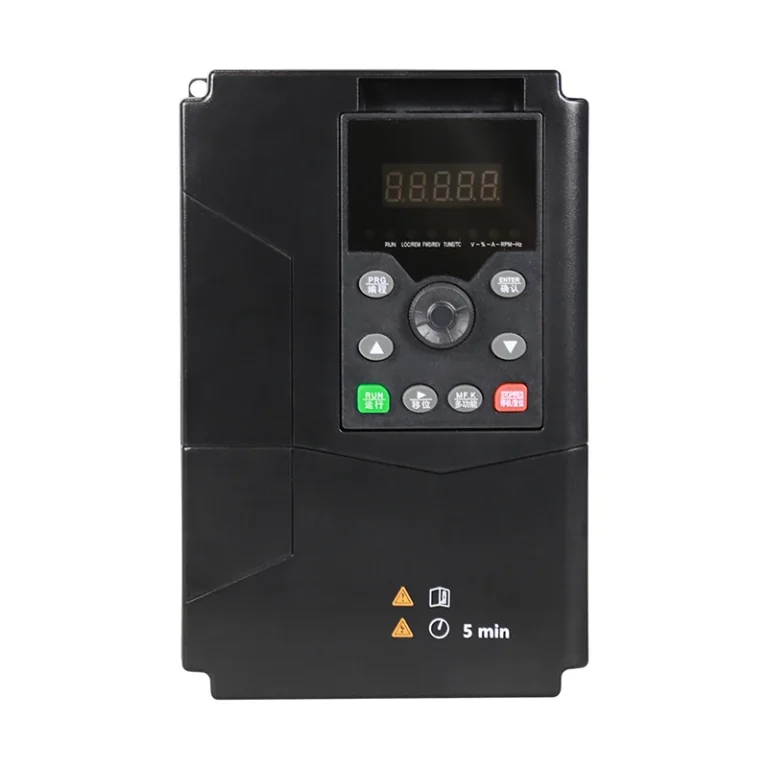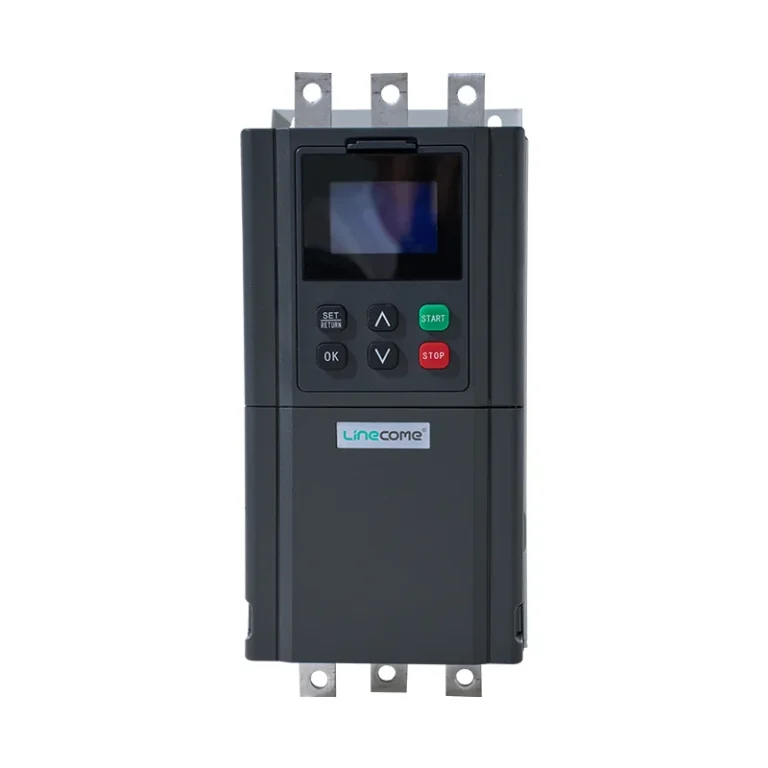

The main types of vfd buyers discuss are not interchangeable labels on one box—they usually mean control mode (V/f versus vector), performance class (general-purpose versus high-performance), and supply hardware (single-phase versus three-phase input).
A variable frequency drive always converts and controls power, but the type you specify changes torque behavior at low speed, the commissioning data you must enter, and whether your shop feed can power the rectifier without derating.
Use the Variable Frequency Drive hub to compare families after you decide which type column matters for your application. For inverter-stage detail, see how a VFD works; for motor amp columns after install, see 3 phase motor amps after VFD.
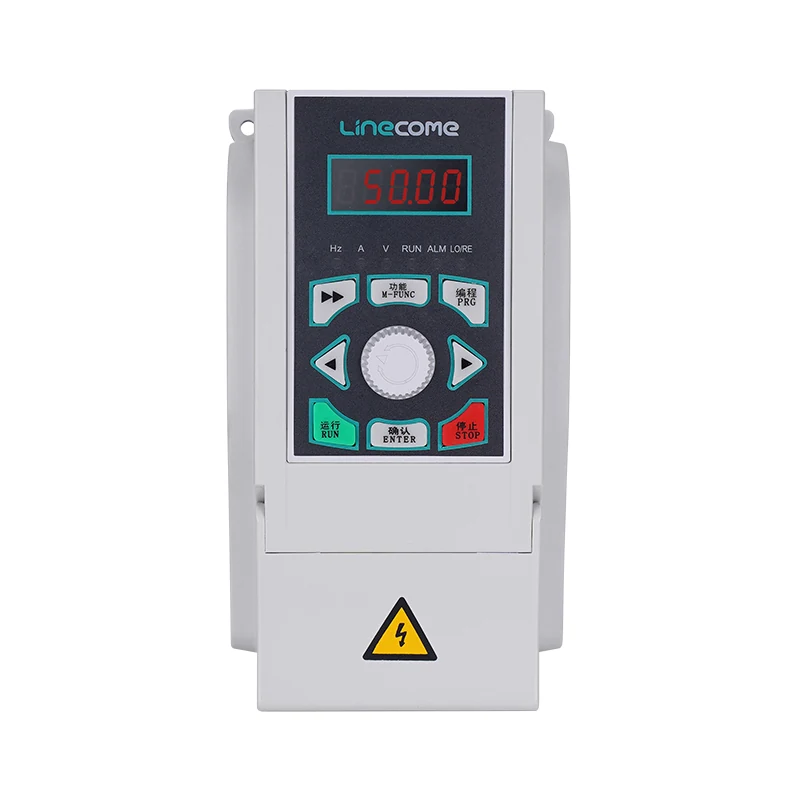 .
Why buyers mean several different “types of VFD”
Marketing pages reuse “VFD type” for control algorithms, enclosure classes, and input voltage classes in the same brochure.
Procurement may ask for a vector VFD when the real need is better low-speed torque on a conveyor, while engineering meant a three-phase input drive for a balanced plant feed. Separating those axes early prevents RFQs from comparing drives that solve different problems.
V/f control type — when Volts-per-Hertz control is enough
V/f control holds a simple voltage-to-frequency ratio so the motor sees roughly constant flux across a speed range.
Encyclopedic descriptions of variable frequency drives note V/f (Volts per Hertz) as the baseline method for many general-purpose applications where precise torque at near-zero speed is not required. Fans, pumps, and some constant-speed-ratio machines often run satisfactorily on V/f when minimum speed stays above the point where cooling or torque collapse becomes an issue.
| V/f fit signal | Often acceptable on V/f | Push toward vector or sizing review |
|---|---|---|
| Speed range mostly above roughly 30–40% base speed | Yes for many fan/pump loads | Low-speed holding torque |
| Torque needed near standstill | Review carefully | Open-loop vector or encoder |
| Simple keypad-only commissioning | Attractive | High dynamic response |
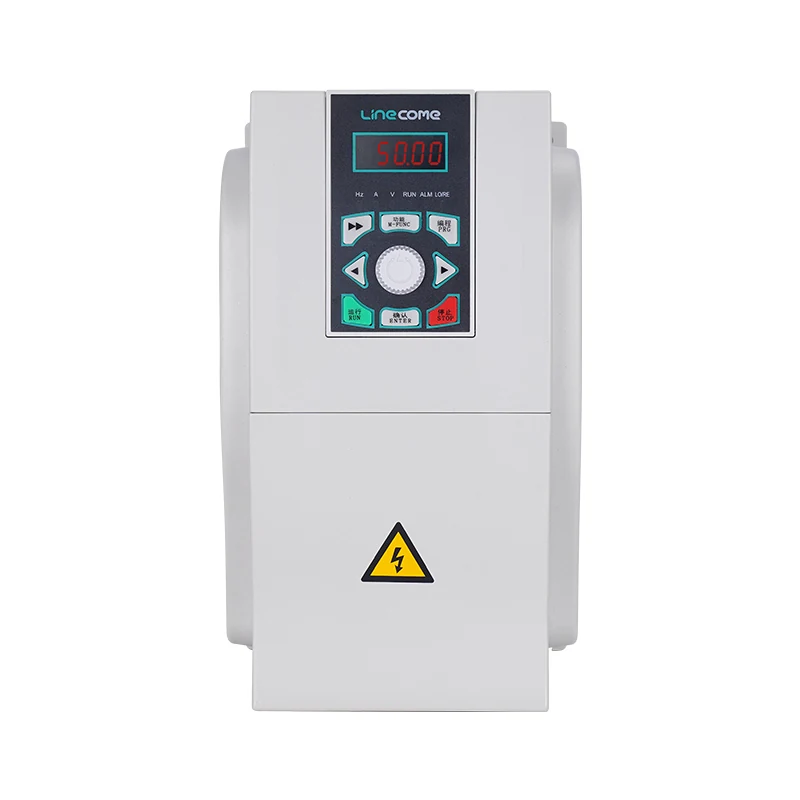 .
Vector control types: open-loop sensorless versus closed-loop with encoder
Vector control attempts to decouple torque and flux so the drive can produce torque at lower speeds than basic V/f—central to vector vfd RFQs when vfd control modes beyond V/f are specified.
Open-loop vector (sometimes called sensorless vector control) uses a motor model and measured currents—no encoder on the shaft. Closed-loop vector adds a speed or position feedback device and moves toward servo-like performance at the cost of wiring, tuning, and cost.
Public LNC610 and LNC820 series pages on this site list both V/F control and open-loop vector (SVC) modes on their specification tables—illustrating how general-purpose hardware spans two control types in one product family rather than requiring a completely different cabinet for every vector keyword in an RFQ.
| Control type | Feedback | Typical buyer intent |
|---|---|---|
| V/f | None | Simple adjustable speed |
| Open-loop vector | Internal model | Better low-speed torque without encoder |
| Closed-loop vector / servo | Encoder | Position or tight speed regulation |
General-purpose drives versus high-performance and servo-grade boundaries
General-purpose VFDs target pumps, fans, conveyors, and mixers with standardized keypads, I/O, and overload curves.
High-performance drives and servo systems add faster torque loops, tighter speed bands, and safety functions aimed at line synchronization or positioning—not every conveyor needs that class. Community Q&A around VFD tags often warns against specifying “high performance” when a catalog general-purpose row already includes the needed control mode.
When a line must hold speed within a tight band while material tension changes, buyers move from general-purpose types toward performance-class hardware with feedback and faster loop times. That step is separate from merely enabling open-loop vector on an LNC610 or LNC820 row, which already expands low-speed torque compared with V/f on the same chassis.
High-protection or heavy-duty enclosures (washdown, dust, longer overload) are another “type” axis buyers mix with control mode—environmental class is not the same as vector versus V/f. A washdown label does not automatically imply vector control, and a vector-capable keypad drive is not automatically washdown-ready without the correct enclosure type on the datasheet.
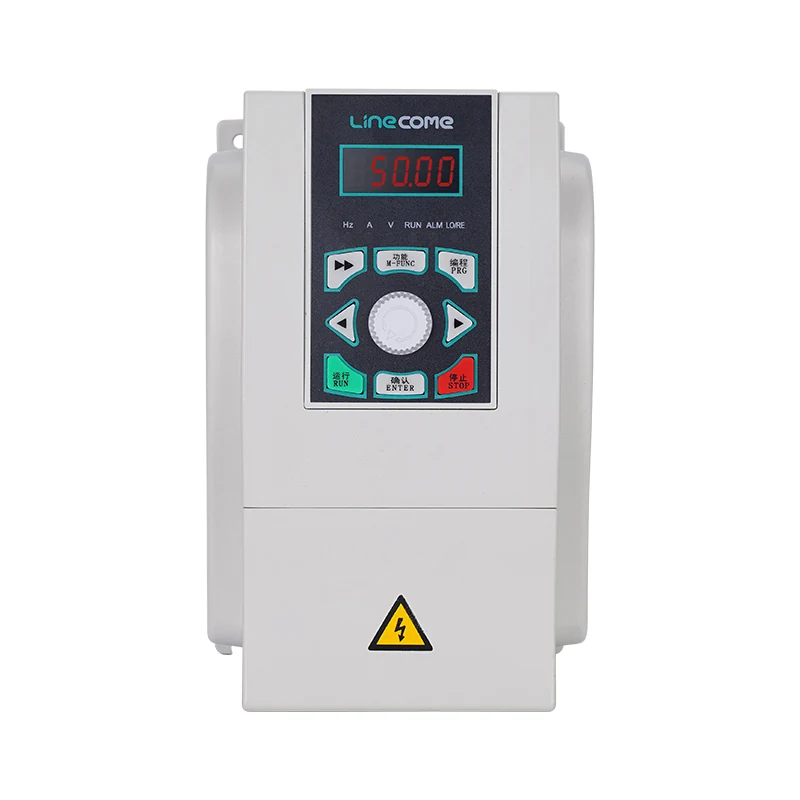 .
Single-phase input versus three-phase input VFD hardware types
Input type describes how the rectifier is fed, not how many phases the motor has.
Single-phase input drives exist for shop retrofits where only split-phase or single-phase utility is available; three-phase input drives expect balanced three-phase feeds and typically offer higher power classes with simpler input current sharing. A single-phase input VFD type is therefore a supply-side label: the rectifier is built and rated for one- or two-wire utility feeds, while the inverter still outputs three-phase motor power when the catalog row says so.
The same motor can be three-phase while the drive input is single-phase on catalog rows that document both columns—match the input type row to your supply, not only motor nameplate voltage. Export projects sometimes specify three-phase input hardware even when the motor is small, because the plant feed is already three-phase and derating a single-phase-input frame would waste panel space.
Integrators document measured voltage, phase count, and whether future expansion needs a higher kW row on the same input class before they freeze the types of vfd column in the BOM.
| Supply available | Hardware type to shortlist | Planning note |
|---|---|---|
| Three-phase plant feed | Three-phase input VFD | Use manual input current column |
| Single-phase shop feed | Native single-phase input or derated three-phase input frame | Confirm derating rules in manual |
| Mixed legacy panel | Document measured voltage class | Input type ≠ motor phase count |
Regenerative, harmonic-mitigated, and specialty drive types in RFQs
Regenerative or common-DC-bus systems handle braking energy differently from standard drives with resistor braking or no braking module.
Active front-end and low-harmonic types address supply distortion and regeneration—common in elevator, crane, or grid-sensitive specs. Those are distinct types from V/f versus vector on a general-purpose keypad drive. Treat them as separate RFQ lines with utility and local electrical authority context, not as automatic upgrades on every fan motor.
Important: Specialty types solve supply or regeneration problems general-purpose drives are not cataloged to fix—confirm braking, harmonics, and grid code expectations before you pay for a regenerative class drive on a simple pump retrofit.
 .
Matching LNC610, LNC820, and LNC820D lines — product fit by VFD type
Catalog lines map cleanly to control-mode and duty-type conversations when you read the public tables instead of one marketing adjective.
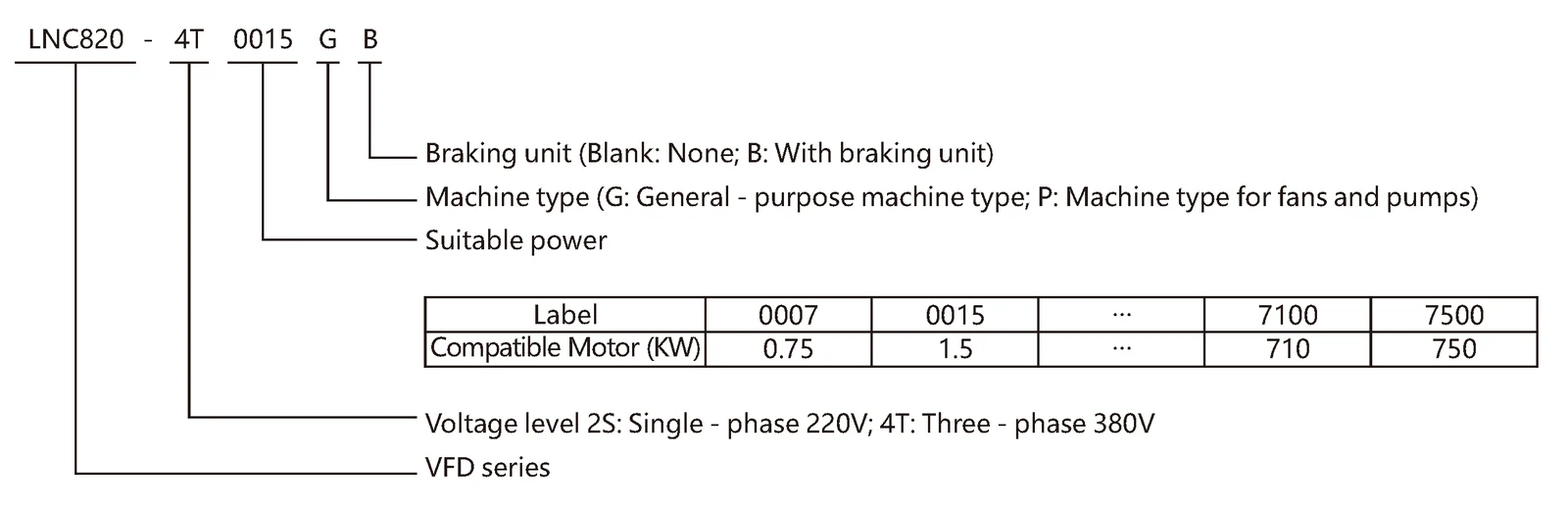
The LNC610 general-purpose VFD series page documents V/F and open-loop vector (SVC), built-in PID, and Modbus on series marketing— a general-purpose type with both baseline and sensorless vector control modes on the same hardware class.
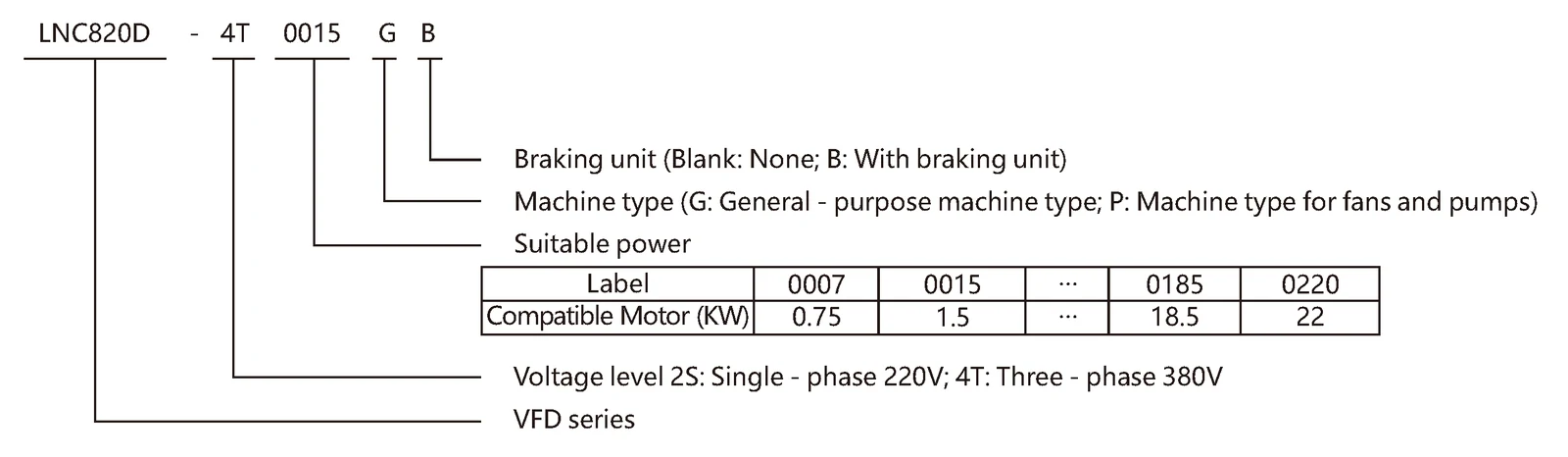
The LNC820 general-purpose VFD series page adds RS485 on overview copy, built-in braking options on many kW rows, and native single-phase input models in smaller kW bands—useful when the type decision includes input hardware and deceleration energy, not just V/f versus vector.
The LNC820D high-protection VFD family targets heavier environmental and duty expectations compared with standard LNC820 rows—shortlist it when the type conversation is washdown, dust, or ruggedized fan/pump duty rather than a basic keypad drive.
| Type question | LNC610 | LNC820 | LNC820D |
|---|---|---|---|
| Control modes on public tables | V/F and SVC | V/F and SVC | High-protection series positioning |
| Fieldbus on overview | Modbus | RS485 | Confirm project comms separately |
| Input class options | Three-phase focus on table | Single- and three-phase rows in band | Heavier-duty environmental story |
 .
Share speed range, torque at low speed, supply phase, and environmental class when you ask the factory to confirm LNC610 versus LNC820 versus LNC820D inside published kW bands.
Frequently Asked Questions
Answers stay at selection level; tuning steps remain in the manual for the drive type you order.
Is V/f the same as a “standard” VFD?
In buyer language, yes—many general-purpose drives default to V/f and optionally enable vector modes from the same hardware.
Do I need vector control for every conveyor?
Not always. Evaluate low-speed torque and holding requirements; many conveyors run on V/f or open-loop vector within general-purpose tables.
What is the difference between single-phase and three-phase VFD types?
It refers to the input supply the rectifier sees. Motor output can still be three-phase on either input class when the catalog row supports it.
When should I specify a regenerative VFD type?
When braking energy or supply harmonics require regeneration or active front-end hardware—not for every deceleration on a small fan.
Can one drive switch between V/f and vector?
Many general-purpose families allow mode selection in parameters when the motor data is entered—verify on the specific series table before you assume automatic switching.
How is this different from a “how VFD works” article?
Mechanism articles explain power stages. This page classifies types buyers specify—control mode, performance class, input hardware, and specialty regenerative/harmonic types.
Bring a one-line duty summary (speed range, torque at low speed, supply phase, environment) to the factory when you compare LNC610, LNC820, and LNC820D rows so the type conversation stays tied to published tables instead of generic brochures. That habit prevents mismatched types of vfd columns from reaching the shop floor.