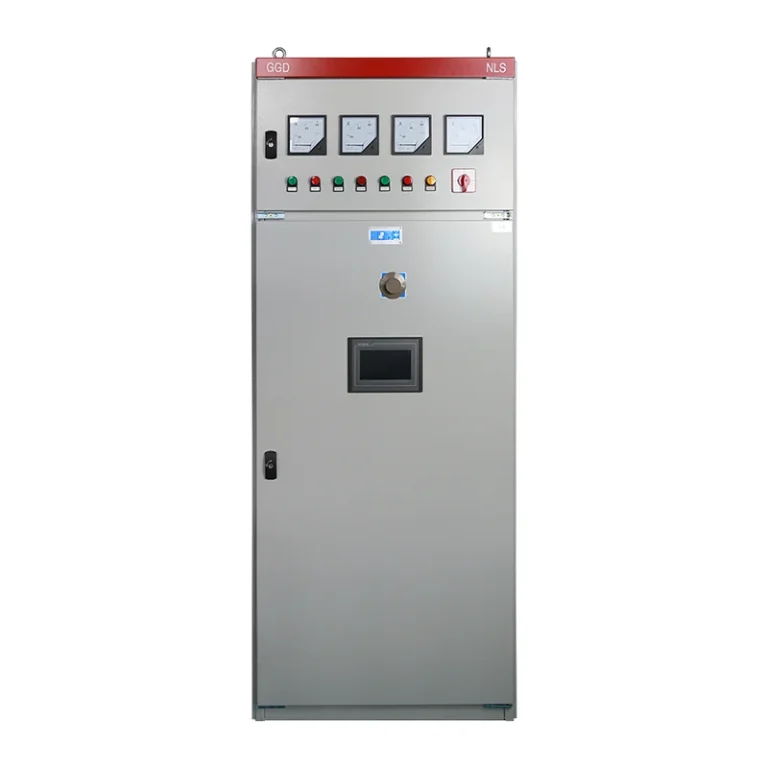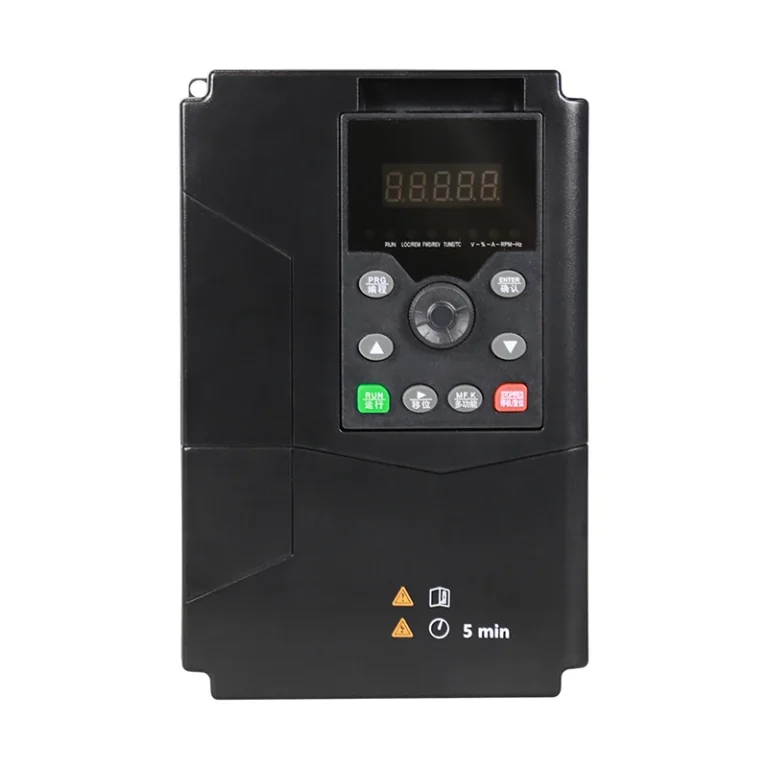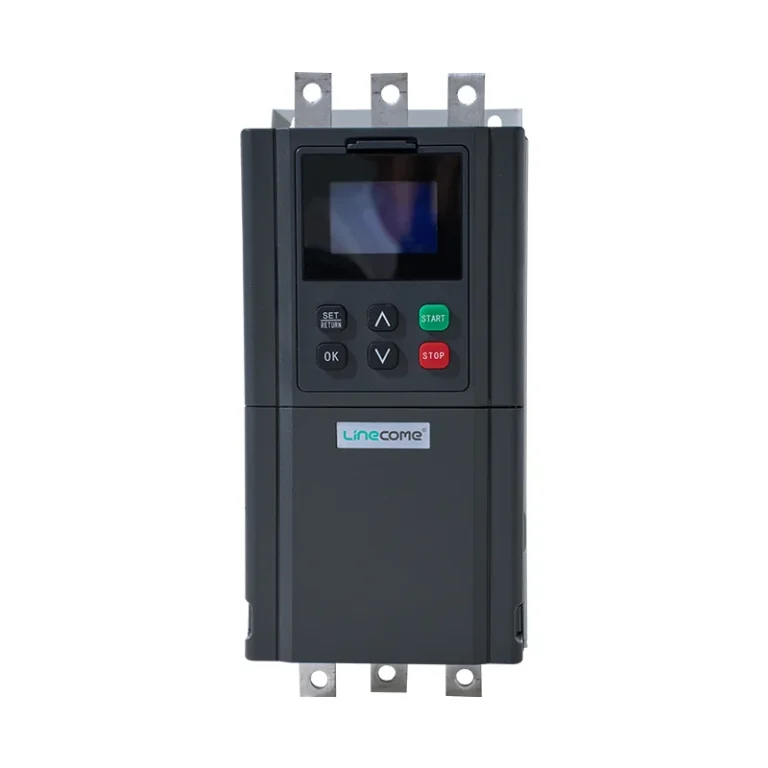

In electrical practice, the vfd electrical meaning is simple: a variable frequency drive is a power-electronics controller that feeds an AC motor adjustable voltage and frequency at its terminals so speed and torque can change without switching mechanical gearboxes.
Buyers who ask what is a vfd in electrical terms usually need a panel-label definition before they compare drives to soft starters on a one-line diagram. The same procurement packet may also spell what is vfd in electrical shorthand on older specs—treat both as the adjustable-frequency motor controller, not a contactor.
Use the Variable Frequency Drive hub to browse catalog families after this definition pass. For rectifier, DC-link, and PWM detail, see how a VFD works. Abbreviations, one-line placement, and RFQ electrical fields stay here.
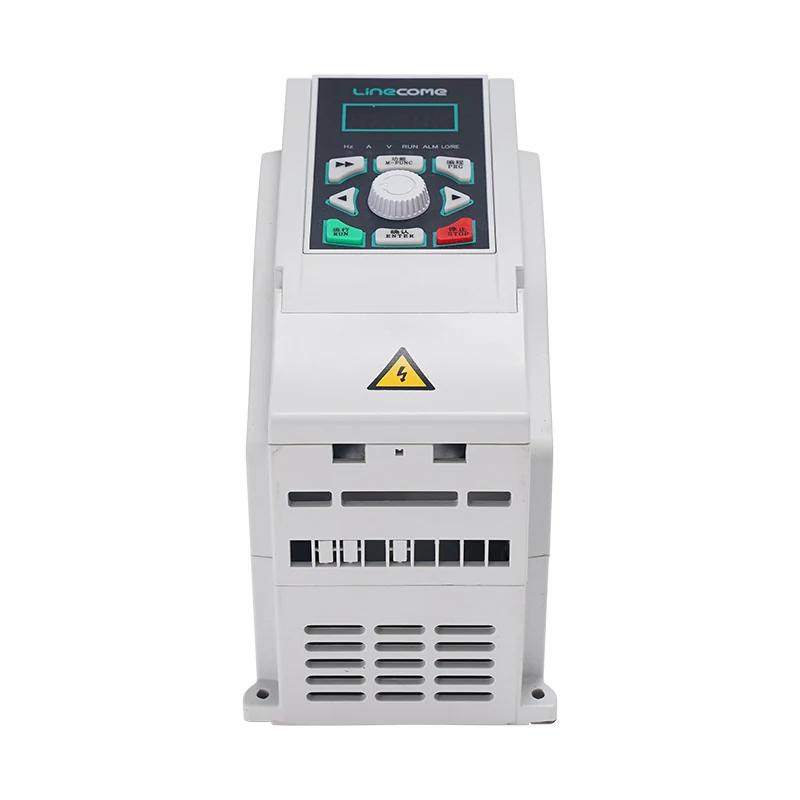 .
VFD electrical meaning in one sentence for buyers and panel designers
Electrically, a variable frequency drive (VFD) sits between the plant AC supply and the motor terminals, converting fixed-frequency mains into controlled output where frequency and voltage stay coordinated for induction motor flux.
That is the vfd electrical meaning spec writers intend when they tag a feeder “VFD” on a one-line: the motor branch is electronically fed, not directly across-the-line at utility frequency only.
If your question is internal power-stage behavior, follow the mechanism guide; if your question is what device sits on the drawing, the definition above is the electrical anchor.
Abbreviations: VFD, VSD, ASD, inverter, and AC drive
Procurement forms mix labels; the electrical intent is usually the same adjustable-speed motor controller. Treat ASD / VSD abbreviations as interchangeable with VFD on most industrial RFQs unless the spec explicitly calls for a non-adjustable frequency converter cabinet.
| Label | Typical electrical meaning | Notes for RFQs |
|---|---|---|
| VFD | Variable frequency drive | Most common US industrial tag |
| VSD | Variable speed drive | Common in international specs |
| ASD | Adjustable-speed drive | Appears in DOE and utility literature |
| AC drive / inverter drive | Motor inverter system | May omit input converter stage in casual use |
| Frequency converter | Fixed or adjustable output frequency hardware | Can mean wider plant conversion—not always a VFD |
 .
Where a VFD sits in the electrical system (without the deep mechanism tour)
On a one-line, the VFD is a motor controller branch: upstream disconnect and overcurrent protection, the drive cabinet, then motor cable to the machine terminals.
Encyclopedic summaries describe the chain as AC–DC–AC conversion inside the cabinet; electrically, what matters for buyers is that the motor no longer sees fixed utility frequency unless the drive is bypassed.
Motor synchronous speed still tracks output frequency when pole count is fixed—so electrical specs must list the frequency range you will command, not only utility frequency at the building service.
Electrical inputs and outputs buyers specify on datasheets
What is a vfd in electrical submittals boils down to input voltage class, input current or kVA, output current to the motor, and the frequency range the application needs.
Three-phase input dominates industrial drives; single-phase input models exist on smaller kW rows—match the ordered SKU to the service actually landed at the disconnect.
Harmonic currents and reflected voltage rise on long motor cables are part of the electrical story even when the RFQ only asks for a one-line definition. You do not need a full filter design in the definition packet, but you should flag when the branch is fed from a generator, a soft rural feeder, or a shared transformer with sensitive electronics so the drive supplier knows filtering may be in scope.
Output specifications should align with motor nameplate voltage, full-load amps, and insulation class; the drive limits current electronically, but it does not replace motor thermal design.
Department of Energy material on adjustable-speed drives reminds readers that matching motor speed to load requirements is the operational reason the device exists electrically—not magic efficiency by default.
List the frequency range you will command on the RFQ, not only utility frequency at the service entrance. Export panels may show 50 Hz motor targets while the building service remains 60 Hz—electrical meaning on the drawing must still match what the motor terminals will see after commissioning.
VFD versus soft starter versus contactor in electrical terms
Contactors apply full line voltage at fixed frequency—electrical simplicity, no speed control.
Soft starters reduce inrush with thyristor ramps but leave the motor at line frequency during run—electrical role is starter, not adjustable-frequency supply.
A VFD provides adjustable output frequency and coordinated voltage—electrical role is controller plus power converter; harmonics and EMC work usually exceed contactor-only branches.
| Device | Motor frequency during run | Speed control | Typical harmonics / EMC load |
|---|---|---|---|
| Contactor | Fixed utility frequency | None | Lower |
| Soft starter | Fixed utility frequency | None (inrush control only) | Moderate at start |
| VFD | Adjustable | Primary purpose | Often higher—plan filters/reactors |
 .
Nameplate and electrical data your RFQ should attach
Photos reduce mismatched voltage class orders before panels are built.
Collect motor nameplate frequency, voltage, full-load amps, insulation class, and power factor when available; add supply voltage and phase at the disconnect the drive will feed from.
List cable run length estimates and whether bypass contactors are required—electrical meaning on the drawing must match who owns protection coordination.
Add whether the branch needs emergency run, fireman’s override, or lockout tags that affect how the drive input is interlocked. Those notes belong on the electrical spec attachment even when the vfd electrical meaning paragraph is only one line on the one-line diagram.
Important: Electrical definitions do not certify code compliance—local rules, manufacturer manuals, and qualified engineers still govern installation and grounding.
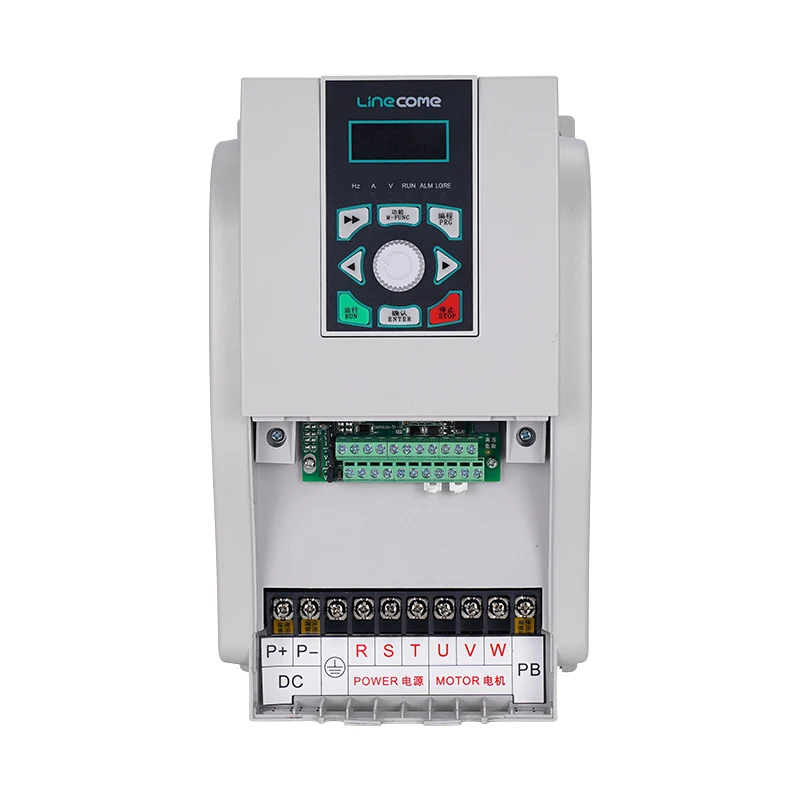
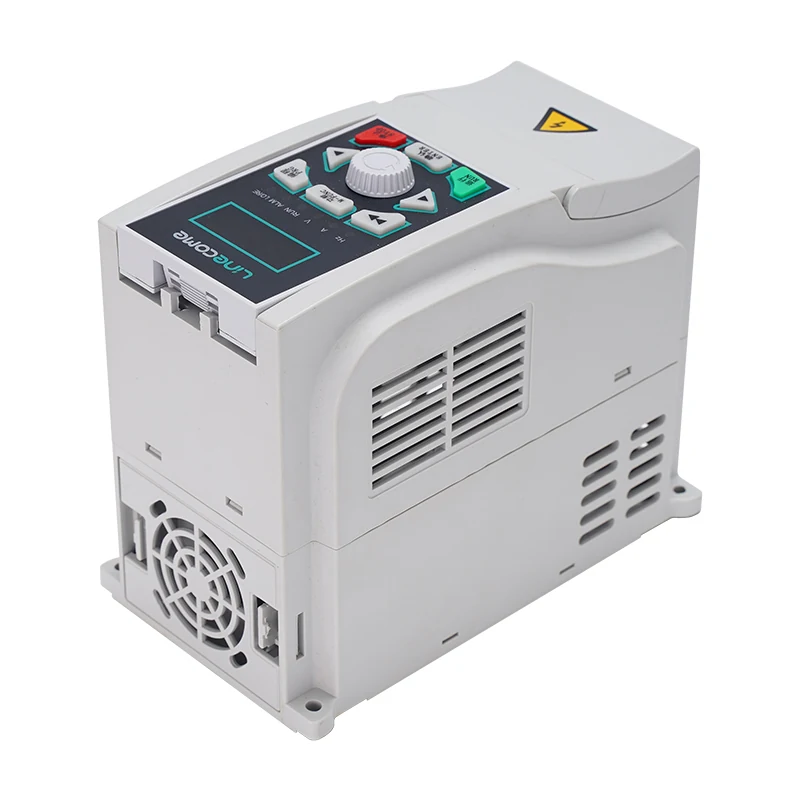
Matching LNC610 and LNC820 drives — product fit for typical electrical specs
Published tables anchor examples once input class and motor amps are known—they are not substitutes for motor data entry in the field.
The LNC610 general-purpose VFD series lists output frequency range, V/F and open-loop vector (SVC), Modbus, and built-in PID on the public table—useful when electrical submittals must show fieldbus and process-loop capability.
The LNC820 general-purpose VFD series lists the same wide output frequency class with RS485 on overview copy and built-in braking unit availability on many kW rows—relevant when deceleration energy is part of the electrical duty.
| Electrical RFQ item | LNC610 (published page) | LNC820 (published series page) | Still verify in field |
|---|---|---|---|
| Output frequency span | Wide range on table | Wide range on series table | Min speed cooling, overspeed |
| Control mode | V/F and SVC listed | V/F and SVC listed | Load type, tuning time |
| Field integration | Modbus on overview | RS485 on overview | Register map, faults |
| Braking energy | Braking unit not default on 610 | Built-in braking on many kW rows | Inertia, duty cycle |
 .
 .
Share nameplate photos and requested frequency range when you ask the supplier to map LNC610 or LNC820 rows to your motor electrical data.
Panel builders should also record whether the drive branch shares a transformer with other controls, because what is a vfd in electrical submittals often stop at the drive terminals even when upstream isolation and disconnect labeling determine how maintenance locks out the circuit. One extra line on the data sheet—upstream disconnect ID and voltage class—prevents rework when the drive arrives before the panel layout is frozen.
Frequently Asked Questions
These answers stay definitional; commissioning steps live in the manual for the model you order. When a specifier still asks what is a vfd in electrical terms after reading the abbreviation table, send them back to the one-line placement section before you debate inverter topology.
What is a VFD in electrical terms versus mechanical terms?
Electrically, it is an adjustable-frequency power supply to the motor terminals. Mechanically, it changes shaft speed when load and torque limits allow—do not confuse the two when specifying bypass or overspeed guards.
Is a VFD the same as an inverter?
Colloquially yes on motor branches. Strictly, the inverter is the output stage; a complete VFD includes rectifier, DC bus, controls, and protection—see the mechanism article for stage detail.
Does every motor on a drawing need a VFD for automation?
No. Fixed-speed auxiliaries may remain on contactors or soft starters. Tag only motors that need adjustable frequency during normal production.
What is VFD electrical meaning on a single-phase service?
Smaller drives may accept single-phase input on published rows; motor output remains three-phase on standard induction motor applications—match the catalog input class to the service at the disconnect.
How is this page different from how a VFD works?
This page defines electrical role, abbreviations, and one-line context. The mechanism guide explains rectifier, DC link, and inverter behavior in depth.
Can I use this definition for hoist or crane duty?
Hoist electrical duty adds brake, hoist, and inching constraints. Start here for vocabulary, then read hoist-specific application material before you finalize the RFQ.
References
External references support definitional and scope claims in this guide.