
Yes—a does soft starter reduce starting current comparison against across-the-line starting is directionally true because thyristor ramps limit terminal voltage during the start interval, so current rises over time instead of appearing as a single full-voltage step.
Buyers asking does soft starter reduce starting current still cannot treat marketing “one number fits all motors” charts as engineering fact—peak amps depend on ramp time, current-limit setting, motor design, load inertia, and utility stiffness, so field measurement beats universal reduction claims.
Questions framed as how much does a soft starter reduce current or how much does a soft starter reduce starting current belong in the same evidence bucket: qualitative reduction versus DOL is well supported; a single fixed percentage for every kW band is not unless your motor data and settings are on the table.
Cross-read current limit versus soft starter for reactor and breaker naming, how to work soft starter for ramp/bypass sequence, soft starter benefits for payoff themes, and disadvantages of soft starter for trade-offs when reduction comes with fixed-speed and bypass limits—this page explains starting-current mechanics only.
Use the Soft Starter hub when the RFQ names reduced-voltage start but omits parameters.
 .
What “starting current” means on a motor branch (definition)
Starting current on induction motors refers to the elevated current during energization and acceleration toward run speed—often discussed alongside locked-rotor current in motor data—not to normal full-load amps during production.
Inrush current articles describe that surge as a phenomenon soft starters mitigate by ramping voltage; they do not promise identical peak values on every design without measurement on your combination of motor, starter settings, and load.
Talk:Inrush current notes buyers confuse inrush with running overload when they pick starters—branch protection must address both, independent of whether the start is DOL or SCR ramped.
How soft starters reduce starting current versus across-the-line (mechanism)
Direct-on-line contactors apply full line voltage immediately, so the motor sees a step change that produces high starting current quickly.
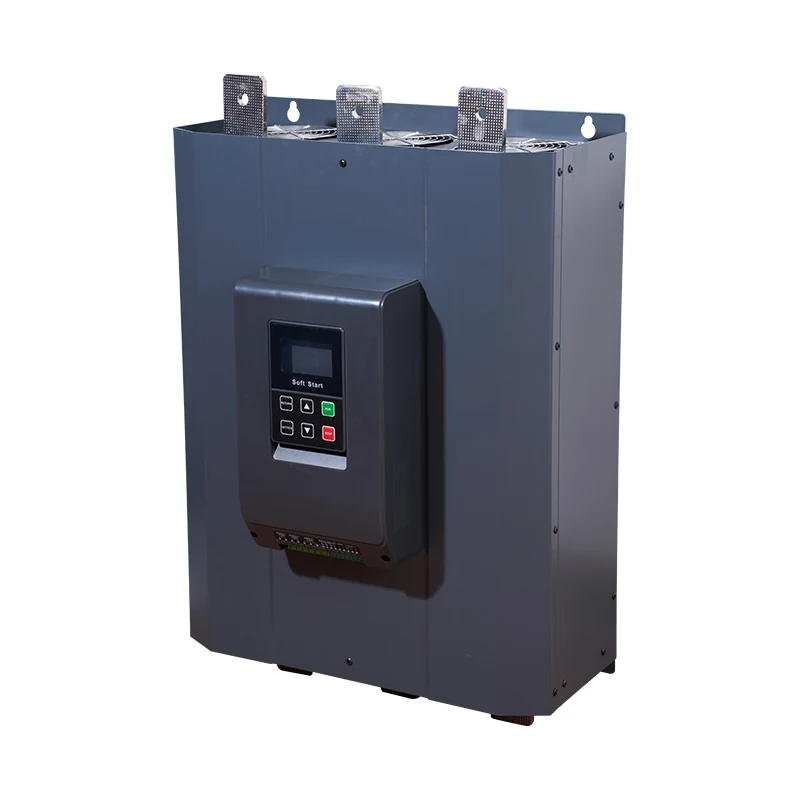
Soft starters use silicon-controlled rectifier phase control to increase terminal voltage over a ramp, which limits the rate of current rise compared with that step—reduction is real in direction, but magnitude varies with settings and load.
 .
| Start method | Voltage applied to motor | Starting current shape (qualitative) |
|---|---|---|
| Across-the-line (DOL) | Full line step | Fast rise, highest peak for same motor |
| SCR soft starter | Timed ramp with optional current cap | Slower rise, lower peak when ramp/limit tuned |
| Fixed reactor tap | Single impedance step | One coarse reduction step, not timed SCR ramp |
Why you cannot trust one universal reduction percentage
Vendor cheat sheets sometimes print a single “reduction” figure without naming motor code letter, inertia, ramp seconds, or current-limit threshold—how much does a soft starter reduce starting current on your tag is therefore a site question, not a glossary number.
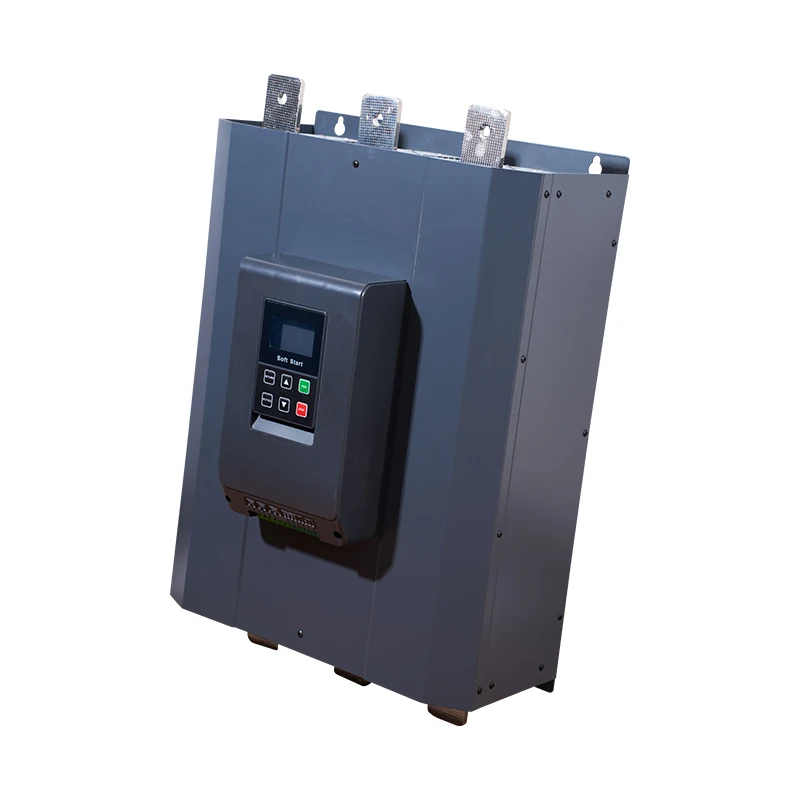
Two identical starter SKUs on different motors can show different clamped peaks because locked-rotor impedance, load torque during acceleration, and feeder voltage dip interact during the ramp.
Prefer clamp meters or protective-device records on a witnessed start over copying percentages from unrelated case studies. Nameplate locked-rotor code letters and coupled load curves belong in the same folder as the clamp CSV so the next project engineer inherits context instead of restarting from a generic vendor chart.
 .
Parameters that change how much current drops: ramp time and current limit
Ramp time trades longer acceleration for gentler current rise—overly aggressive ramps still spike current; overly long ramps increase heat duty on semiconductors before bypass.
Current limit settings cap the ramp’s attempt to feed the motor—helpful when utilities cap step load, but mis-set limits can stall acceleration on high-inertia loads.
Integrators should record both parameters on the commissioning sheet, not only the motor kW band. Seasonal retunes are common on irrigation and HVAC branches where operators ask how much does a soft starter reduce current after a valve or belt change shifts acceleration torque.
Clamp trends taken after those retunes answer how much does a soft starter reduce starting current for that season’s load—still a site log, not a brochure constant copied onto unrelated motors.
Motor, load, and supply variables that move the measured peak
Motor design, coupled load inertia, belt tension, pump column static head, and upstream transformer impedance all shift measured starting current even when starter firmware stays constant.
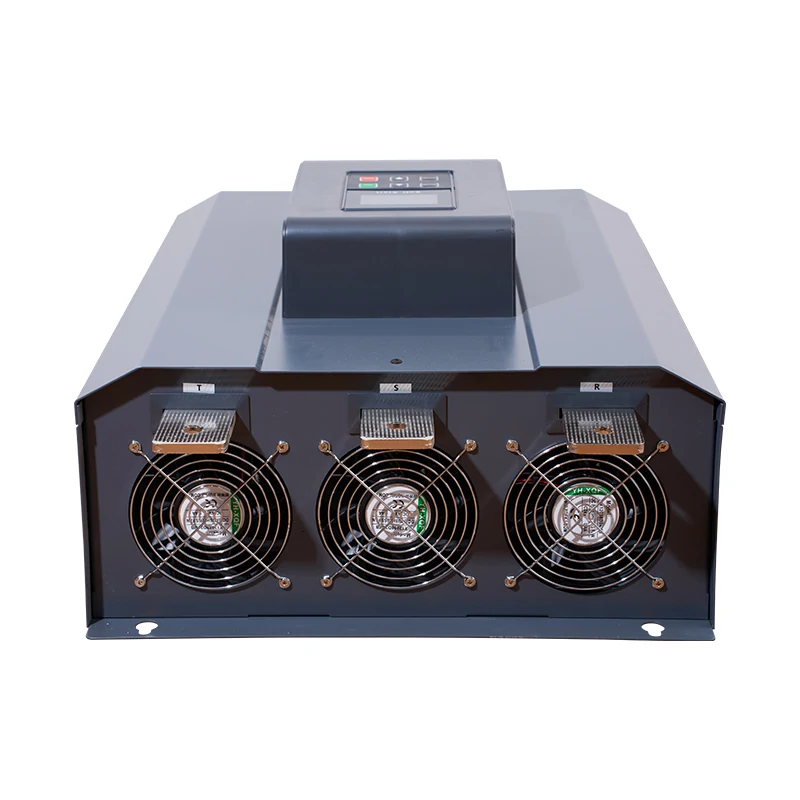
Weak feeds and generator backup exaggerate voltage dip during starts—soft starters reduce step severity, but measured amps still need a witnessed start under production-like conditions.
 .
Reactor, wye-delta, and VFD paths—different “how much” stories
Current-limiting reactors insert fixed impedance for a single step—how much does a soft starter reduce current compared with a reactor depends on whether you need repeatable timed ramps and electronic limits each start.
Wye-delta methods change winding connection rather than SCR phase control—peak reduction mechanics differ from soft starters; see star-delta comparison siblings for method limits, not duplicate them here.
Variable-frequency drives can cap acceleration current while building frequency—overlap exists during start, but drives commit the branch to inverter run duty; soft starters return to line frequency after bypass. Treat that overlap as a control-class decision, not as proof that any single amp ratio transfers from a VFD start menu to an SCR soft starter on a different motor tag.
ZR800 online soft starter — product fit after starting-current review
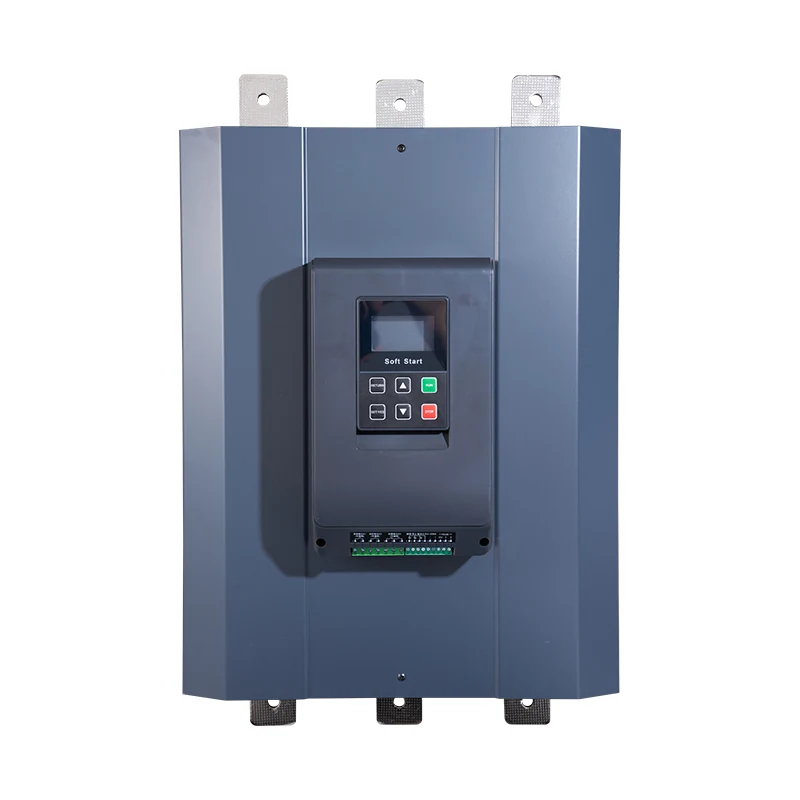
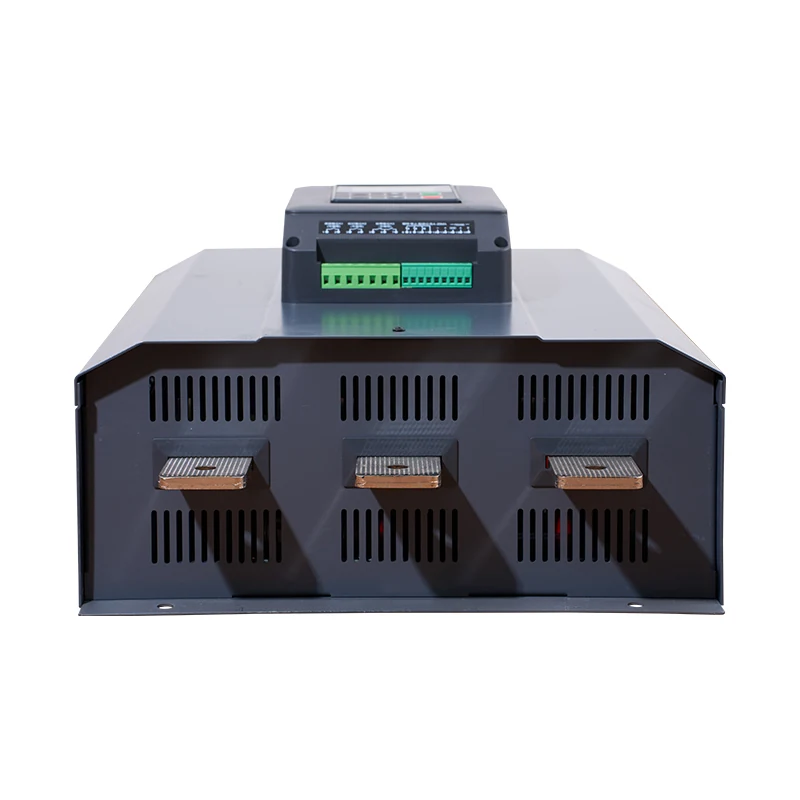
When qualitative reduction versus DOL matches your duty and parameters are defined, anchor the RFQ to the public ZR800 online soft starter family and copy monitoring rows from the catalog—not from invented amp tables.
The ZR800 series public listing summarizes protection and electrical monitoring intended for pump and fan branches where starting current shape matters to the utility.
The published ZR800-18.5-90KW online soft starter series page lists 12 protection functions on the features list and monitoring of current, voltage, phase sequence, frequency, and runtime—supporting logs that compare starting events over time.
The same public page documents 4–20 mA output with 0.5% linear accuracy on the features list when plants tie starter health to process meters—still subject to loop calibration.
 .
| Verification step | Why it matters for “how much” questions | Owner |
|---|---|---|
| Witnessed start clamp reading | Replaces universal % claims | Commissioning |
| Ramp and limit parameters recorded | Explains repeatability | Controls integrator |
| Bypass proved | Ensures run readings are not SCR-limited | Maintenance |
| Motor nameplate FLA and duty | Scales expectations | Project engineer |
Important: Talk:Electric motor threads repeat that clamp readings from a witnessed loaded start outperform vendor “reduction” slogans—log amps, ramp, limit, and voltage dip together on the commissioning sheet.
Utility engineers reviewing feeder step load should compare consecutive starts with matching parameter sets before approving permanent soft starter specs—two starts with different ramp values are not comparable evidence for how much does a soft starter reduce starting current claims on the same motor tag.
When procurement templates ask for a single inrush ratio, push back with the parameter block and witnessed clamp sheet—soft starter reduce starting current behavior is repeatable only when ramp, limit, load, and feeder conditions repeat together on that nameplate.
Frequently Asked Questions
Short answers stay qualitative—log measured peaks on site instead of copying unrelated percentage marketing.
Does a soft starter reduce starting current compared with across-the-line?
Yes, by ramping voltage during start so current rises more gradually than a single full-voltage step—exact peak amps still require measurement on your motor and settings.
How much does a soft starter reduce starting current on my motor?
There is no honest universal percentage—depends on ramp, current limit, motor data, inertia, and feed stiffness; witness and log a start instead of trusting one-size charts.
Why do two identical soft starters show different starting current on site?
Different motors, loads, voltage dip, and parameter sets change clamped peaks even when the SKU matches—settings and mechanics must be recorded together.
Does current limit setting change how much inrush drops?
Yes—it caps acceleration current during the ramp, but too aggressive a limit can stall high-inertia loads; tune with loaded starts, not defaults alone.
How does ramp time affect starting current shape?
Longer ramps generally spread current rise over time; overly short ramps approach DOL-like spikes and increase SCR heat duty before bypass.
Is starting current reduction the same as limiting running load amps?
No—inrush during start differs from full-load running current; Talk:Inrush current themes warn against confusing the two when sizing protection.
When does a reactor or wye-delta limit current without an SCR ramp?
Reactors use fixed impedance steps; wye-delta changes winding connection—both differ from timed SCR control; pick based on method study, not a single amp slogan.
What motor data should I log to judge starting current reduction?
Nameplate FLA, expected starts per hour, ramp and limit parameters, bypass proof, and clamp readings from witnessed starts under load-like conditions.