
Circuit breaker breaking capacity is the fault-current interruption capability declared for specified conditions, including voltage. Compare the relevant rating with the available short-circuit current at the installation point; do not compare it only with the normal load current. Also verify the complete panel or equipment rating and any conditions attached to the protective arrangement. A large ampere rating, an adjustable trip setting or a higher-looking product code does not establish that a breaker can safely interrupt the site’s prospective fault current.
This guide helps buyers read rating evidence for low-voltage equipment. It does not calculate a site’s fault level, approve a protective combination or assign an unverified breaking capacity to a LINECOME product.
Separate normal current from fault interruption
Normal load current describes what the circuit carries in service. A trip setting influences when a protective device operates. Breaking capacity addresses a different question: whether the device can interrupt the applicable fault current under its declared conditions. Put these values in separate columns on the procurement worksheet.
A motor drawing modest current during a demonstration does not establish the possible short-circuit current from its supply. Likewise, selecting a breaker with a higher frame current does not by itself resolve an interruption-capability shortfall. The comparison needs both the equipment declaration and a site fault assessment.
The broader motor-panel breaker coordination guide covers the purchasing information for the protective arrangement. Here the focus is narrower: identifying and comparing fault-current ratings without confusing them with operating current or selectivity.
Establish the available fault current at the right point
Ask the responsible electrical designer for the available short-circuit current at the intended equipment terminals. The record should identify the connection point, system voltage, supply arrangement, calculation assumptions and revision. A fault-level figure from another switchboard is not automatically the figure at this cabinet.
For US workplace installations, OSHA 1910.303(b)(4) requires suitable interruption capability for the nominal voltage and current available at the equipment’s line terminals. The following paragraph also addresses coordinated selection of the protective arrangement and circuit characteristics. Apply the rules adopted for the actual project and obtain the responsible designer’s review.
Do not test available fault current by deliberately creating a short circuit. This is an engineering assessment, not an extension of a routine factory functional test. If the supply information is missing, keep that item open rather than assuming a small motor implies a small fault level.
Read the rating at the actual operating voltage
A rating schedule may declare different interruption values for different voltages or service conditions. Request the exact model’s current technical document, then locate the row matching the project’s voltage and AC or DC application. Preserve the row and its notes with the equipment schedule.
Do not extract the largest kA figure from a brochure headline and apply it to every voltage. Similarly, an AC declaration should not be transferred to DC operation without the corresponding evidence. Pole arrangements, application restrictions and the identified device version matter where the manufacturer specifies them.
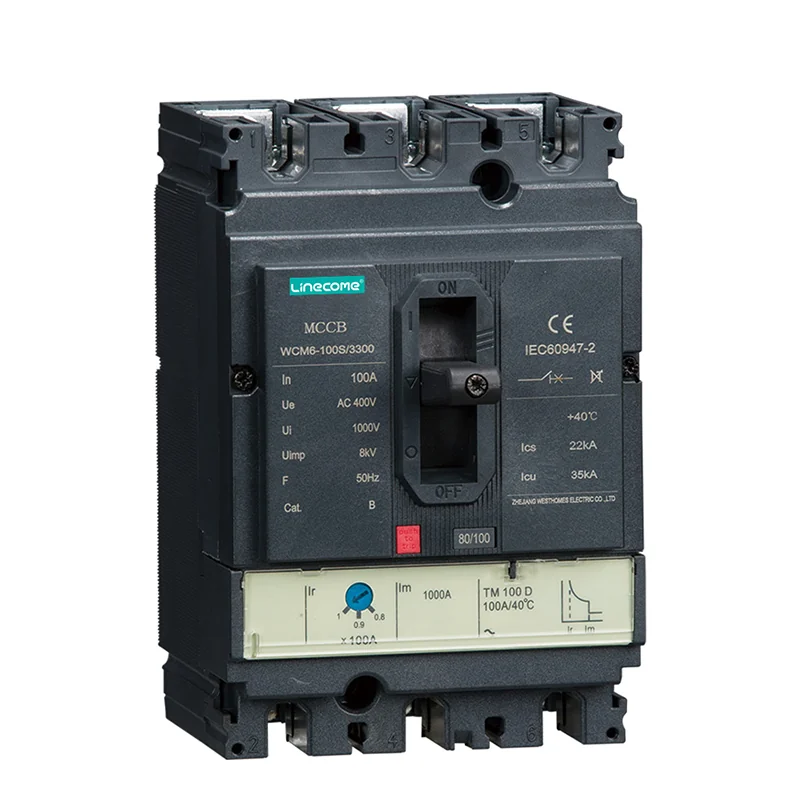
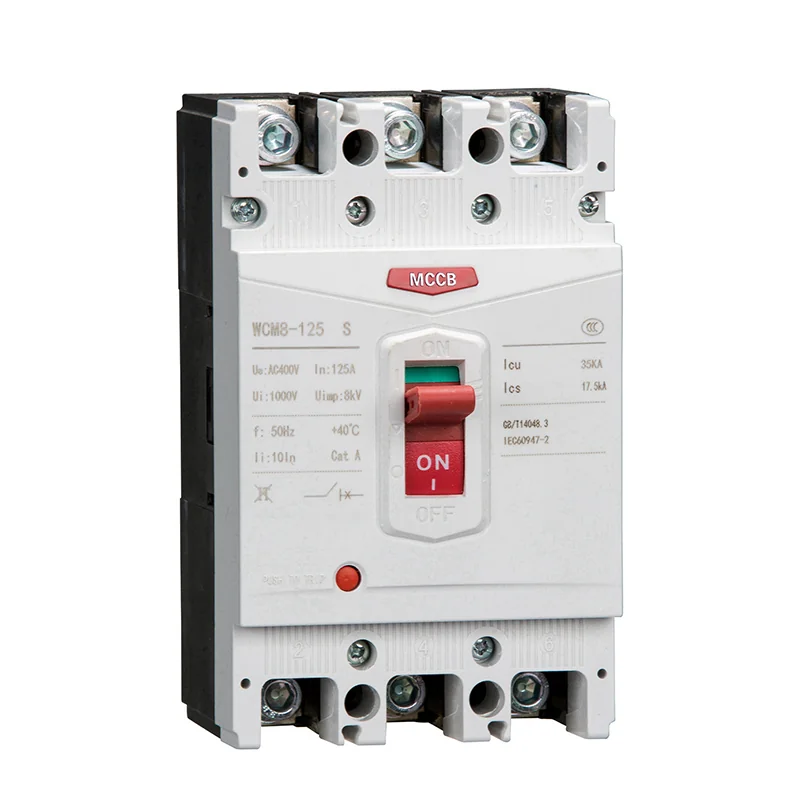
For a LINECOME WCM9 moulded-case circuit breaker, request the exact model and rating schedule for the proposed application. The product photograph below identifies the construction shown on the website; it does not establish the rating of a supplied breaker or its suitability for an unspecified fault level.
Distinguish Icu and Ics in IEC documentation
IEC-style breaker documents may identify rated ultimate short-circuit breaking capacity as Icu and rated service short-circuit breaking capacity as Ics. Both relate to specified test conditions at the declared operational voltage, but they represent different performance declarations. Where Ics is expressed as a proportion of Icu, confirm the applicable value rather than assuming that the two are equal.
The IEC catalogue entry for IEC 60947-2:2024 identifies the low-voltage circuit-breaker standard and its scope. Verify the detailed rating definitions and test requirements in the applicable edition, together with the exact manufacturer declaration. A catalogue scope page identifies the standard; it is not a model-specific rating certificate.
Do not turn either term into permission to reset and re-energise a breaker after a real fault. Inspection, manufacturer instructions and the condition of the complete equipment govern the return-to-service decision. A laboratory rating is not a site maintenance release.
Compare like-for-like quantities
Before comparing two numbers, label their units and basis. Check whether a stated current is an RMS interruption value, a peak making value, a withstand value or a normal-current rating. These quantities serve different purposes even when they appear close together on a technical sheet.
Consider an original hypothetical comparison: a designer records 18 kA available at a particular point, and a candidate document states a relevant interruption rating of 25 kA at the same voltage and applicable conditions. The numerical interruption comparison is favourable because 25 exceeds 18. That arithmetic alone does not approve the panel, establish selectivity or verify every other component.
If the 25 kA figure belongs to another voltage, a different device version or a different type of rating, the comparison is incomplete. Record that distinction explicitly rather than presenting a mathematical margin that has no engineering basis. The figures here are illustrative and are not LINECOME ratings or a site recommendation.
Use a rating-evidence checklist
The table below is an original document-review tool. It organises the comparison without supplying device values, universal margins or protective settings. The design record and approved equipment documents remain the basis for acceptance.
| Question | Required evidence | Reason to stop and clarify |
|---|---|---|
| Where is the breaker installed? | Identified terminals and drawing reference | Fault figure refers to another location |
| What are the electrical conditions? | Voltage, AC/DC and supply arrangement | Rating row does not match the application |
| Which device is proposed? | Full model, version and relevant accessories | Generic family brochure only |
| Which interruption rating applies? | Declared value with units and conditions | Normal current or making value substituted |
| What is the available fault current? | Responsible designer’s assessment | Assumed value without traceable basis |
| What covers the complete equipment? | Panel or assembly rating evidence | One breaker used to justify every component |
| Are there combination conditions? | Exact approved arrangement and restrictions | Upstream device or component has changed |
Review the checklist before ordering. It is easier to resolve a missing voltage row or unidentified upstream device before shipment than after the cabinet arrives. Keep unresolved items visible in the purchase review rather than closing them with a general statement that the breaker is “industrial grade.”
Check the panel as a separate item
A standalone breaker’s interruption capability does not establish the short-circuit rating of an assembled control panel. Ask for evidence covering the delivered assembly and the applicable protective arrangement. Identify the components and construction conditions on which that evidence depends.
Where a proposal relies on a verified combination, request its exact identities and limitations. Do not assume that any upstream current-limiting device makes any downstream component acceptable. The responsible designer and assembly supplier should explain the documented basis for the specific configuration.
Keep selectivity separate as well. Adequate interruption capability does not prove that only the nearest downstream breaker will open for every fault. Selectivity and coordination require their own evidence. Avoid treating a higher interruption figure as a universal answer to all protection questions.
Reopen the review after supply or equipment changes
A transformer replacement, an altered supply arrangement or an added generation source can change the assumptions behind the fault assessment. The exact effect belongs to the designer’s updated study. Record such changes so that the equipment review does not continue relying on an obsolete number.
A breaker substitution also needs review even when its frame size and normal-current rating appear unchanged. Compare the model, voltage-specific ratings, trip arrangement, combination conditions and documentation. Product similarity is not a reason to remove those checks.
Temperature and loading remain separate selection issues. Our breaker temperature-derating guide explains why local heat must be reviewed. Satisfying a temperature requirement does not establish interruption capability, and a sufficient interruption value does not remove the need for environmental and normal-load checks.
Define a safe acceptance and handover record
At factory acceptance, verify the supplied device identity, markings, approved drawing and supporting documents. Confirm that substitutions and open design questions have been resolved. Functional operation and visual checks can support this record, but they do not reproduce short-circuit type testing.
For later maintenance, retain the fault-assessment revision, rating schedule, panel evidence and replacement restrictions. Identify who must review changes. A future technician should be able to locate the engineering basis without searching through unrelated sales brochures or relying on a faded label alone.
After an actual fault, follow the approved isolation and investigation procedure before any return to service. Use our separate air-circuit-breaker mechanical test guide only where the equipment and procedure are applicable; it is not an interruption-capacity test or a blanket instruction for every breaker construction.
Watch the basic interruption principle
The RealPars video below explains the general working principle of a circuit breaker. It provides background for understanding protective operation, but does not demonstrate the breaking capacity, certification or application suitability of the products illustrated here.
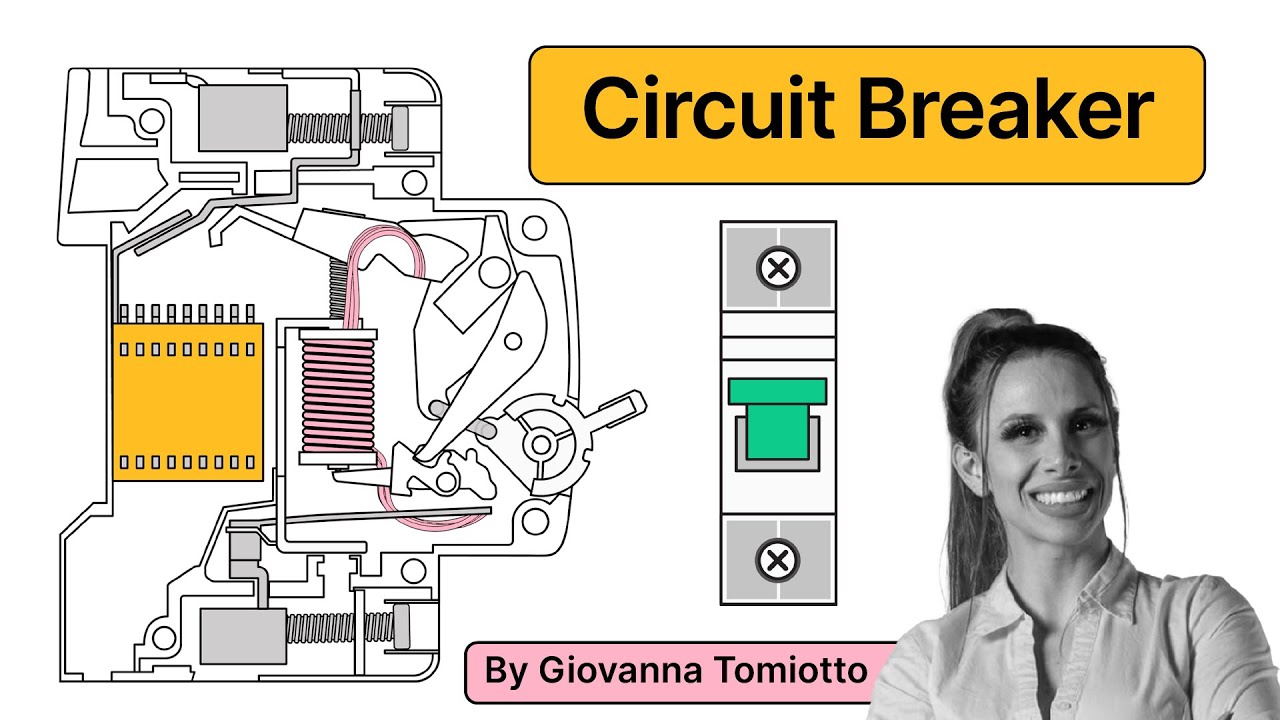
Video by RealPars. Watch Circuit Breaker Explained | Working Principle on YouTube.
Frequently asked questions
Is breaking capacity the same as the breaker’s ampere rating?
No. Normal-current and trip information describe different aspects of operation. Breaking capacity concerns interruption of fault current under declared conditions, including voltage. Review each value separately.
Does a higher breaker rating prove the panel rating?
No. Obtain evidence for the complete equipment and any protective combination on which it depends. One component’s rating does not automatically establish every other component’s short-circuit performance.
Can a breaker be reused automatically after interrupting a fault?
Do not assume so. Follow the manufacturer instructions and approved inspection and return-to-service procedure for the actual event and equipment. A rating statement alone does not release damaged or uninspected equipment for operation.