
A soft starter overload trip should be investigated from the motor’s operating history and protection arrangement before changing a current setting. Confirm the exact trip message, motor nameplate data, starting and running current, load condition, cooling and bypass state. An overload indication can reflect genuine excessive duty, an unsuitable setting or an incomplete understanding of where current is measured. Resetting repeatedly or raising the protection threshold without evidence can leave the underlying problem unresolved. The useful outcome is a documented cause, a justified correction and verified protection throughout the operating cycle.
This guide addresses ordinary industrial motor applications. Special services, including equipment where stopping creates another hazard, require their own engineered protection strategy. Qualified personnel must use the actual starter and motor instructions and applicable installation requirements.
Identify which protection operated
Begin with the exact words or code on the device that tripped. A starter’s motor-overload function, a separate overload relay, a breaker and a starter-temperature protection function are not interchangeable. Photograph the indication and save any event history before removing control power or attempting a reset.
Record whether the event occurred before rotation, during acceleration, immediately after bypass transfer or after sustained running. Also note whether it was the first start after a long rest or a later start in a repeated operating sequence. This timeline makes the investigation more specific than a general complaint that the starter “keeps tripping.”
Ask what actually opened the motor circuit. A diagnostic output can be an alarm, a trip command or part of a larger interlock. Review the drawing rather than assuming that an indicated fault has removed all possible power paths. If the equipment behaves unexpectedly, secure it under the site procedure before further investigation.
Reconcile the motor data and starter configuration
Compare the installed motor nameplate with the commissioning record. Check rated current for the actual voltage and connection, duty information, cooling arrangement and any special limitations. A replacement motor may have the same power rating but different current or thermal characteristics. An old parameter file is not automatically correct for it.
Identify the selected starter model, supply arrangement and operating connection. The current seen by a protection function can depend on installation topology and sensor arrangement. Do not copy a setting from a different motor connection or another starter family without the manufacturer’s instructions.
For an application using the PR800 external-bypass soft starter, request the exact protection and wiring documentation supplied for that model and revision. The website identifies the product family and describes protection features; it does not establish the correct overload settings, sensor location or bypass coverage for every project. Our soft starter operating-principle guide provides the surrounding startup context.
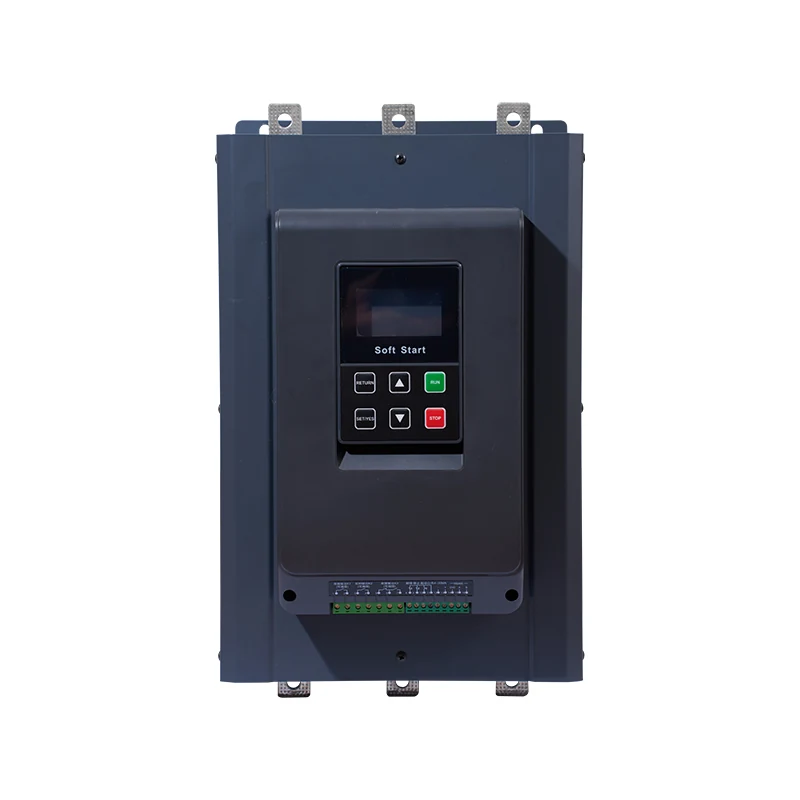
This original PR800 product photograph shows a related frame size. It is not evidence of the external bypass circuit, current-sensor position or motor-protection settings supplied with a particular installation.
Separate starting duty from running overload
A motor that takes too long to accelerate may accumulate substantial heating before reaching normal operation. Increasing ramp time or restricting current further can make an acceleration problem worse if the available torque is insufficient. Record actual acceleration behavior and load condition before proposing a setting change.
The electric-motor reference guide hosted by Natural Resources Canada explains that inadequate motor torque can prolong starting and lead to an overload trip. It also emphasizes matching the motor to the load’s speed, torque and duty requirements. This supports investigating the mechanical demand, not simply increasing a protection threshold.
An event after prolonged running suggests a different evidence set. Record the load state, current on each phase, ventilation condition and ambient context. Include any recent process change: a different material, a changed pump duty or a tighter mechanical load. Do not infer the load from a machine’s nominal production setting alone.
Repeated starts combine starting and recovery effects. The number of starts is useful, but the timing, acceleration duration and condition between starts also matter. A single successful cold start cannot establish suitability for a full working shift.
Use an evidence table before choosing a correction
The following checklist is an investigation aid informed by the motor-duty discussion in the Canadian reference guide. It does not prescribe a trip class, current percentage or reset delay. Those values must come from the exact motor, starter and approved protection design.
| Event pattern | Evidence to preserve | Question to resolve |
|---|---|---|
| Trip during acceleration | Current trend, acceleration time and load state | Can the motor accelerate the load within its permitted duty? |
| Trip after bypass transfer | Bypass status, sensor arrangement and current records | Does the protection measure the intended motor current in bypass? |
| Trip during steady operation | Phase currents, process state and ventilation observations | Is there sustained overload, abnormal supply behavior or impaired cooling? |
| Trip after repeated starts | Event times, successful and failed attempts, recovery periods | Does the actual sequence exceed the approved thermal duty? |
| Trip after motor replacement | New nameplate, connection and existing settings | Does the configuration still match the installed motor? |
| Starter temperature alarm | Exact code, enclosure conditions and device loading | Is the event device heating rather than the motor-overload function? |
Give each unresolved question an owner. A service visit should produce a comparison between the evidence and the permitted operating envelope, not just a note that the motor restarted after reset.
Verify protection while the external bypass is closed
An external bypass provides another current path around the starter’s power semiconductors during the intended running state. That makes current-sensing location and trip action important review points. The existence of an overload feature in a starter does not, by itself, prove that the actual motor current remains measured and interrupted correctly after transfer.
Ask for a marked drawing showing the running-current path, the sensing devices and the device that disconnects the motor following a trip. Require a clear statement of which protections remain effective during starting, bypassed running and stopping. If a separate overload relay is required by the approved design, include its identification and settings in the records.
Do not relocate sensors or improvise a bypass connection from a general article. Some designs require particular sensor placement, wiring or configuration. The supplier must reconcile the proposed arrangement with the exact equipment instructions. Our external bypass contactor selection guide addresses complementary contactor questions; contactor selection alone does not settle motor-protection coverage.
A useful factory question is: “What evidence will demonstrate the intended trip action with bypass closed?” The answer should identify a safe test or documented verification method and its limits. A lit bypass indicator alone does not answer that question.
Understand what a thermal model can and cannot tell you
Some protection systems estimate motor heating from current history; others use temperature sensors, and some combine methods. A modeled thermal value is not the same as a directly measured winding temperature. Confirm what the installed device actually monitors and how its instructions describe cooling, reset and control-power interruption.
The ASHRAE motors and controls chapter distinguishes thermal sensing and protective arrangements in its motor discussion. Use that distinction to ask precise questions about the supplied system. Do not assume that a current-based function identifies every possible cooling failure or that a temperature input is present because a display offers a temperature-related alarm.
After a control-power interruption, establish how the device handles its stored thermal state. The behavior is product-specific. Avoid repeatedly cycling power to clear a trip: clearing an indication does not establish that the motor has cooled or that the condition permitting a safe restart has been met.
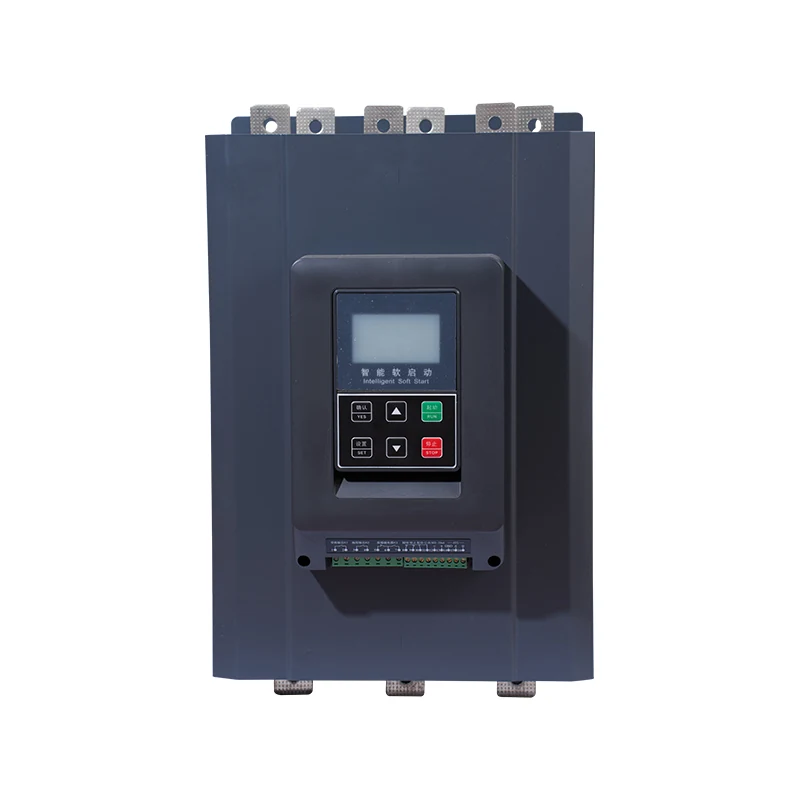
The larger PR800 frame shown here is a separate original product reference. A larger starter may have a different application envelope, but changing the frame alone does not correct an overloaded motor, an unsuitable mechanical load or a protection gap.
Check cooling and the driven equipment safely
Inspect accessible cooling paths, motor surroundings and enclosure ventilation under an appropriate safe method. Record blocked air passages, contamination, a damaged fan or a changed operating environment. Compare observations with the motor and starter instructions. Do not assign a universal acceptable surface temperature from a photograph or a hand-touch assessment.
Mechanical checks may require separate isolation of pressure, stored motion or other energy. HSE’s maintenance guidance explains the need to make plant safe and address stored energy before maintenance. Apply that principle through the site’s actual procedure; an overload trip is not a maintenance isolation.
Investigate the driven load with the process owner. For a pump, identify the real operating condition rather than assuming that every current rise has the same cause. For a conveyor or mixer, record material and mechanical changes. Electrical settings should not be used to conceal an unresolved mechanical problem.
If a separate phase-loss or supply fault is recorded, follow that evidence as its own branch of investigation. Do not relabel every trip as thermal overload. Our soft starter repair overview discusses the wider service boundary when equipment damage or specialist repair is suspected.
Verify the correction and keep a useful handover record
Before returning the motor to normal duty, document the diagnosis, changed parts or settings and the engineering basis for the correction. Save the original configuration. State which checks were performed, which operating conditions were represented and what remains outside the verified scope.
A controlled successful restart is only the first observation. Where the complaint involved prolonged operation or repeated starts, the acceptance plan should represent that duty within the motor’s approved limits. Do not run an unsafe reproduction merely to obtain a matching trip. Agree the observation period and stop conditions with the responsible engineer.
Retain phase-current records, event times, bypass state and load conditions together. For a replacement proposal, send these records with the motor nameplate, duty description, supply details and current drawings. Ask LINECOME to confirm the exact starter selection and protection arrangement rather than requesting only a price for the same kilowatt rating.
The final record should let another competent person understand why the change was made and how protection was checked. “Reset successful” describes a moment; it does not explain why the equipment is suitable for the intended duty.
Educational video: the motor behind the trip
The induction-motor tutorial below explains the rotating field, rotor behavior and slip. It helps connect electrical observations with the motor’s mechanical task. This is a motor-principle lesson, not a starter setting guide or a thermal-protection test procedure.
Video by Sabin Civil Engineering. Watch How does an Induction Motor work ? on YouTube.
Frequently asked questions
Should I raise the current setting after an overload trip?
Only after the responsible engineer has verified that the existing setting is incorrect and the revised value follows the actual motor and protection instructions. First preserve the event evidence and investigate load, cooling, starting duty and bypass coverage.
Does an external bypass remove the need for motor overload protection?
No. The design must provide the required protection throughout the operating cycle. Confirm the current-sensing path and trip action with bypass closed; do not infer coverage from the starter’s feature list alone.
Is a motor overload trip the same as a starter overheating alarm?
No. They can refer to different protected equipment and different measurements or models. Preserve the exact message and identify which device operated before choosing the investigation path or proposing a replacement.