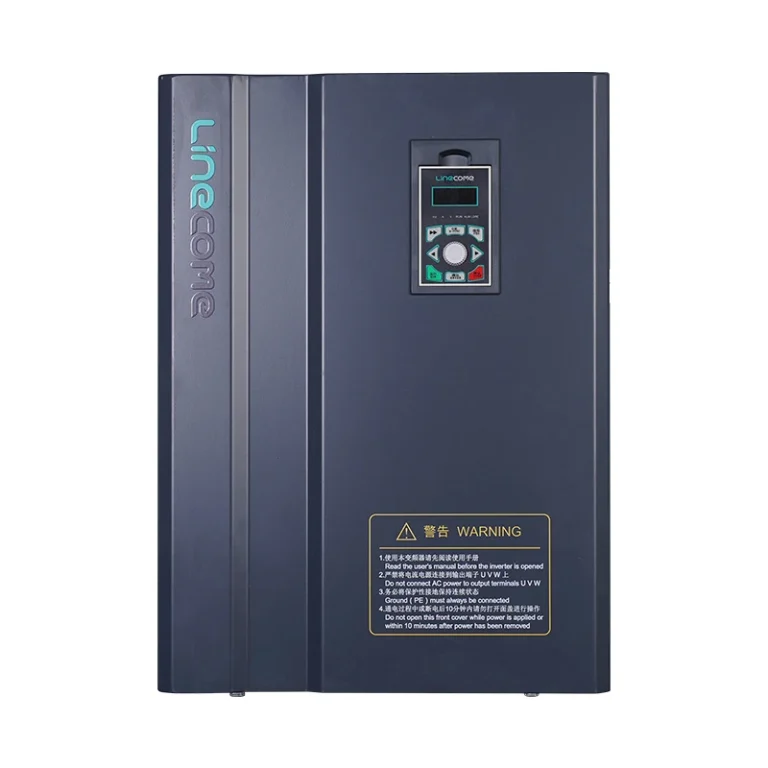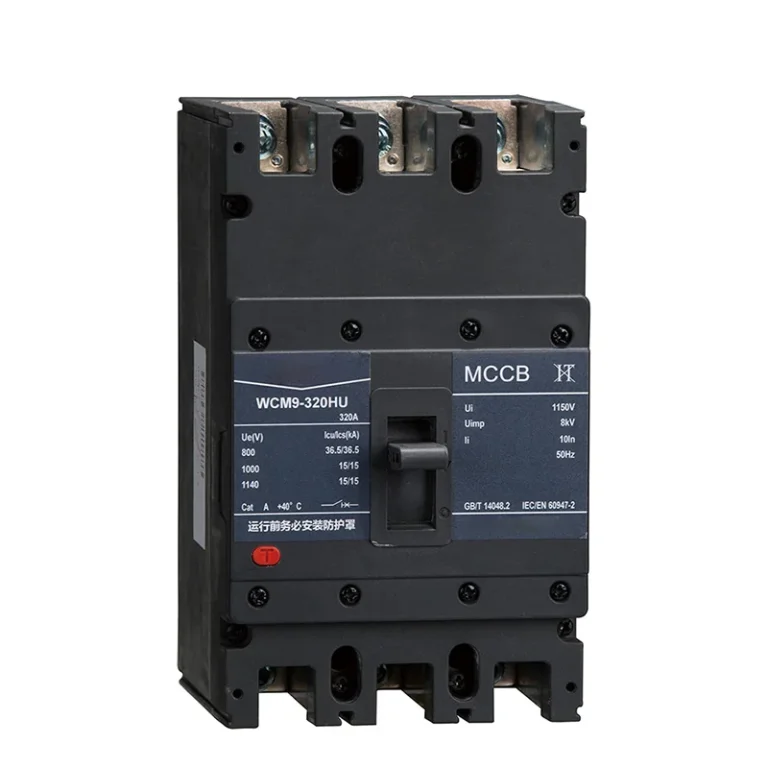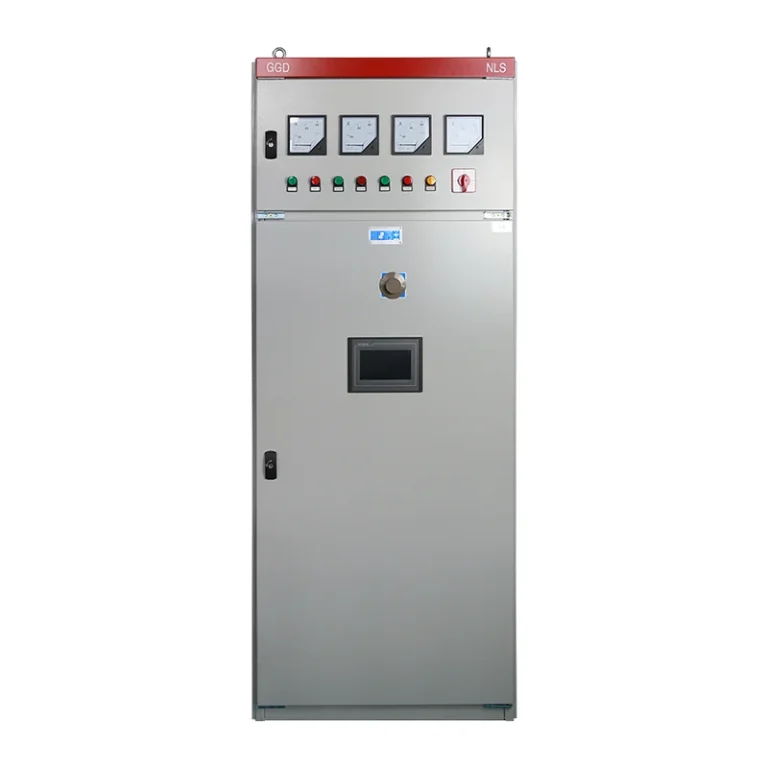

VFD vs static frequency converter is primarily a load-selection question: are you controlling a motor, or supplying specified AC power to equipment? A variable frequency drive is designed for compatible motor control. A frequency-converting AC power source may instead be specified to supply equipment at a required voltage, frequency and waveform. The word “static” only describes conversion without rotating machinery; it does not, by itself, distinguish a motor drive from a general equipment power source. Choose from documented output capability and load compatibility rather than the name printed on a quotation.
This guide helps buyers prepare a clear equipment specification. For electronic conversion terminology, see our static frequency converter principle guide. For the drive power stage itself, see how a VFD works. Here, the task is deciding which product function to request before comparing models or prices.
First identify what will connect to the output
Write down the complete load, not just its largest motor. A machine may contain an induction motor, a control transformer, solenoid valves, electronic power supplies, heaters and smaller auxiliary motors. Even when the total power appears modest, those devices can impose different waveform, starting and neutral requirements. The machine’s incoming terminals and its main motor terminals are different connection points.
If the project is to vary the speed of one compatible motor, a suitable motor drive is the normal product category to investigate. If the project is to energize an entire imported machine at a specified frequency, ask the machine manufacturer for its accepted supply characteristics and a list of frequency-sensitive devices. That information determines whether branch-level motor control, a suitable equipment power source, component replacement or another engineered arrangement is appropriate.
As background, Pacific Northwest National Laboratory’s variable-speed-drive overview describes VFDs as motor-speed controls. That functional definition is useful when a seller uses “inverter,” “converter” and “drive” interchangeably. None of those labels alone establishes the ability to power every load connected to a machine’s main terminals.
Why “static” does not settle the comparison
A static converter uses power electronics rather than a rotating motor-generator set. Many motor VFDs meet that broad description. Equally, equipment power sources can use static conversion. A purchasing document that requests only a “static frequency converter” therefore leaves the most important compatibility questions unanswered.
Ask the supplier to describe the intended load and output in plain terms. Is the unit a motor controller with motor-model parameters and a PWM output? Is it an AC power source with specified voltage regulation, distortion and supported load characteristics? Can it supply the required phase arrangement and neutral? These are documented capabilities, not conclusions that follow from the word static.
The distinction also prevents a false choice. A converter can be static and have a fixed operating-frequency setting, an adjustable setting or a test-programmable output. Likewise, a VFD can run a motor at one selected frequency for an entire shift. Whether the number on the display changes is less useful than knowing what the output is designed to supply.
Compare the functions in a purchasing table
The table below is a qualitative screening tool, not a universal specification for every product. The exact model manual and the equipment manufacturer’s requirements govern acceptance. A supplier claiming a special capability should identify it in writing, including any required filters, protection or operating restrictions.
| Selection question | Motor VFD project | Equipment AC power-source project |
|---|---|---|
| What is the controlled load? | A compatible motor or an explicitly approved motor arrangement | The declared equipment load and its operating combinations |
| What defines output acceptance? | Motor current, torque, speed range and insulation compatibility | Voltage, frequency, waveform, phase arrangement and load compatibility |
| How are starts evaluated? | Motor acceleration and required torque within drive limits | Equipment inrush, simultaneous starts and voltage recovery |
| What needs separate attention? | Motor cooling, feedback, cables and braking energy | Neutral, nonlinear loads, transformer loads and equipment switching |
| What proves suitability? | Motor data and application approval for the exact drive | Equipment supply requirements and source performance under the stated load |
Output waveform matters as much as frequency
A typical voltage-source motor drive synthesizes its motor output with rapid switching. The motor’s inductance and the drive’s control method are part of the intended system. Specifying an output fundamental of 50 or 60 Hz does not mean the terminal voltage is identical to a utility sine wave. Switching frequency and output fundamental frequency are separate quantities.
Equipment power-source procurement therefore needs an explicit waveform requirement where the load requires it. Ask how distortion is specified, under which load conditions it is measured and whether external components are necessary. Do not assume that adding an unspecified filter to a VFD turns it into an approved general-purpose equipment supply.
Measurement requirements matter too. A basic handheld instrument may not characterize a switched output or a transient event adequately. Qualified personnel should select instruments and measurement methods appropriate to the waveform and hazard level. National Instruments’ educational material on AC power and waveforms provides background on why waveform and frequency are distinct parts of an AC description.
Check voltage, phases and neutral independently
Frequency conversion does not automatically provide the required voltage conversion. Record incoming line voltage, available phases and actual frequency, then separately record the required output. Do not infer voltage-raising capability from a broad output-frequency range or assume that a drive designed for one input class can accept any plant supply.
Neutral requirements deserve a separate line in the enquiry. A three-phase motor may use three power conductors and protective earth without a load neutral, while a machine can include line-to-neutral auxiliaries. Whether a proposed source supports the required neutral arrangement must be confirmed from its documented design. Protective earth must never be treated as a substitute neutral.
Also distinguish supply conversion from motor reconnection. A motor nameplate may permit alternative winding connections, but that does not authorize changes to the rest of the machine. Have the machine builder or responsible electrical engineer identify which components can remain unchanged and which require a different supply or replacement.
Size for the actual operating profile
For a motor-drive enquiry, provide motor nameplate current, voltage, power, frequency, speed and load behavior. Starting torque, acceleration time, cyclic overload, ambient temperature and installation altitude can affect selection. The largest printed kilowatt number in a catalog is not enough to establish continuous output-current suitability in the installed conditions.
For an equipment power-source enquiry, provide the equipment’s apparent-power and real-power requirements where available, power factor, inrush, nonlinear loads and operating combinations. Ask how the source responds when a transformer energizes or several loads start together. Confirm the specified output performance under those events rather than relying only on a steady-state rating.
For example, consider a machine whose main motor is labeled 50 Hz while the incoming machine terminals also supply controls and a small auxiliary pump. A drive on the main motor branch may address that motor’s speed requirement, but it does not resolve the control and auxiliary requirements. A machine-level source, if chosen, must be sized and validated for the complete equipment profile. This example illustrates the decision process; it is not a wiring recommendation.
Account for switching and returned energy
Ask where contactors and isolators sit relative to the converter. Motor-drive manuals commonly impose conditions on output-side switching. Existing machine controls may repeatedly connect and disconnect loads in ways that a proposed converter does not support. Supply the actual circuit diagram so the supplier can review the arrangement instead of approving a vague description.
Returned energy is another separate issue. A driven load can feed energy back during deceleration or overhauling operation. A source’s ability to deliver power does not establish its ability to absorb returned power. The engineering review must identify whether the application needs braking components, a regenerative capability or another approved energy-handling arrangement.
Do not increase a deceleration time merely to hide a trip without evaluating the process consequences. Our VFD overvoltage troubleshooting guide explains how event timing helps an investigation. For purchasing, the key action is to disclose the energy profile before the equipment is selected.
Prepare an enquiry that suppliers can answer
Send the supplier the incoming supply details, the intended output connection point, equipment and motor nameplates, the approved circuit diagram and a description of each operating mode. State whether speed variation is needed or whether the equipment requires a constant operating frequency. Include the required voltage quality and any manufacturer restrictions on electronic supplies.
Request a response identifying the exact model, supported load types, continuous and transient capacity, cooling conditions, protection coordination, earthing arrangement and any external components. Ask what remains outside the supplier’s scope. This makes two quotations comparable even when their marketing names differ.
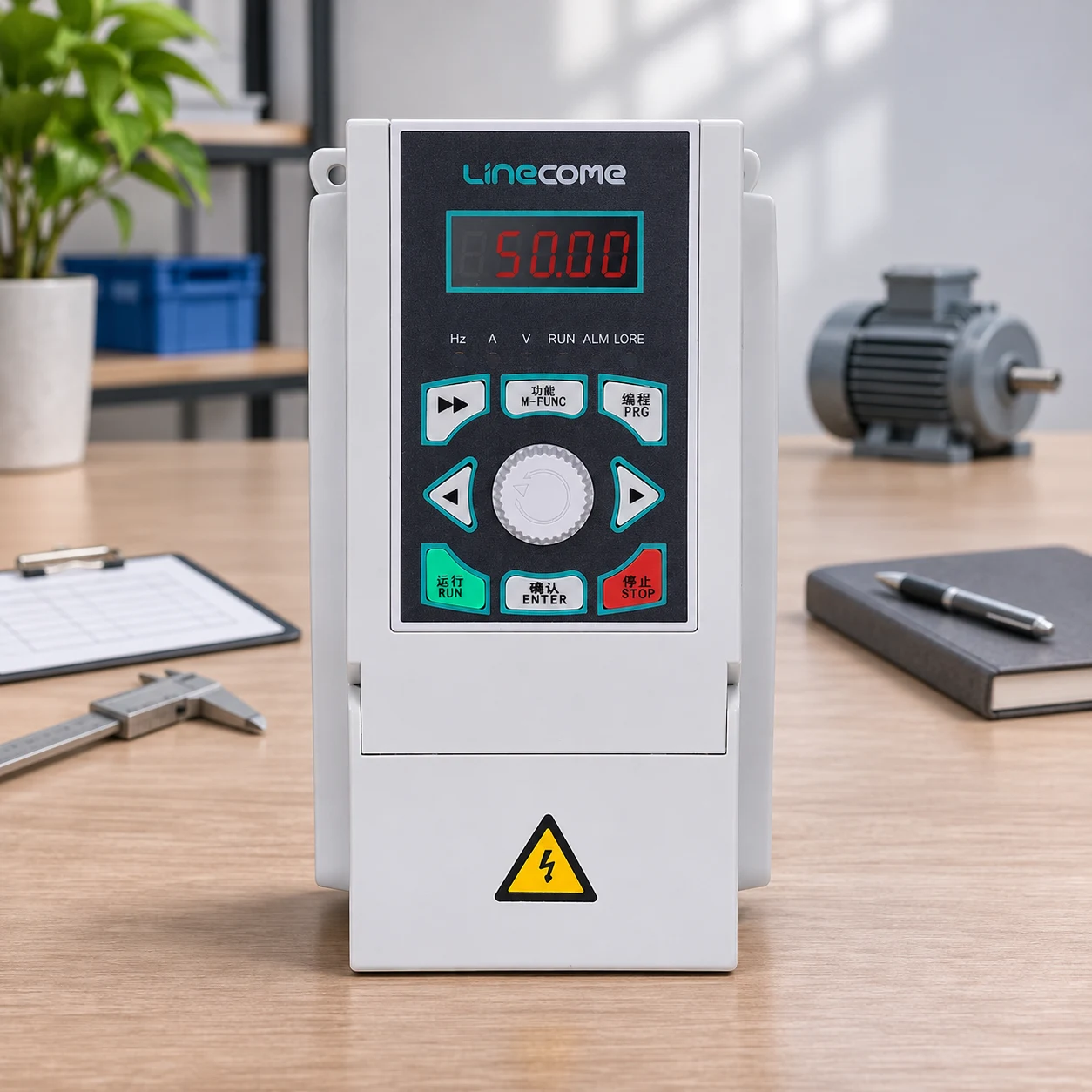
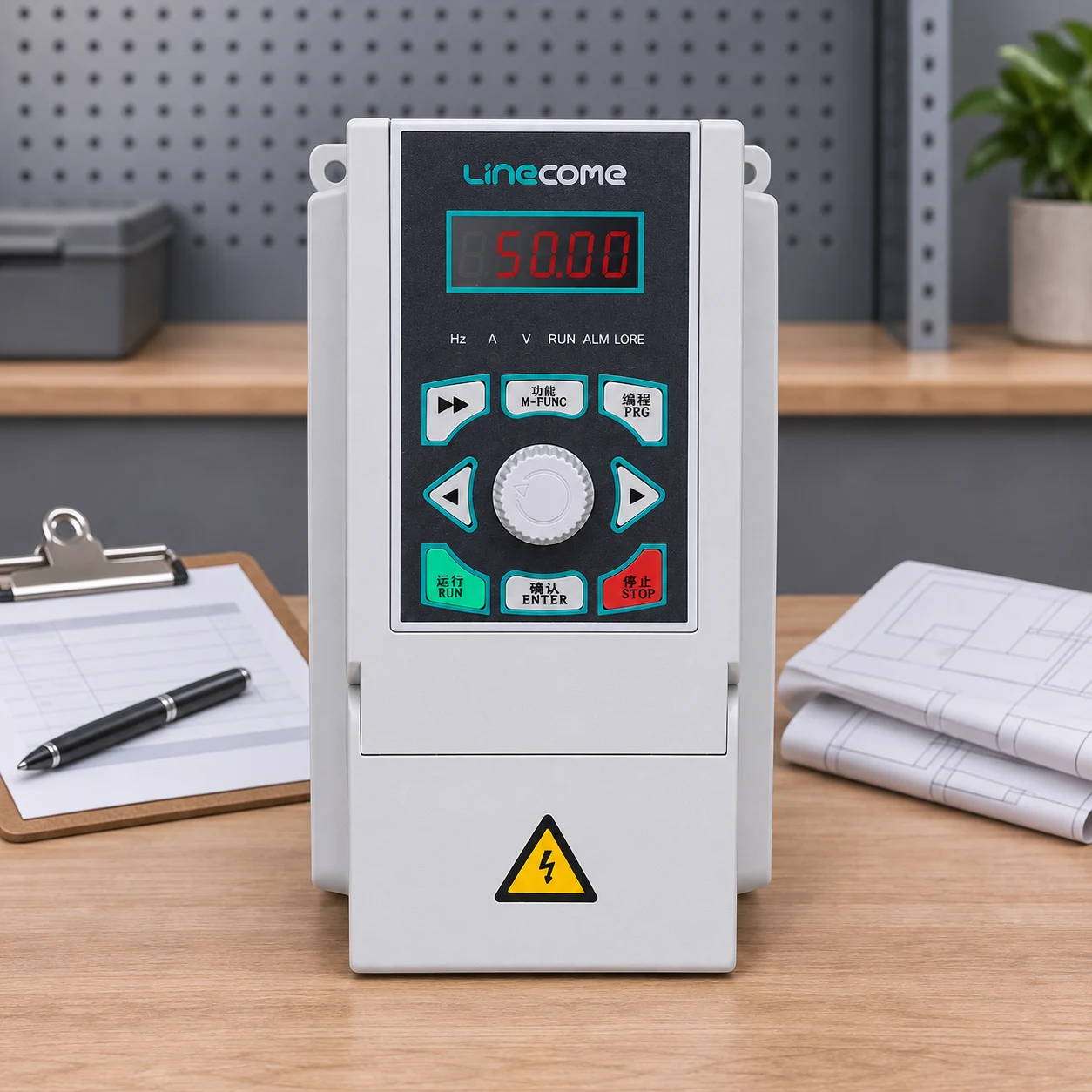
The LINECOME LNC820 general-purpose VFD range is a starting point for motor-control enquiries. The range listing does not establish that a unit can supply a complete mixed-load machine. Provide the application details and request confirmation for the exact selected model. Use the product directory to identify the relevant family before requesting detailed compatibility documentation.
Agree on an acceptance test before ordering
Write the pass conditions into the purchase specification: the accepted load configuration, start sequence, operating modes, voltage and frequency tolerances, any waveform requirements and the observations needed after a supply interruption. Define who will measure each item and what instruments will be used. Otherwise, “it powered on” can become the only acceptance criterion.
Installation and inspection must use appropriate electrical safe-work procedures. OSHA’s electrical work-practice requirements address deenergization and stored electrical energy for covered US workplaces. Follow the equipment manuals and local requirements; a stopped drive or dark display is not proof that internal stored energy has dissipated.
Retain the accepted circuit revision, model and option codes, settings and test results. If a later modification adds a transformer, auxiliary motor or other load, reassess compatibility. Approval for one motor or one tested machine configuration should not silently expand to additional equipment.
Further learning: what a motor VFD actually does
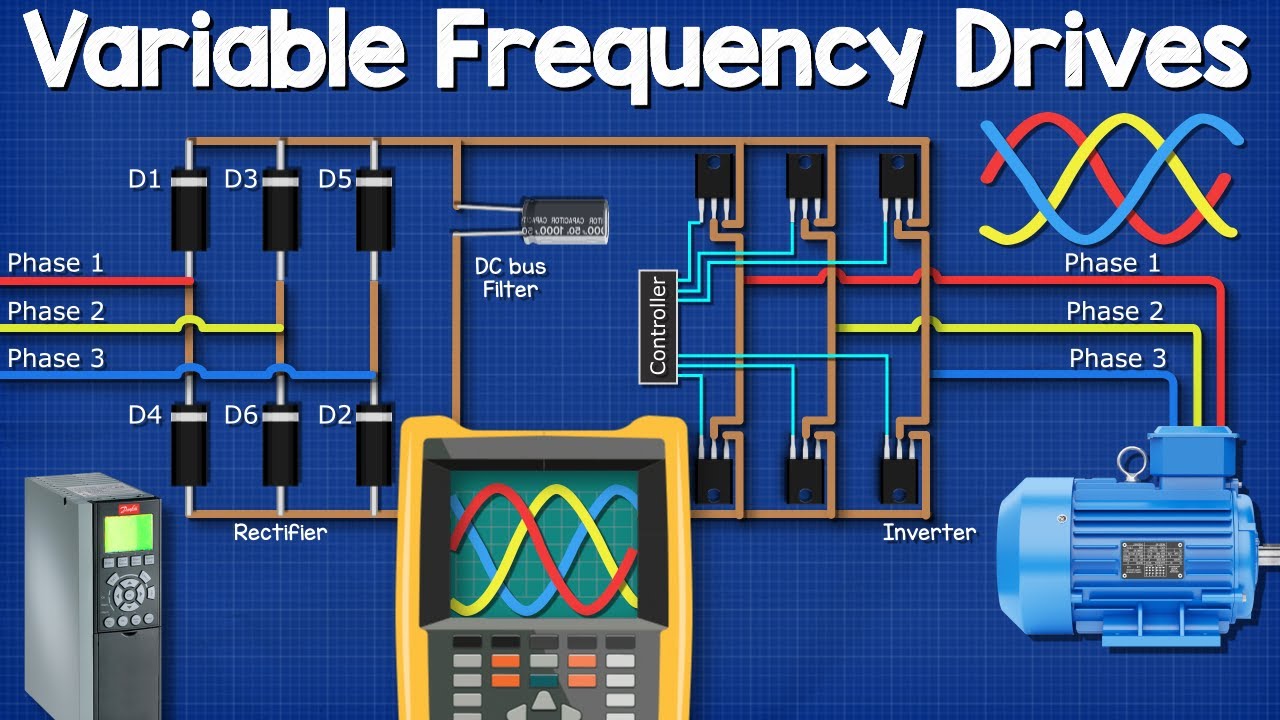
The Engineering Mindset’s video explains the motor-drive conversion stage. Watch it as background for the motor side of this comparison; it does not demonstrate that an arbitrary VFD can supply a complete machine.
Frequently asked questions
Is a VFD a static frequency converter?
A typical electronic VFD is static in the sense that conversion uses no rotating machinery. That description alone does not identify the load types it is approved to supply.
Can a VFD supply an entire imported machine?
Do not assume so. Mixed loads, neutral arrangements, switching, waveform and starting demands require review against the exact converter and machine specifications.
Does setting a VFD to 60 Hz produce utility-quality power?
No. The fundamental frequency setting does not by itself specify waveform, distortion, voltage regulation or compatibility with nonmotor equipment.
What is the first question to ask before requesting a quotation?
Identify whether the output will connect to a motor branch or to complete equipment, then provide the load and supply requirements for that connection point.