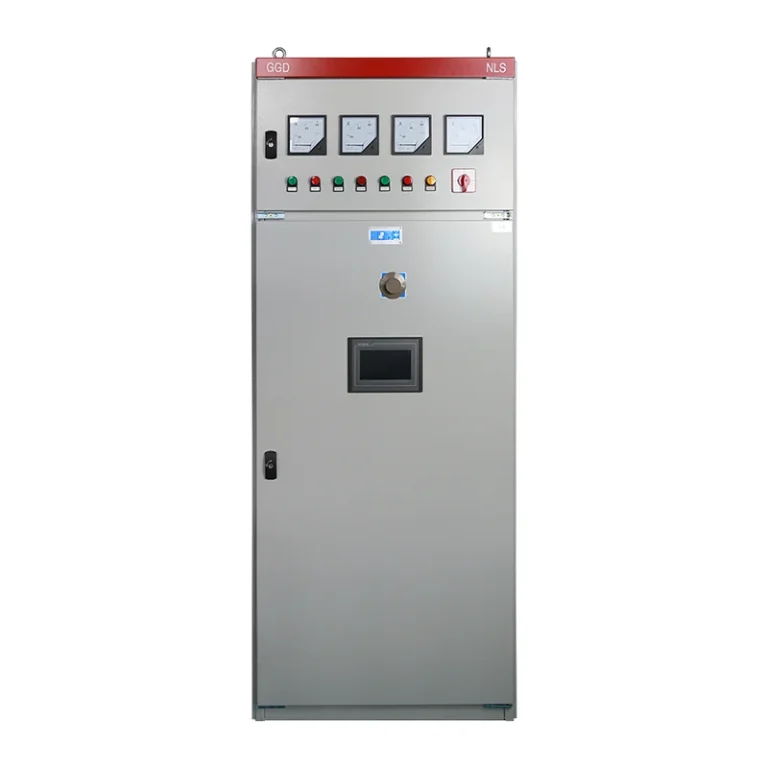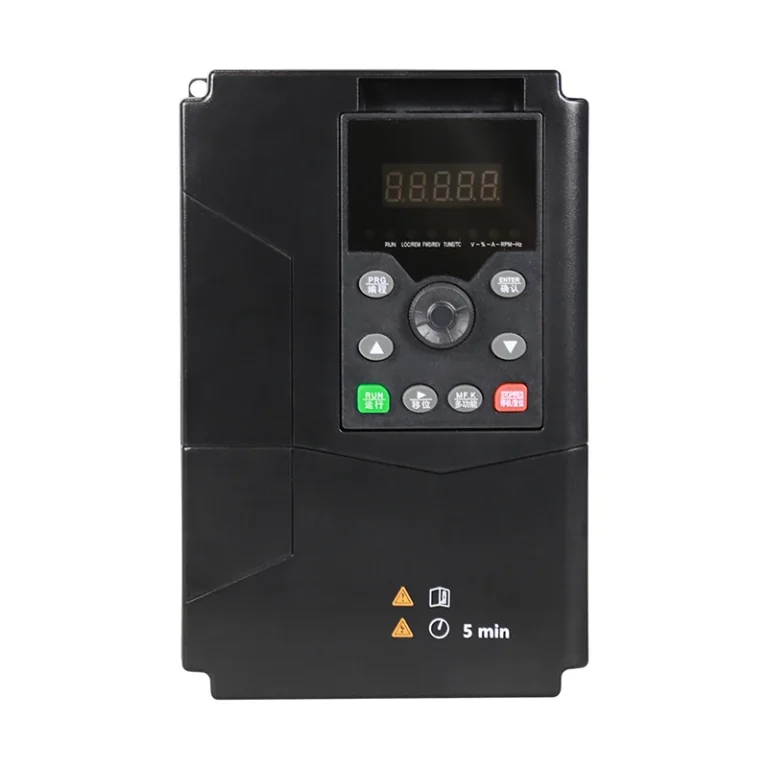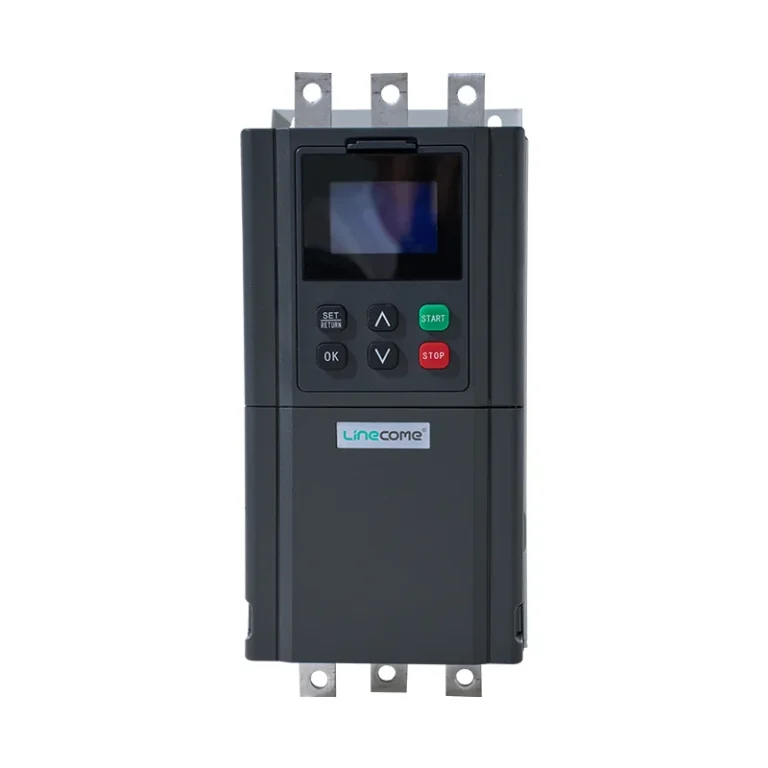

You when to use a soft starter on a motor branch when the load stays at fixed line frequency during run but repeated starts need a controlled voltage ramp—not when the process requires adjustable speed or continuous flow modulation.
Facility buyers searching when to use a soft starter are usually choosing between direct-on-line contactors, impedance steps, and thyristor ramps on pumps, fans, and compressors before they budget a full variable frequency drive line item.
OEM skids shipped with a drive pre-installed can blur the question—confirm whether the motor ever changes speed in production before you treat the factory default as proof that a soft starter would have been enough on a fixed-speed tag.
Use the Soft Starter hub after you mark which motors are fixed-speed with harsh starts. For reactor-versus-SCR comparisons, see current limit versus soft starter; for field wiring, see soft starter installation—this page stays on selection timing, not repair or VFD mechanism.
 .
When a soft starter is the right first buy (decision summary)
Choose a soft starter when speed never changes in normal production but inrush, water hammer, or belt slip punishes direct-on-line starts—thyristor ramps limit terminal voltage during the start interval while run mode stays at utility frequency.
That decision frame is the core when to use a soft starter answer: you are buying start control, not adjustable-frequency supply for throttled fan or pump duty.
If the process needs variable speed, route the tag to VFD application material instead of forcing a soft starter into an adjustable-speed spec.
Fixed-speed pump and fan starts that need inrush control only
Municipal booster pumps, cooling-tower fans, and packaged HVAC fans that run at one speed after start are classic soft-starter candidates when operators still start them frequently across a shift.
Encyclopedia descriptions of motor soft starters tie inrush reduction to silicon-controlled rectifiers increasing terminal voltage over time—electrically distinct from a VFD that changes run frequency.
Document expected starts per hour on the RFQ; occasional seasonal starts may tolerate reactor taps, while hourly starts usually justify SCR ramps with monitoring.
Projects that mention inrush current soft starter in the same sentence as “energy savings” usually mixed up fixed-speed start control with adjustable-speed throttling—clarify whether speed ever changes before you lock the BOM.
A current limiting reactor motor start inserts one coarse impedance step; it can be the economical answer when the motor starts twice a day and utility voltage is stiff, but it will not give operators a repeatable ramp time across seasons.
When utility or mechanical limits punish direct-on-line starting
Weak rural feeders, on-site generators, and long cable runs amplify voltage dip complaints when large motors snap to full voltage—soft starters spread the inrush over seconds instead of one step.
Mechanical teams cite water hammer on long pump columns and belt slip on bulk conveyors as reasons to ramp torque even when speed stays fixed afterward.
From the field: Maintenance forums repeat that a current-limiting breaker governs fault let-through, not a gentle acceleration profile on every start command—size branch protection separately from start control.
When a VFD is overkill for the process
Adjustable-speed drives add rectifier and inverter stages, harmonics planning, and commissioning time that fixed-speed plants may not need when dampers or valves never throttle and the motor never leaves line frequency.
Independent comparison articles contrast soft starters and VFDs on cost and complexity: drives win when speed control is part of the recipe; soft starters win when the goal is controlled starting at fixed speed.
If your when to use a soft starter checklist shows no throttle and no speed recipe changes, keep the tag on reduced-voltage start hardware unless a future retrofit explicitly plans variable speed.
Drive vendors sometimes propose a VFD current limit menu as “soft start enough” on a fixed-speed pump; that still commits the branch to an inverter platform, harmonics review, and motor cable practices a thyristor starter avoids when speed never changes.
Soft starter versus current-limit reactor or breaker assumptions
Reactor or autotransformer taps give one or two discrete inrush reductions; SCR soft starters give adjustable ramp times and often integrate overload and stall reporting in one cabinet.
Current-limiting breakers protect the branch under fault conditions—they do not replace a timed start ramp on every start command.
| Method | Start control | Run frequency | Best when |
|---|---|---|---|
| DOL contactor | None | Fixed | Small motors, stiff utility |
| Reactor / tap | Fixed step | Fixed | Rare starts, coarse limit OK |
| SCR soft starter | Timed ramp | Fixed | Frequent pump/fan starts |
| VFD | Frequency ramp | Adjustable | Throttled flow or speed duty |
 .
Duty cycle and start frequency checklist for soft starter selection
List motor full-load amps, insulation class, utility stiffness, and whether bypass contactors are required after the ramp completes.
Add whether the driven machine needs torque limiting at start only or also during emergency stops—soft starters address the start interval; separate braking or mechanical stops may still be required.
Attach one-line diagrams showing where the soft starter sits relative to overload relays and branch disconnects so estimators do not confuse start control with variable-speed control.
Seasonal irrigation pumps and snow-melt circulation loops often start under cold-fluid viscosity changes; a soft starter lets you lengthen the ramp when winter starts feel harsher without reprogramming a full drive stack you never needed for throttle duty.
Warehouse exhaust fans that run at one speed after start but face generator-backed emergency power may still benefit from reduced-voltage starting so the genset sees less step load when multiple motors come online after an outage.
 .
Matching ZR800 online soft starter series — product fit by motor band
When comparison concludes SCR soft start beats reactor-only or breaker-only assumptions, match motor voltage and amp band to a published online soft starter row.
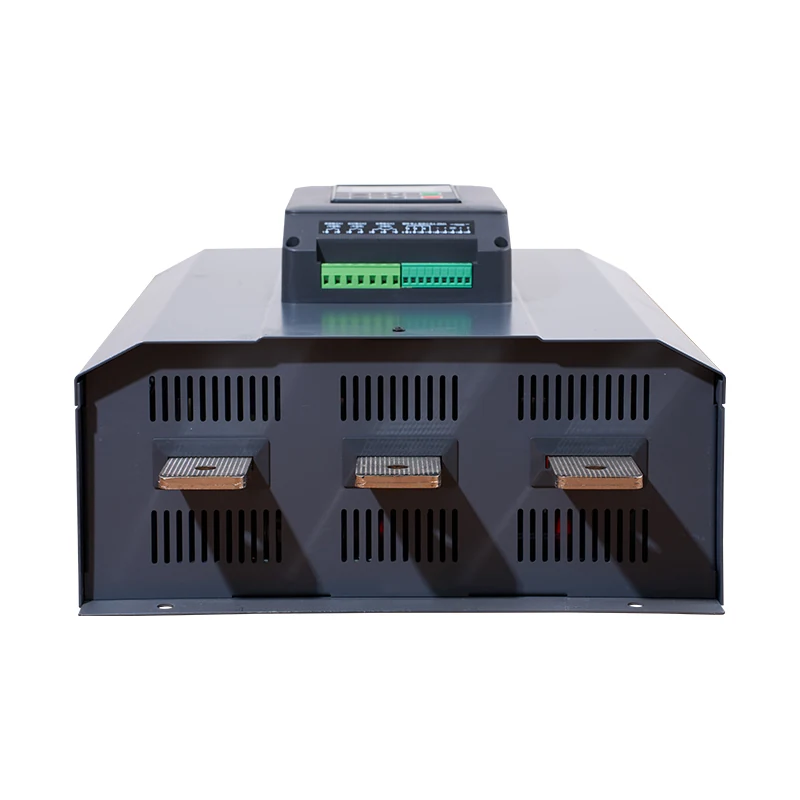
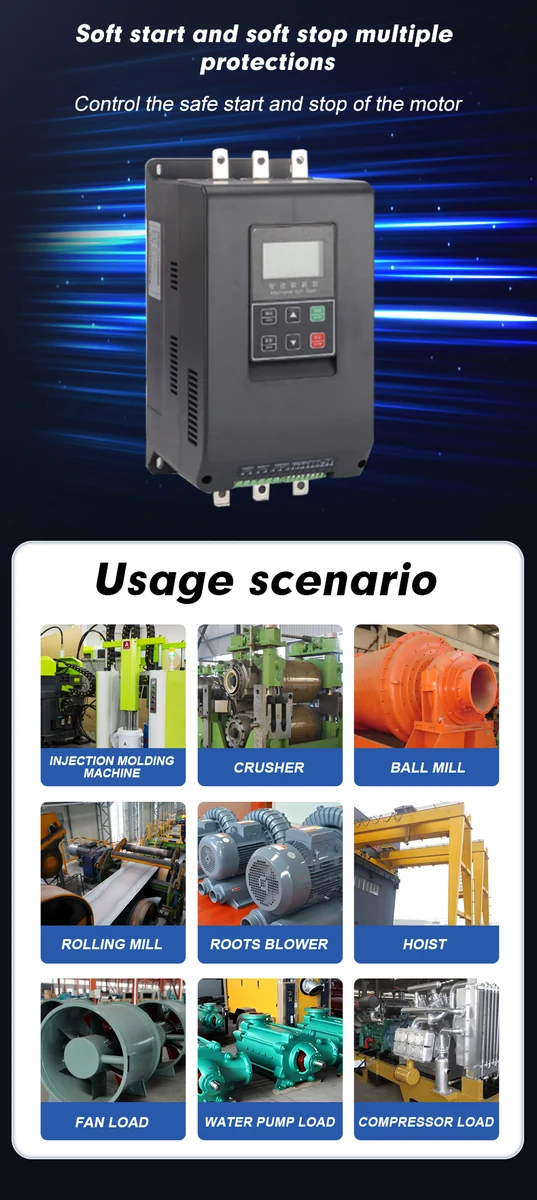
The public ZR800 online soft starter series page documents comprehensive protection and monitoring aimed at pump and fan duty—not a substitute for motor data entry on your one-line.
| Public ZR800 page theme | Why it matters after you decide when to use a soft starter | Your project still verifies |
|---|---|---|
| Online soft starter topology | In-line reduced-voltage start | Bypass strategy, cable length |
| Protection and monitoring feature list | Aligns starter faults with plant expectations | Motor FLA, duty cycle |
| Multiple kW band product rows | Maps large motor names to catalog | Enclosure, ambient |
 .
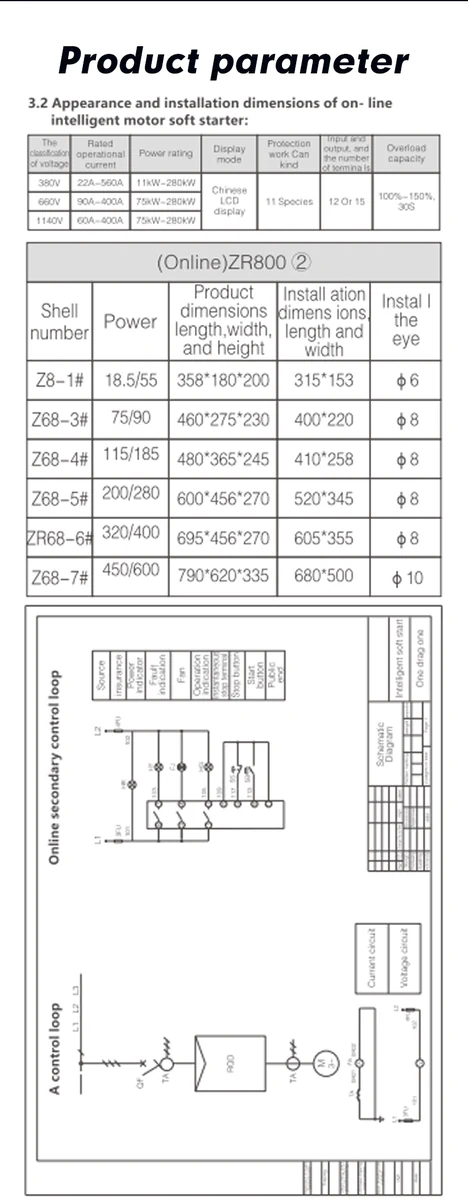 .
Continue specification on the ZR800 product row that matches your nameplate kW and voltage, then share expected starts per hour and utility conditions with the supplier if you need a firm SKU rather than a generic “soft start” note.
Capital projects that bundle several pump stations should decide when to use a soft starter per motor tag rather than per vendor package name—identical hardware descriptions on paper often hide different start frequencies and bypass requirements in the field.
Maintenance supervisors comparing spare-part strategies should note whether the plant standardized on SCR soft starters or kept current limiting reactor spares for legacy taps; mixing philosophies across identical pump models creates training debt for night-shift crews.
Procurement teams reviewing inrush current soft starter quotes should ask vendors to state run-mode frequency explicitly—if the motor remains at line frequency after the ramp, the part belongs in soft-start selection guides like this one, not in adjustable-speed energy narratives.
When two identical pumps serve duty/standby roles, decide when to use a soft starter on each motor independently; standby tags that start rarely may stay on contactors while the duty pump justifies SCR control because it sees dozens of starts per day.
Frequently Asked Questions
These answers summarize selection timing for specifiers—they do not replace motor data sheets or your site safety program.
When should I use a soft starter instead of a VFD?
When the motor stays at fixed speed during run and you only need to soften starts—not when throttling requires adjustable frequency.
When is a soft starter not enough?
When the process needs variable speed, PID flow control, or energy savings from load matching—those are VFD application decisions.
Is a soft starter the same as a VFD set to slow ramp?
No. A soft starter leaves run frequency at line frequency; a VFD changes run frequency for speed control.
How does this differ from current limit versus soft starter?
That article compares impedance, breakers, and SCR methods; this page decides whether soft start belongs on the project at all.
How does this differ from soft starter installation?
Installation covers wiring and commissioning; this page covers whether to specify the device before you buy conduit and panels.
Does every large motor need a soft starter?
No. Stiff utilities and rare starts may tolerate DOL or reactor starts—use the checklist sections above before you standardize on SCR hardware.
References
External references support soft starter selection and scope claims in this guide.