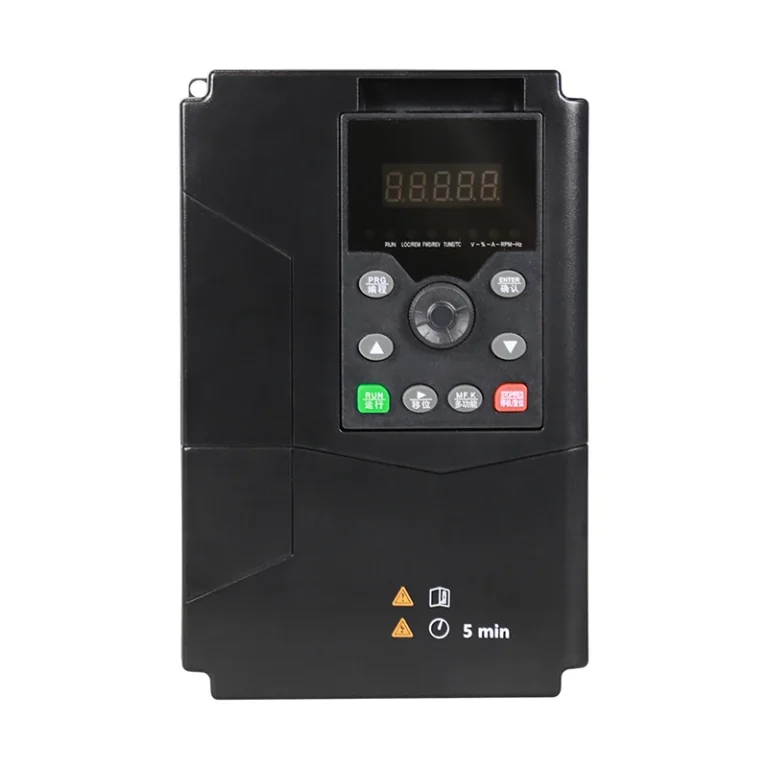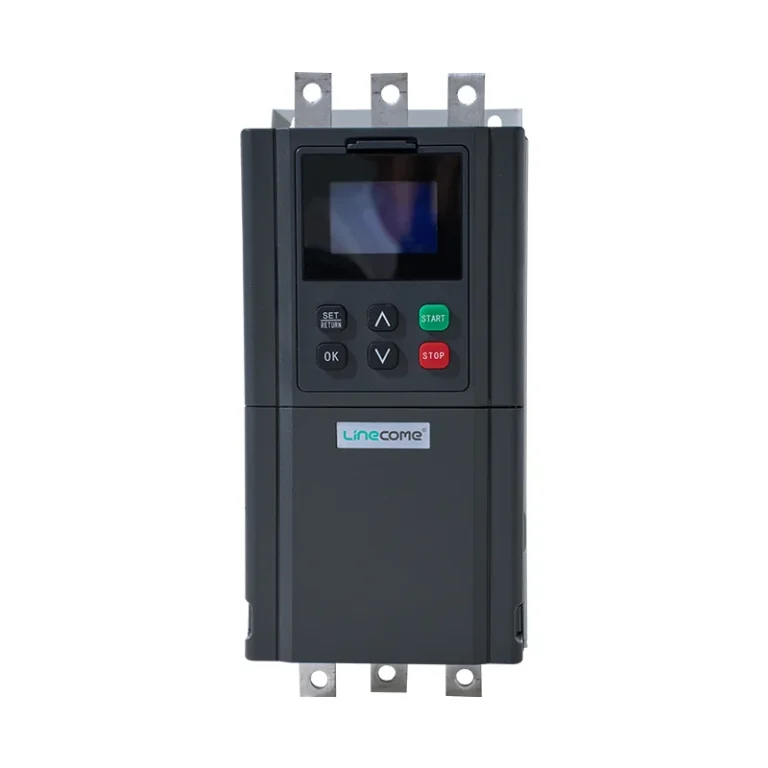

Benefits of a vfd electric motor hoist come down to controlled lift speed: a variable frequency drive (VFD) adjusts frequency and coordinated voltage to the hoist motor so hook travel can ramp up, creep, and slow down instead of jumping between fixed contactor speeds. For industrial overhead lifting—not consumer RV or trailer inverters—the payoff shows up in positioning, repeated-cycle wear, and how much braking work stays with the drive versus the mechanical brake.
Use the Variable Frequency Drive hub to compare drive families, and read how a VFD works when you need the rectifier–DC link–inverter chain behind these hoist outcomes.
 .
Why put a VFD on an electric motor hoist
A hoist motor on line power wants to run at synchronous speed tied to utility frequency. Contactor or two-speed schemes only give you a small set of speeds, which forces operators to accept coarse motion or frequent starts at full voltage. A VFD sits between the supply and motor, delivering adjustable-frequency power so mechanical speed follows the commanded reference across a wide range.
That control layer matters on lifting equipment because the load is suspended. Small changes in acceleration show up as hook bounce, load swing, or hard stops that travel into ropes, drums, and gearboxes. Encyclopedia descriptions of variable-frequency drives emphasize adjustable speed and torque by frequency control—the same principle applied here to vertical motion rather than a conveyor belt.
| Control approach | What the operator feels | Typical trade-off |
|---|---|---|
| Fixed speed / single contactor | On/off lifting at one speed | Simple, but harsh starts and limited positioning |
| Two-speed contactor | High and low speed steps | Better than one speed, still discrete shifts |
| VFD on hoist motor | Continuous speed with ramps | Added drive cost, commissioning, and braking planning |
Smoother speed and positioning on the hook path
Continuous speed control is the benefit operators notice first. Instead of slamming into a high-speed coil or dropping to a slow winding, the drive ramps frequency (and voltage under vector or V/Hz rules) so the hook can inch toward fixtures, align with pallets, or match a paced assembly line.
Field discussions comparing two-speed hoists with VFD retrofits often center on positioning: two-speed control limits you to pre-set speeds, while a drive can hold an intermediate reference as long as thermal and mechanical limits allow. That does not eliminate load swing—pendulum physics still apply—but smoother acceleration reduces the impulse that excites swing compared with abrupt speed steps.
Programmable acceleration and deceleration times also let integrators separate “fast traverse” from “final approach” using multi-step references or a built-in PLC profile when the drive supports it. The goal is repeatable motion across shifts, not maximum speed on every cycle.
Less mechanical shock on brakes, ropes, and gearboxes
Hoist brakes are safety and holding devices, not necessarily the best tool for routine deceleration. When a motor is switched off abruptly, mechanical brakes absorb kinetic energy on every stop, which heats linings and stresses linkages. Educational material on VFDs notes soft starting reduces inrush; the same ramp concept on deceleration lets the drive reduce motor torque in a controlled way before the brake sets—when the hoist OEM’s control philosophy allows that sequence.
Many modern hoist packages therefore treat the brake as a parking and emergency device while the drive handles service stopping. That pattern appears repeatedly in crane-industry articles (not cited here as standards). Your retrofit must follow the existing hoist manual: some designs require the brake to release only after the drive proves holding torque; others interlock upper limit switches and overload devices independently of the drive.
Reduced mechanical shock also protects wire rope lay, drum grooves, and gearbox teeth. Lower peak accelerations mean lower dynamic rope tension spikes during starts and stops. This is qualitative wear reduction— not a guaranteed doubling of rope life without condition monitoring.
 .
Motor and drive protection during lifting duty
Industrial hoist motors see high cyclic duty: frequent starts, occasional overload pulls, and heat buildup in the motor and drum room. A VFD can limit current during start, enforce thermal models, and trip on overcurrent or stall conditions according to its parameter set. Wikipedia’s overview of drives includes adjustable torque control as a core capability; on a hoist, that translates to refusing a run command when torque demand exceeds a safe envelope—provided sensors and programming match the application.
Vector-capable drives add motor-model-based control that can respond to changing load torque as the hook picks up parts. That is not a substitute for a hoist-rated overload device or upper-limit switch; those remain part of the machine safety chain. Think of the drive as one layer that can reduce nuisance trips from inrush while still stopping on a true mechanical overload when wired correctly.
Energy and duty-cycle expectations on hoist motors
Department of Energy (US) summaries on adjustable-speed drives highlight matching motor speed to load requirements—language borrowed from fan and pump efficiency work. On hoists, the analogy is narrower: energy savings appear when average operating speed and torque fall below what a fixed-speed motor would draw if it ran at full speed between picks. A hoist that always lifts at maximum speed and dwells loaded may show little kWh difference.
Where VFDs still help economically is cycle smoothing: fewer peak demands on the plant bus, reduced maintenance on brakes and mechanical shock-related failures, and the ability to slow idle traverse. Do not promise payback percentages without metering on your duty class.
When vector control matters for hoist torque at low speed
Many hoist applications spend time at low hook speed under full load—tooling changes, die work, or synchronized assembly. Vector control (SVC)—open-loop sensorless vector—and closed-loop vector (FVC) modes attempt tighter torque control than plain V/Hz, which helps maintain lift torque at reduced frequency after motor data is entered and auto-tune succeeds.
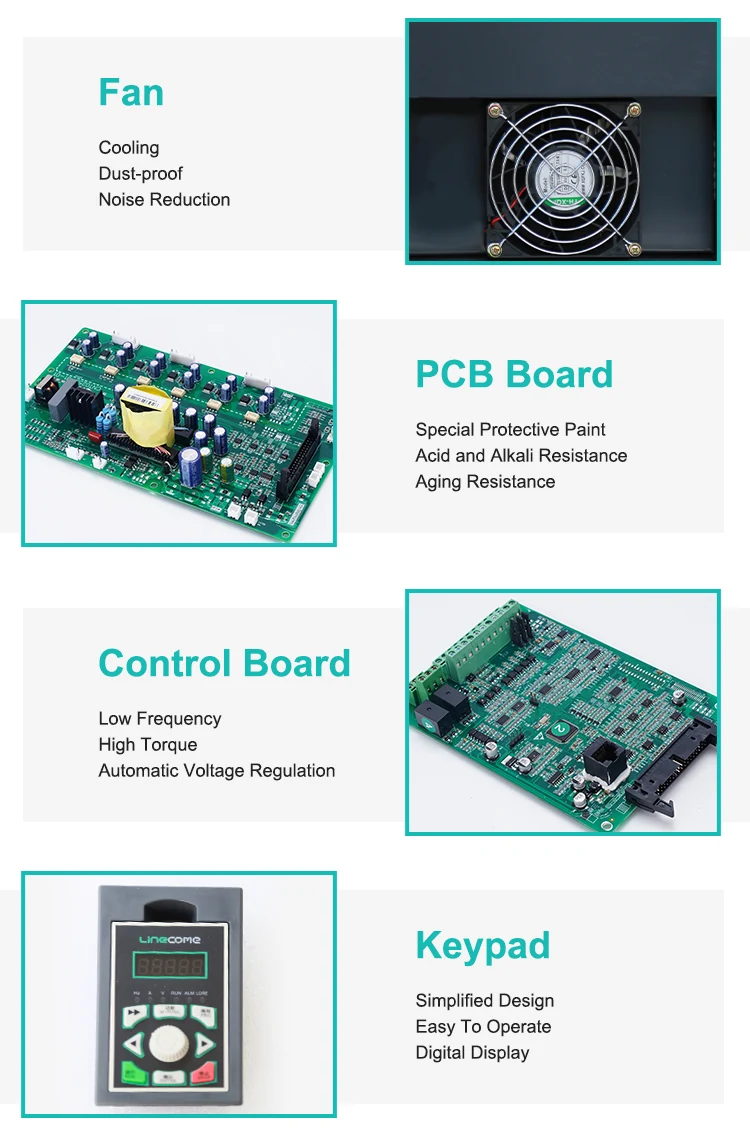
The public LNC860S vector VFD series page lists hoisting equipment among example industries and documents both SVC and FVC in its control characteristics table, with output frequency 0–500 Hz and acceleration/deceleration time settings spanning 0.1–6500.0 seconds. Feature bullets on the same page state starting torque can reach 150% at 0.25 Hz under SVC and overload capacity of 150% rated output current for one minute—catalog language still requiring confirmation against your motor nameplate and hoist duty class.
Vector control is not mandatory for every monorail with two picks per hour. It becomes relevant when low-speed loaded motion would stall under scalar control or when torque limits must be tighter for process quality.
 .
Retrofit and specification checklist before you buy
Treat a VFD quote as part of the machine record, not a standalone component swap.
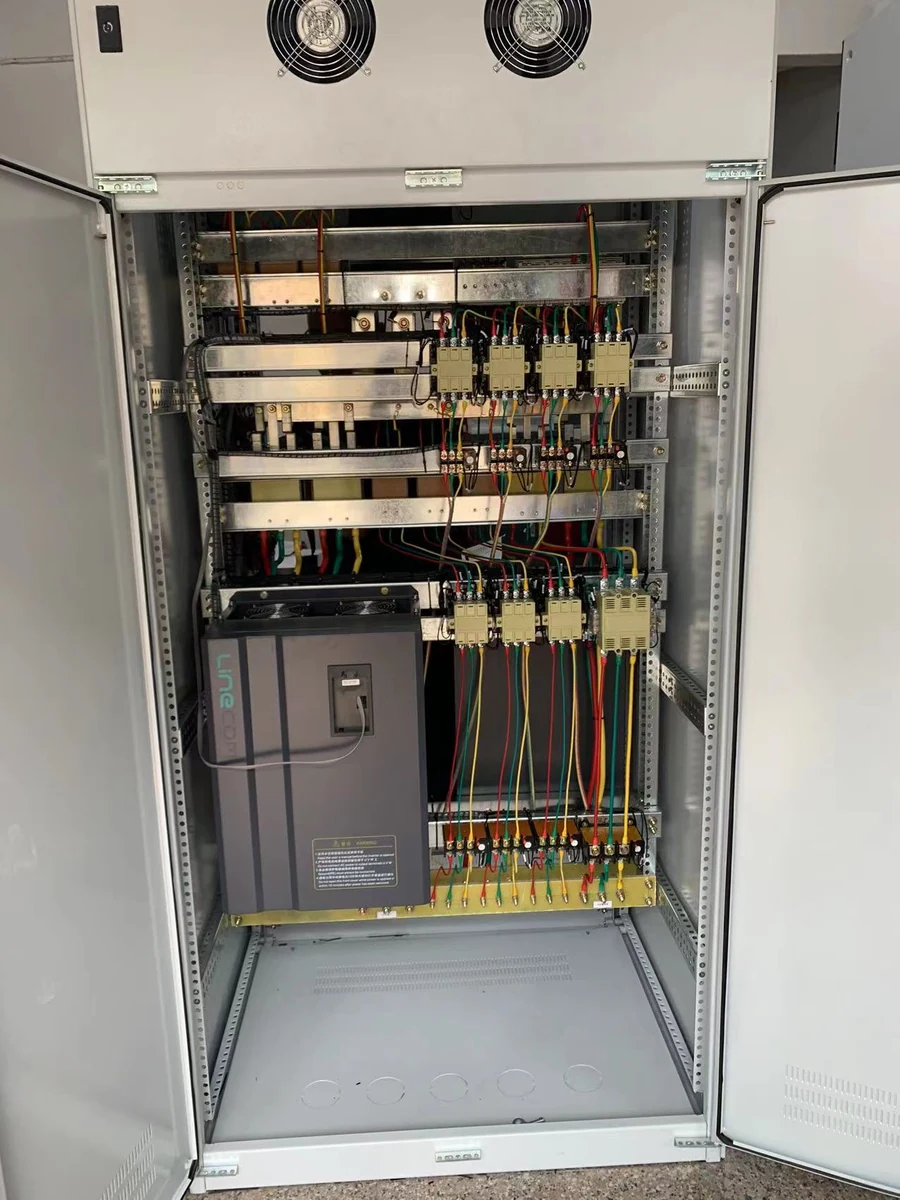
Collect motor nameplate amps, voltage, frequency, insulation class, and duty (S1–S3 or OEM class). Record existing control voltages, brake coil logic, and whether the brake is released by a contactor or a drive output. Document supply phase at the panel and available short-circuit protection.
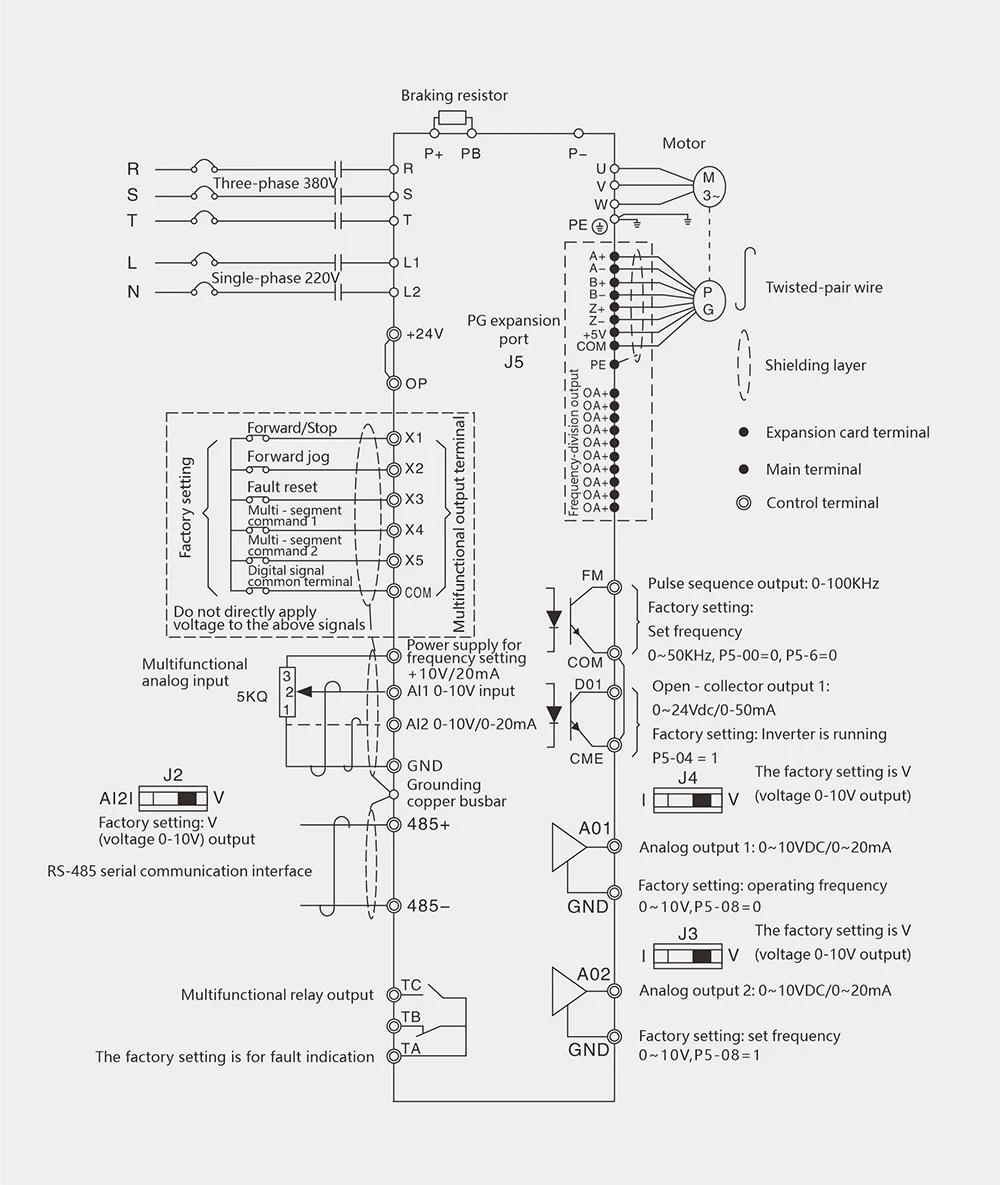
Plan braking explicitly: service stops may use deceleration ramps; emergency stops may still require mechanical brake and safety PLC inputs per OEM wiring. Regenerative energy during lowering may need a brake chopper and resistor sized for the hook load—catalog “built-in braking unit optional” lines are not automatic approval.
Capture communication needs early (Modbus, hardwired I/O, or future SCADA). Finally, confirm environmental class: heat, dust, and vibration common to hoist bays may push you from a bare drive to a protected enclosure SKU.
Important: Brake sequencing, overload devices, and upper-limit switches remain hoist-OEM responsibilities—source: U-01 integrator safety themes. A drive retrofit that ignores those interlocks is not a completed safety design even if the motor spins.
Vector VFD fit for hoist motors (LNC860S as a bounded example)
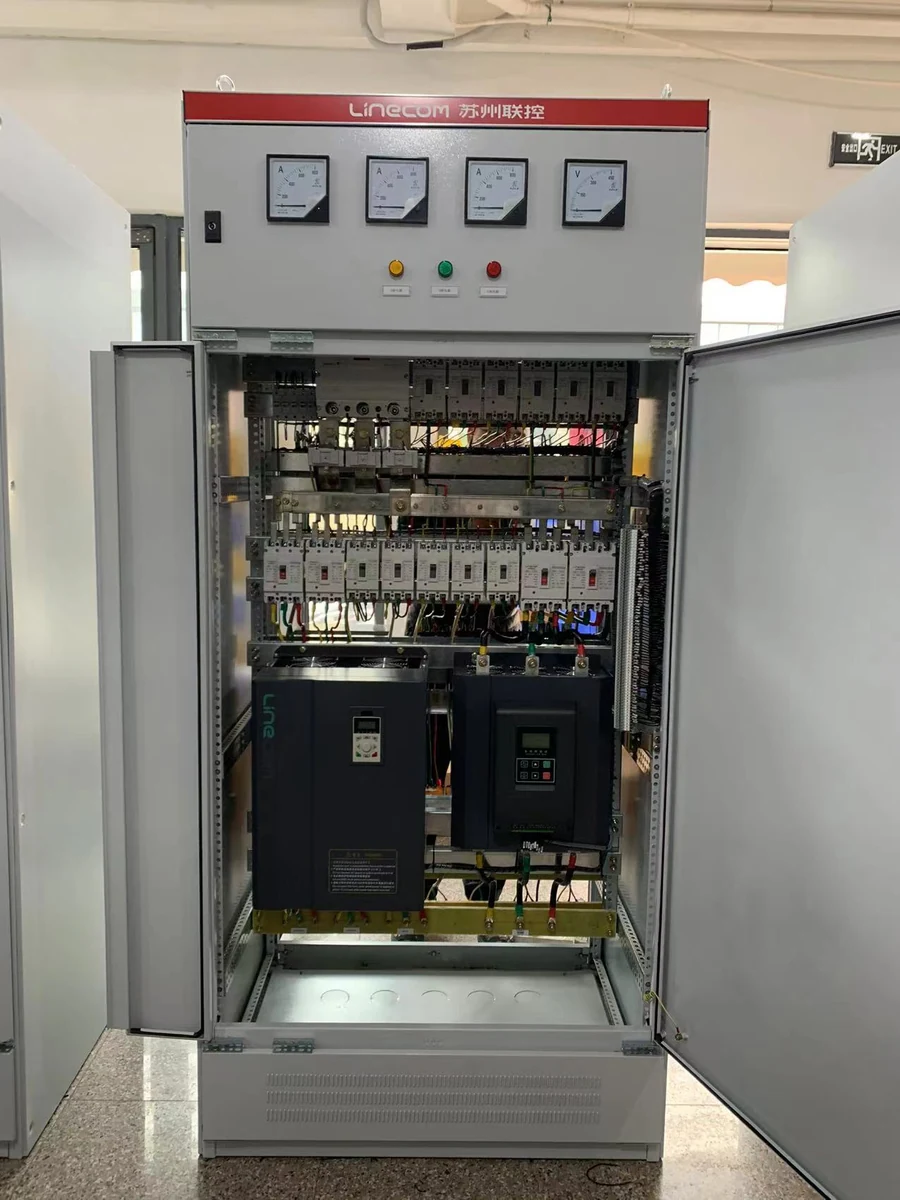
When your application needs the vector features described above, map requirements to a published family instead of guessing from a keyword. The LNC860S page positions the series for higher-performance motor control with optional fieldbus cards, built-in PID, and multi-step speed operation—capabilities that align with staged lift profiles when integrators program them.
| Public LNC860S page item | Hoist-relevant reading | Your project still verifies |
|---|---|---|
| SVC and FVC modes listed | Low-speed torque and encoder options | Motor data entry, encoder wiring if FVC |
| 0–500 Hz output frequency | Electronic speed range | Mechanical speed limits, rope speed caps |
| Accel/decel time range 0.1–6500.0 s | Ramp tuning for soft starts/stops | Load tests with actual hook mass |
| Hoisting equipment named in overview | Application alignment | OEM duty class and safety approvals |
| RS485 / Modbus mentioned | Supervisory monitoring | Register map and fault handling |
 .
Continue specification on the LNC860S 0.75–2.2 kW vector VFD product page for the model row that matches input voltage and output current, then share nameplate photos with the supplier if you need a duty confirmation. If the lift only needs a controlled start at one speed, compare soft-start or two-speed options in the VFD hub before committing to full vector control.
Frequently Asked Questions
These answers summarize hoist-specific benefits, brake interaction, and vector control choices without replacing OEM wiring diagrams or safety inspections.
What are the main benefits of a VFD on an electric motor hoist?
Adjustable speed, controlled acceleration and deceleration, finer hook positioning, and drive-side current limiting—compared with fixed-speed or two-speed contactor control.
Does a VFD extend hoist brake life?
It can reduce routine stopping duty on mechanical brakes when deceleration is handled by the drive and the OEM design uses the brake primarily for hold and emergency events—but only if brake sequencing matches the approved wiring diagram.
Is a VFD hoist more energy efficient?
Sometimes, when average speed and torque stay below full-speed operation for much of the shift; hoists that always run fast and loaded may see smaller kWh changes without a measured baseline.
VFD or two-speed hoist—which is better?
Two-speed control stays valid for simple high/low cycles; a VFD wins when you need continuous speed, synchronized ramps, or vector torque at low hook speed.
Do hoists need vector control?
Not always. Vector modes help on low-speed loaded lifts where scalar V/Hz would weaken torque—after motor data and tuning on a drive that supports SVC or FVC.
What data do I need before retrofitting a VFD on a hoist motor?
Motor nameplate, duty class, brake and limit-switch logic, supply phase, desired ramps, braking/regeneration plan, and environmental conditions around the drive mounting location.
Can any hoist motor run on a VFD?
Only after nameplate voltage, frequency, current, insulation, duty, and cooling match the drive rating and the hoist OEM approves VFD operation for that machine.
How does a VFD relate to load swing?
Smoother acceleration can reduce excitation of pendulum swing, but active anti-sway requires application-specific control beyond a generic drive parameter set unless your OEM documents it.