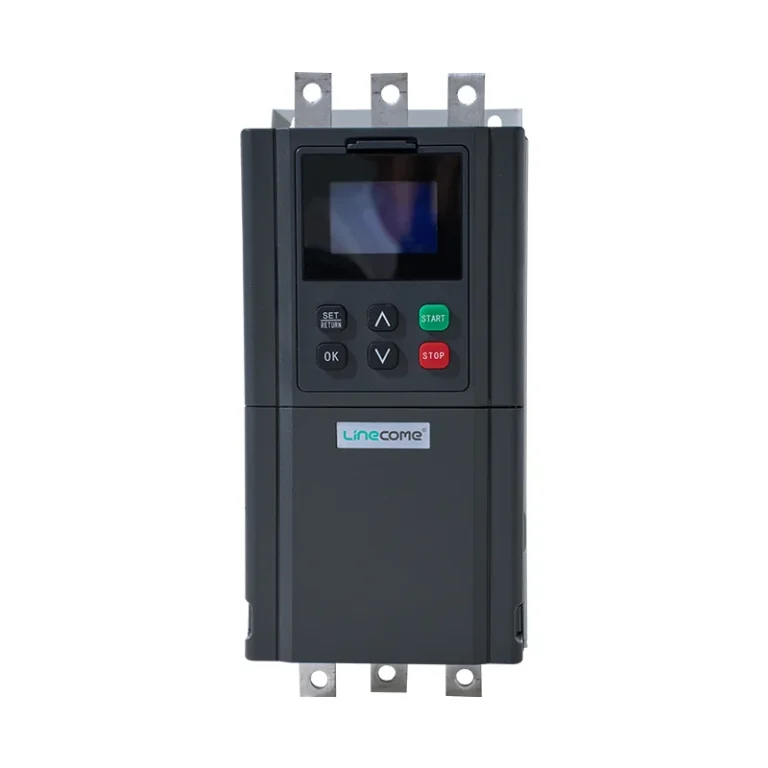

How to work soft starter circuits during a normal start means the motor soft starter raises induction motor terminal voltage over a programmed ramp using silicon-controlled rectifiers, then transfers run current through a bypass contactor while the motor stays at utility frequency—not at an adjustable VFD speed.
Maintenance leads and OEM buyers searching how to work soft starter behavior need that start–bypass–run chain on every motor soft starter (soft starter) tag before they interpret fault codes or sign off on pump and fan skids. Wiring steps live in soft starter installation; selection timing lives in when to use a soft starter—here the focus stays on operating sequence.
Browse the Soft Starter hub when you compare online, bypass, and cabinet families across the catalog.
 .
How a soft starter works during start, run, and stop (overview)
A soft starter works by limiting voltage (and therefore current and torque) only during the start interval, then behaving like a short-circuiting contactor path at run for efficiency.
During start, SCR pairs in each phase gradually increase conduction so the motor sees rising voltage instead of an instant line step. During run, a bypass contactor typically closes so current bypasses the semiconductors, reducing heat and losses. During stop, the unit may coast, ramp voltage down, or open control per the model manual—behavior is not interchangeable with a VFD’s frequency deceleration ramp.
| Phase | Power path | Motor electrical experience | Typical buyer concern |
|---|---|---|---|
| Start | SCR modulated | Rising voltage, limited inrush | Water hammer, belt slip, utility dip |
| Run | Bypass closed | Full line frequency | Heat in cabinet, run efficiency |
| Stop | Model-dependent | Coast or controlled ramp-down | Controlled stop on vertical pumps |
Important: Community notes on motor soft starter talk pages repeat that bypass timing must be proven in the field—assuming the contactor closed because the motor “sounds at speed” invites heat trips on the next start if bypass failed.
Voltage ramp and SCR phase control during the start interval
Voltage ramping in a silicon-controlled rectifier (SCR) soft starter is phase-angle control: each SCR conducts for a portion of the AC cycle, so the motor terminals see a fraction of the sine wave early in the ramp and a larger fraction as the ramp timer or current feedback advances.
Encyclopedia summaries describe thyristor soft starters as increasing applied voltage over time rather than applying full line voltage in one step. That is mechanically different from a reactor start’s single impedance step and electrically different from a VFD that builds both voltage and frequency together for speed control.
Integrators should record the configured ramp time and starting current limit from the parameter set—not from marketing glossaries—because the same kW band can ship with different default ramps by firmware revision.
 .
Pump applications often lengthen ramps when column water is static; fan applications may shorten ramps when inertia is low but inrush still matters to upstream transformers.
Bypass contactor operation and when semiconductors leave the circuit
The bypass contactor closes after the starter logic decides the motor has reached sufficient speed or voltage—often when ramp completes or current falls below a threshold defined in the manual.
Closing bypass removes continuous duty from SCRs, which would otherwise overheat at full-load run current. Online soft starters remain in series with the motor until bypass proves closed; miswired bypass auxiliaries are a common reason for “runs hot” or “trips on second start” field reports.
Internal bypass units integrate the contactor in the same enclosure; external bypass schemes place the contactor beside the starter for larger amp frames. Both require proof that aux contacts match the control diagram before production starts.
Run mode at line frequency versus adjustable-speed drives
A soft starter does not change motor speed during run in the VFD sense: once bypass is closed, the motor runs at synchronous speed dictated by line frequency and pole count, minus slip.
Variable frequency drives continuously adjust output frequency for throttling; soft starters only shape the start and sometimes stop intervals. If the process needs variable flow or speed tracking, route the tag to VFD application material rather than expecting a soft starter to hold an intermediate speed.
| Control device | Run frequency | Primary value |
|---|---|---|
| Soft starter | Fixed line frequency | Controlled inrush at start |
| VFD | Adjustable | Speed matching and energy at part load |
For impedance-versus-SCR naming confusion, see current limit versus soft starter—that page compares methods; this page explains SCR timing once you already specified a soft starter.
Stop commands, coast, and controlled ramp-down behavior
Stop on a soft starter is not one universal profile: some models open the bypass and ramp voltage down; others remove gate drive and let the motor coast; still others interlock with a motor contactor or brake module documented separately.
That differs from a VFD deceleration ramp, which reduces output frequency and coordinates braking energy in the DC link. Maintenance teams should document which stop mode is configured on each tag so remote operators do not confuse a coast stop on a vertical pump with a controlled ramp.
Emergency stops from safety PLCs usually drop control power or open upstream contactors per the machine safety assessment—the soft starter’s soft stop feature does not replace category-rated emergency circuits.
 .
Maintenance and OEM logs after starts and fault trips
After abnormal starts, maintenance teams should log ramp time setting, observed starting current trend, bypass auxiliary state, fault code, and cumulative runtime if the controller exposes it.
OEM skids shipped with soft starters should include a one-line sequence card: start command → ramp active → bypass proved → run permissive → stop mode. Field edits to ramp or current limit without updating that card create warranty and safety traceability gaps.
When trips repeat, distinguish repair workflows in soft starter repair from normal operating logs here—repair owns measurement and component isolation; this section owns what “healthy operation” should look like on the HMI or indicator set.
ZR800 online soft starter series — product fit for monitored pump and fan duty
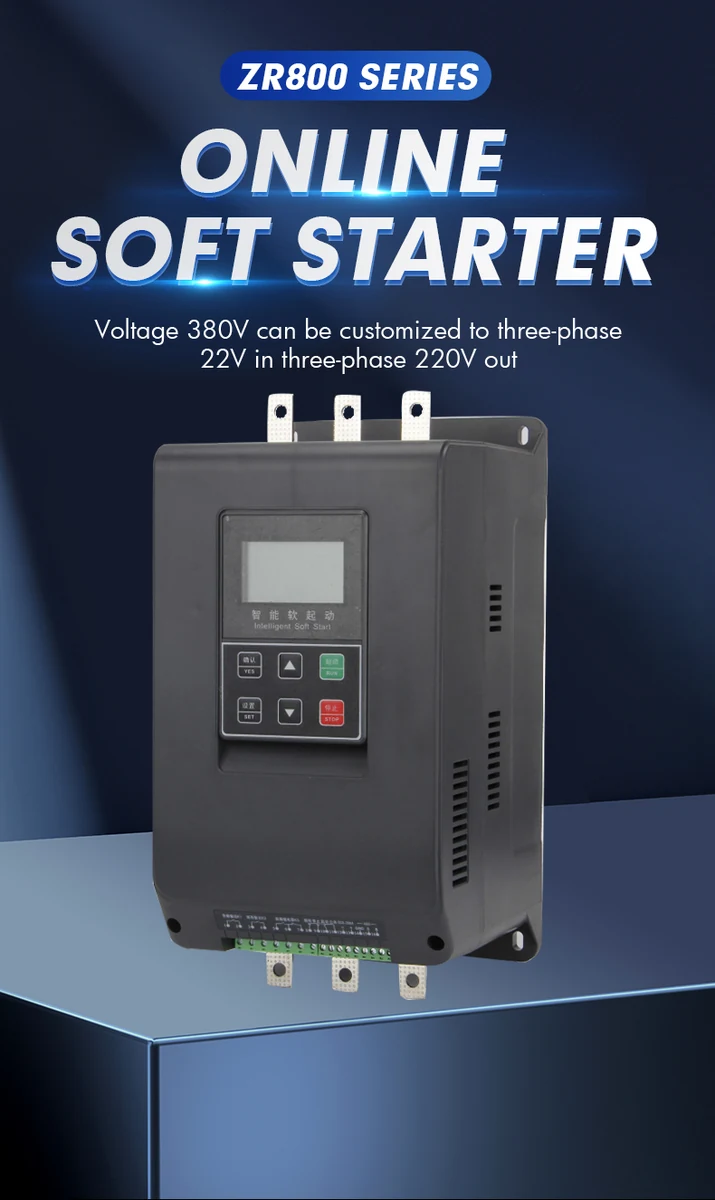
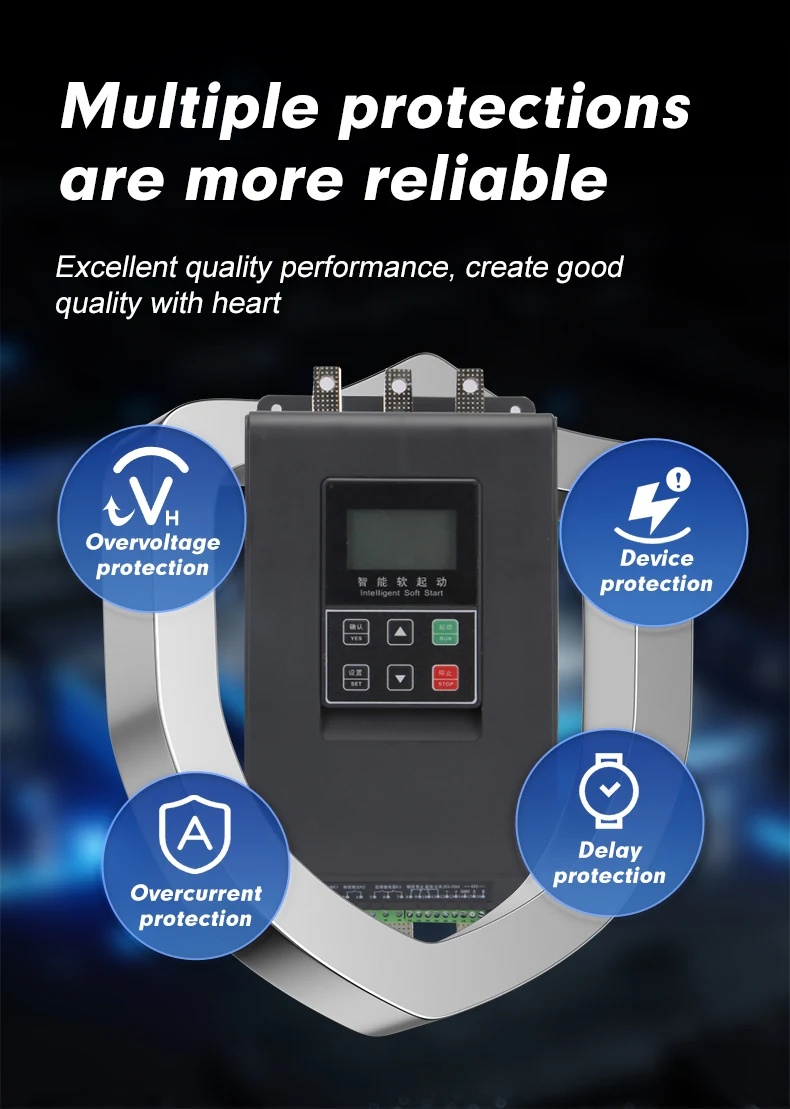
When the mechanism sections match your duty, align motor band and voltage class with the public ZR800 online soft starter family before you copy parameters from a generic cheat sheet.
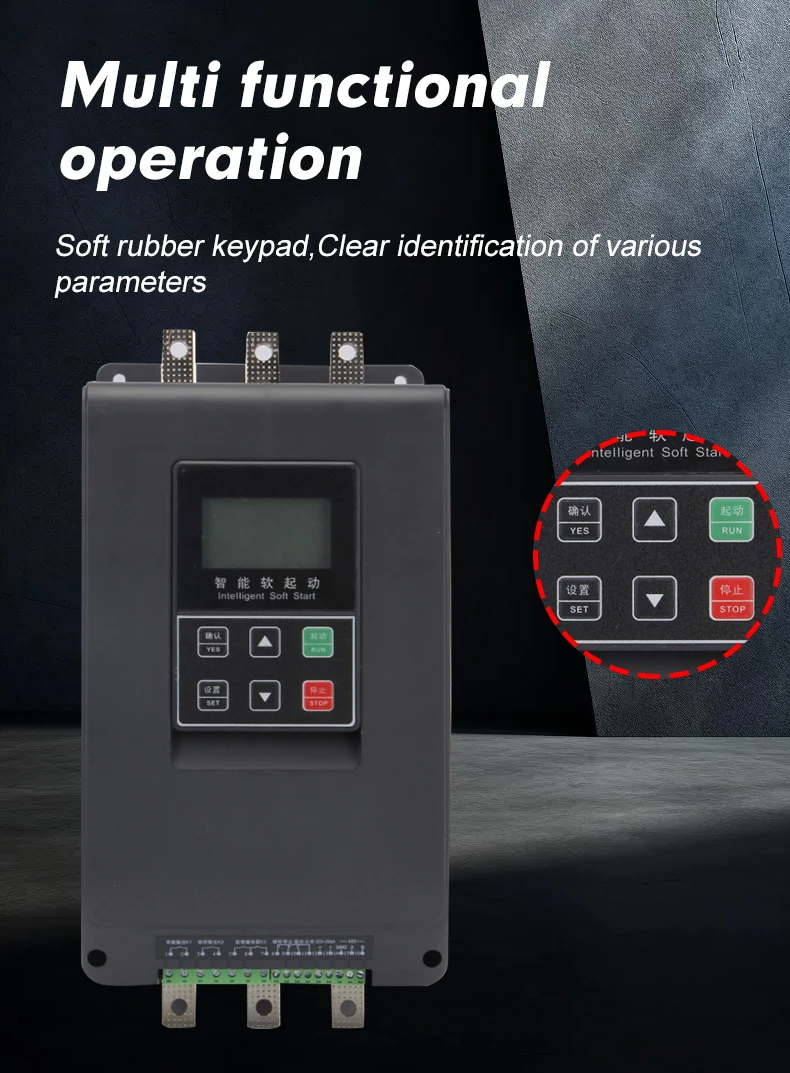
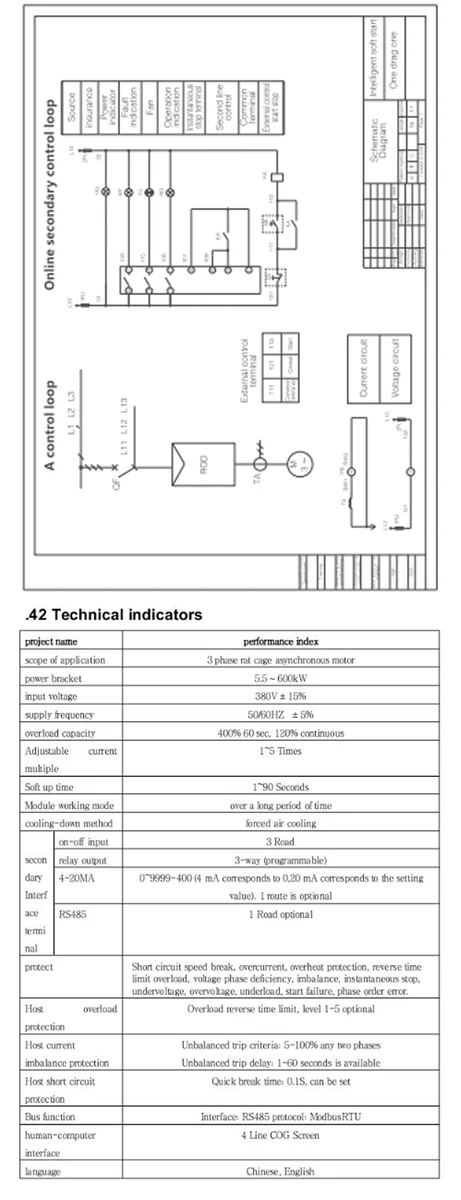
The published ZR800-18.5-90KW online soft starter series page lists comprehensive protection and monitoring aimed at pump and fan applications—not a substitute for the exact model manual on your skid.
| Public ZR800 theme | Why it matters after you understand how the soft starter works | Your project still verifies |
|---|---|---|
| 12 protection functions on features list | Maps starter faults to plant alarm philosophy | Motor FLA, duty, bypass wiring |
| Monitoring of current, voltage, phase sequence, frequency, runtime | Supports maintenance logs in earlier section | Sensor scaling, comms path |
| 4–20 mA output with 0.5% linear accuracy on features list | Ties process meters to starter health | Loop power, grounding |
 .
 .
Select the catalog row that matches nameplate kW and voltage, then confirm ramp, bypass, and stop parameters against the manual for that SKU before production release.
Packaged pump skids sometimes ship with default ramp times tuned for cold water only—summer maintenance should confirm whether lengthened ramps are documented after seasonal valve changes so night crews do not confuse normal longer starts with bypass faults.
Generator-backed sites should note that soft starters reduce step load during ramp but still draw starting current above run FLA until bypass—coordinate with generator sizing studies rather than assuming DOL-level inrush disappeared entirely.
Training materials for new technicians should show line frequency run mode explicitly after bypass—confusing soft starters with inverter drives leads to false expectations about holding an intermediate speed during production.
Frequently Asked Questions
These answers summarize operating behavior for maintenance and OEM readers—they do not replace the manufacturer manual or site safety rules.
What does a soft starter do during the start interval?
It limits voltage rise using SCR phase control so inrush and starting torque increase gradually instead of in one direct-on-line step.
How does voltage ramping work in an SCR soft starter?
Thyristors increase conduction angle over time so motor terminals see a growing fraction of the AC waveform until ramp completes or current feedback releases the bypass.
When does the bypass contactor close?
After ramp logic decides the motor is sufficiently at speed—commonly when ramp finishes or starting current falls below a manual threshold—and auxiliaries must prove closed before run is treated as healthy.
Does a soft starter change motor speed during run?
No. After bypass, the motor runs at line frequency speed; throttling still belongs to dampers, valves, or a VFD if the process requires it.
How is stop different from a VFD deceleration ramp?
A soft starter stop profile works on voltage removal or a starter-specific ramp-down at fixed frequency, whereas a VFD ramps output frequency and manages DC-link energy during deceleration.
What should maintenance teams log after each start?
Ramp setting, starting current trend, bypass proof, fault codes, and runtime counters when available—plus any parameter changes with date and technician ID.