
The honest disadvantages of soft starter hardware matter as much as the benefit pages on your bid tab: thyristor ramps control start intervals but do not give continuous speed control, semiconductors can heat during long ramps before bypass, many designs need a bypass path for efficient run, and the device is not a universal substitute for direct-on-line on every high-inertia tag.
Procurement teams reading disadvantages of soft starter rows should cross-check upside articles—soft starter benefits, advantages of soft starter, advantages of motor soft starter—without copying their H2 structure; this URL owns limitations and trade-offs. Selection timing stays on when to use a soft starter; ramp mechanics stay on how to work soft starter; reactor naming stays on current limit versus soft starter.
Browse the Soft Starter hub before you lock a starter family on the motor schedule. Treat soft starter limitations as a checklist distinct from benefit pages, and read soft starter vs vfd disadvantages as a speed-control split—not as interchangeable marketing bullets on the same RFQ line.
 .
Fixed-speed run limitation versus adjustable-speed drives
Motor soft starter summaries describe controlled voltage during start and line-frequency run afterward—that fixed-speed limitation is the first disadvantage when the process needs throttling, recipe speeds, or continuous flow modulation.
Variable-frequency drives exist precisely because soft starters do not change output frequency during production; if operators must hold intermediate speeds, the disadvantage is not “missing a menu item” but buying the wrong control class entirely.
Cross-read advantages of VFD when adjustable Hz is part of normal duty—not when you only need a gentler start on a pump that always runs at synchronous speed.
SCR heat and long ramp intervals before bypass closes
During start, silicon-controlled rectifiers modulate voltage and carry current through the ramp; extended ramp times or stalled acceleration leave semiconductors in the power path longer, which increases heat stress compared with a short ramp that reaches bypass quickly.
Encyclopedia descriptions note bypass contactors precisely so SCRs are not asked to carry full-load run current indefinitely—treating a soft starter like a continuous power conditioner ignores that thermal and duty-cycle reality.
Field acceptance should include verifying bypass proof and ramp settings on a loaded start, not assuming catalog defaults suit high-inertia loads.
Bypass contactor dependency and commissioning proof
Many online and bypass soft starter designs require a working bypass contactor for efficient run mode after the ramp—without proved bypass, semiconductors remain in series and the disadvantages shift toward heat trips and reduced efficiency.
Commissioning disadvantages include aux-contact verification, interlock testing, and documenting bypass state for maintenance—steps DOL contactors skip because run path is always the contactor itself.
Mechanism detail for start–bypass–run sequencing lives on how to work soft starter so this section stays on the limitation, not wiring tutorials.
Harmonics, EMI, and power-quality context versus VFD run duty
Soft starters create phase-angle switched waveforms during the start interval, which can produce harmonics and conducted EMI concerns on sensitive feeds—generally different in character and duration from continuous PWM during VFD run, but not “zero power-quality impact.”
Harmonic articles frame distortion as a system topic requiring study when non-linear loads cluster on a transformer—soft starters are usually less continuous than drives, yet buyers still should not assume any starter class is invisible to power-quality planning.
Do not substitute blog prose for a site harmonic study when generators, UPS feeds, or data-center adjacency apply.
| Limitation theme | Soft starter disadvantage in plain terms | Often better fit |
|---|---|---|
| Run speed | No adjustable Hz during production | VFD when throttling is required |
| Start duty | SCR heat on long ramps | Shorter ramp, proven bypass, or method change |
| Run efficiency | Needs bypass on many designs | Prove contactor; size enclosure cooling |
| High inertia | May not replace DOL on every heavy load | Reactor, wye-delta, or drive per study |
| Power quality | Switched waveforms during start | Coordinate with utility and generator rules |
 .
When soft starters fail as a direct-on-line replacement on high-inertia loads
Direct-on-line contactors apply full voltage in one step—harsh electrically, but sometimes the only method that develops enough starting torque for high-inertia crushers, compressors, or long conveyor trains without stalling during an overly gentle ramp.
Soft starters limit voltage during start; if acceleration stalls, maintenance lengthens ramps and increases SCR duty—exactly the disadvantage pattern that makes wye-delta, reactor, or VFD paths worth modeling before you overspecify SCR hardware on every large motor.
Star-delta trade-offs—including transition torque dips—are documented on sibling pages; here the point is simply that reduced-voltage start is not automatically superior on every inertia class.
Important: Talk:Inrush current editors repeat that inrush (energization surge) differs from running overload—soft starters shape start current but do not remove the need for correct branch protection and motor thermal limits.
 .
Decision matrix: when disadvantages dominate the specification
Use this matrix when disadvantages outweigh benefits on the same motor tag:
| Buyer priority | Disadvantage that bites | Redirect the spec toward |
|---|---|---|
| Adjustable run speed | No Hz control | VFD application material |
| Minimal electronics | SCR + bypass complexity | DOL or reactor when duty allows |
| Long, slow starts on large inertia | Heat and stall risk | Engineering study—not default SCR |
| Frequent starts on fixed-speed pumps | Still viable with tuning | Soft starter when ramp proven on site |
| Harmonics-sensitive generator feed | Start-interval distortion | Coordinate methods; do not assume “drive-free” means “clean” |
When the matrix still points to SCR reduced-voltage start after honest disadvantage review, continue to catalog fit below—not before.
 .
ZR800 online soft starter — recommend when trade-offs are acceptable
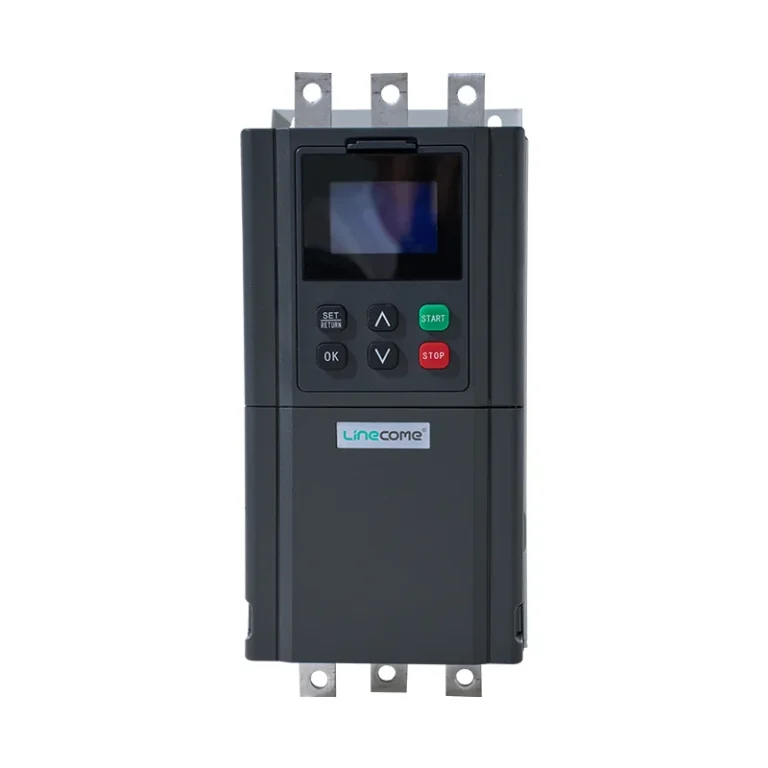
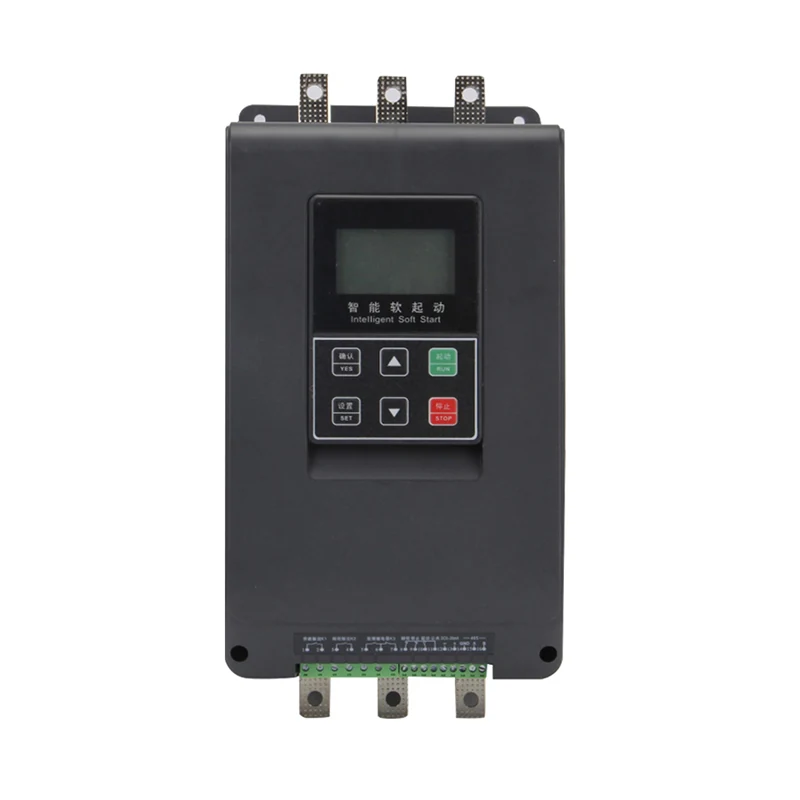
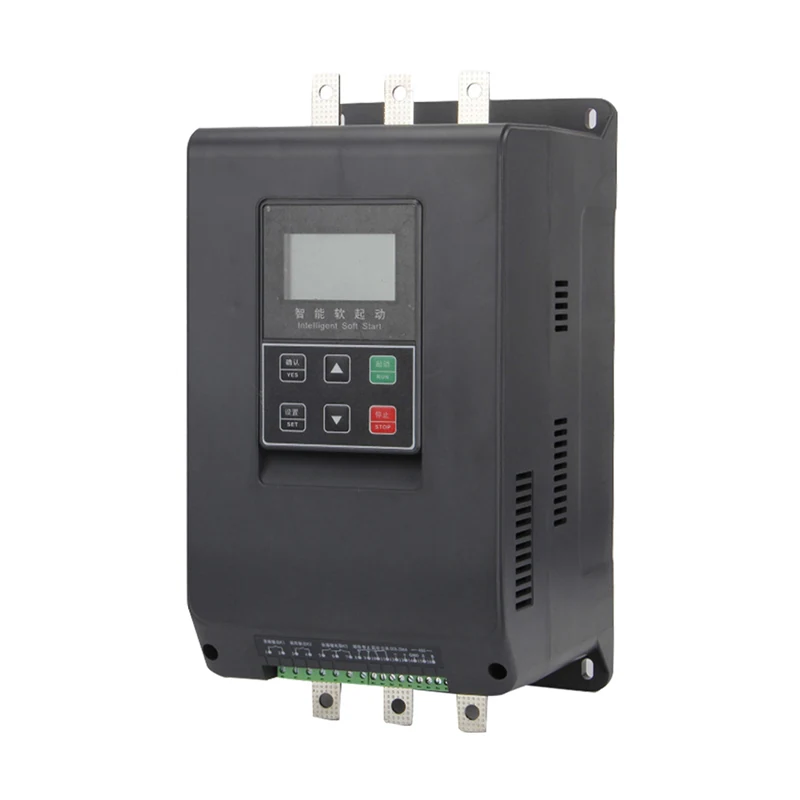
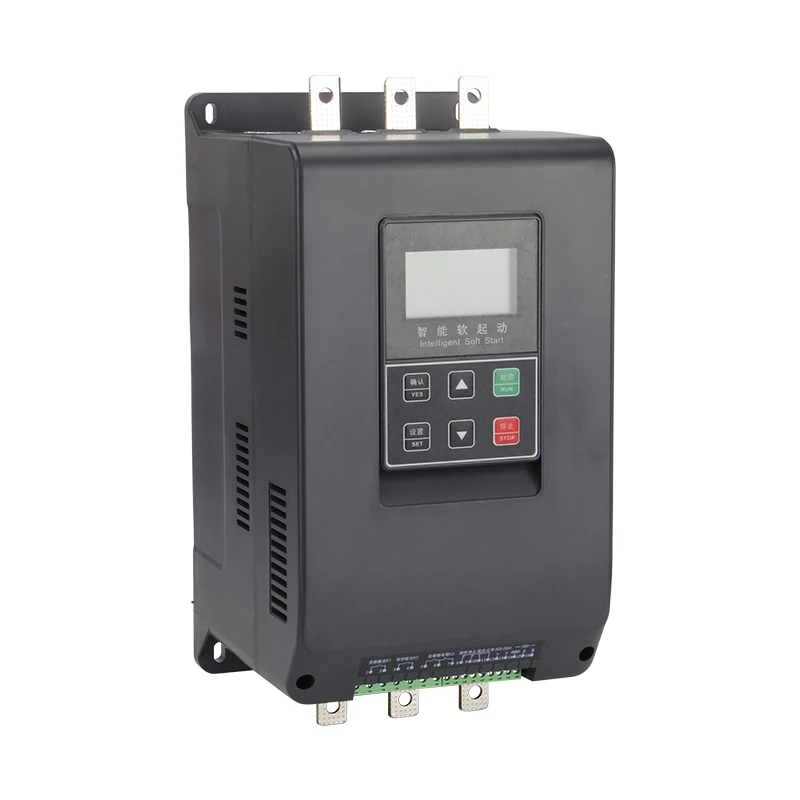
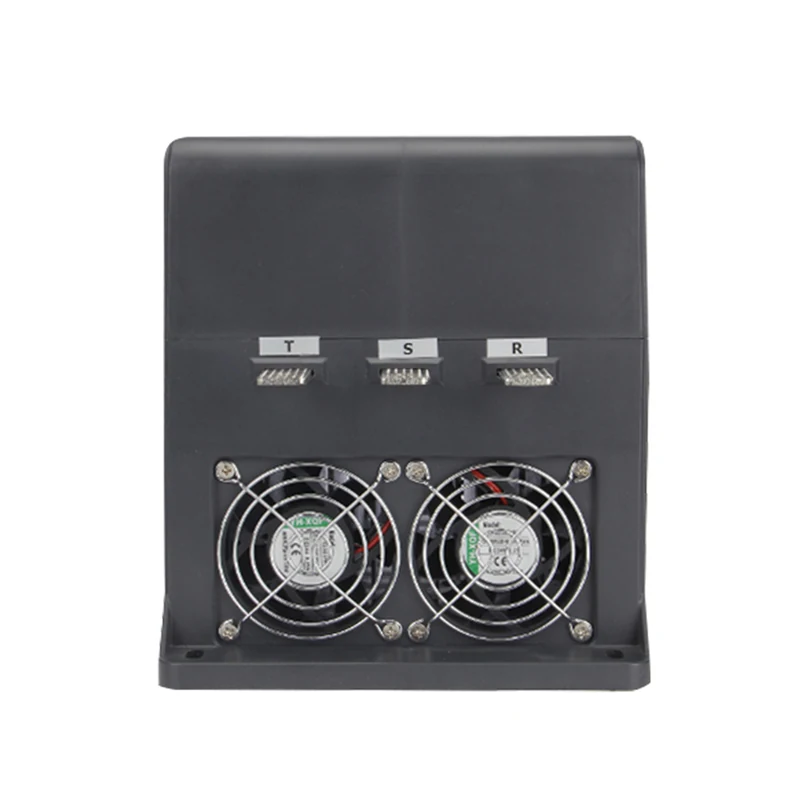
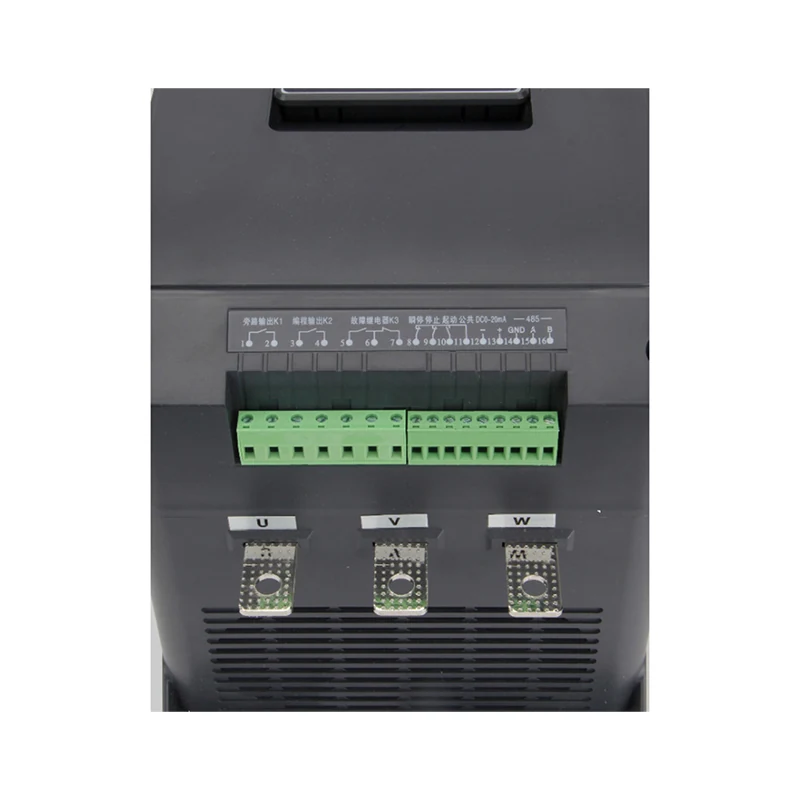
When disadvantages are understood and fixed-speed pump or fan duty still wins, align motor band with the public ZR800 online soft starter family and cite published rows—not generic starter marketing.
The catalog listing for the ZR800-18.5-90KW online soft starter series documents protection and monitoring themes on the public product page before you copy parameters into an RFQ.
The published ZR800-18.5-90KW online soft starter series page lists 12 protection functions on the features list plus monitoring of current, voltage, phase sequence, frequency, and runtime—useful when you accept SCR/bypass trade-offs but still need supervised pump duty.
The same public page documents 4–20 mA output with 0.5% linear accuracy on the features list for optional process feedback—subject to loop calibration on site.
 .
| Public ZR800 theme | When disadvantages are acceptable | Your project verifies |
|---|---|---|
| 12 protection functions (features list) | You need trip visibility after ramp/bypass proof | Fault enable policy |
| Electrical monitoring | You log starts on repetitive duty | Comms path |
| 4–20 mA, 0.5% linear accuracy (features list) | Instrument tie-in after bypass proved | Loop power |
Commissioning teams should document bypass proof, ramp seconds, and fault history on the same row as motor FLA so limitation reviews survive staff turnover—especially when repetitive starts make SCR duty disadvantages visible only after months of operation. Panel builders archiving soft starter limitations on the one-line diagram reduce change-order risk when operations later ask for adjustable run speed.
Frequently Asked Questions
Answers below assume you already read benefit-oriented siblings; they stress limitations so you do not over-specify SCR starts.
Can a soft starter adjust motor speed during production?
No—run mode stays at line frequency after bypass; adjustable speed is a VFD job, and that limitation is the main disadvantage when throttling is required.
Why do many soft starters need a bypass contactor?
Bypass removes semiconductors from the run path for efficiency and thermal reasons; without proved bypass, SCR duty disadvantages dominate maintenance.
Do soft starters create harmonics or EMI concerns?
Phase-angle control during start can inject harmonics and conducted EMI compared with a clean sine at run—duration and severity depend on ramp settings, feed impedance, and nearby sensitive loads, not on a single catalog promise.
When is a soft starter a poor substitute for direct-on-line on high-inertia loads?
When reduced voltage during start causes stall or excessively long ramps that heat SCRs—high-inertia tags may need DOL, wye-delta, reactor, or VFD paths after engineering review.
What maintenance disadvantages come with SCR soft starters?
Bypass auxiliaries, heat management, parameter drift, and semiconductor replacement cycles add tasks DOL contactors avoid—budget spares and training accordingly.
How do soft starter disadvantages compare to benefits on fixed-speed pump duty?
On repetitive fixed-speed starts, ramp and monitoring benefits often outweigh fixed-speed and bypass disadvantages—benefit pages cover upside; this page prevents buying SCR control when a VFD or contactor is cheaper over life cycle.
Should I choose a VFD instead when the process needs throttling?
Yes—lack of continuous speed control is the decisive disadvantage; read VFD advantage material rather than forcing soft starter specs onto throttling applications.
What ZR800 catalog rows help when disadvantages are acceptable?
Public ZR800 pages list protection functions, monitoring, and optional 4–20 mA output—use them after bypass and ramp proof, not as a substitute for disadvantage review.
References
- Motor soft starter (ramp, bypass, fixed-speed run limits).
- Direct-on-line starter (full-voltage baseline and torque step).
- Variable-frequency drive (speed control when soft starters cannot).
- Harmonic (power-quality context for non-linear loads).
- Talk:Inrush current (inrush versus overload naming on specs).