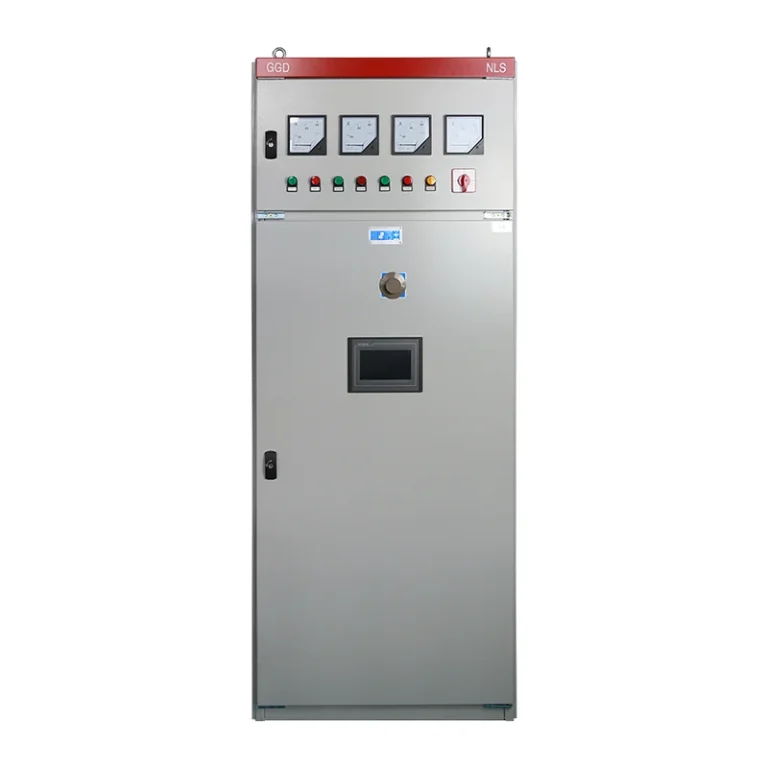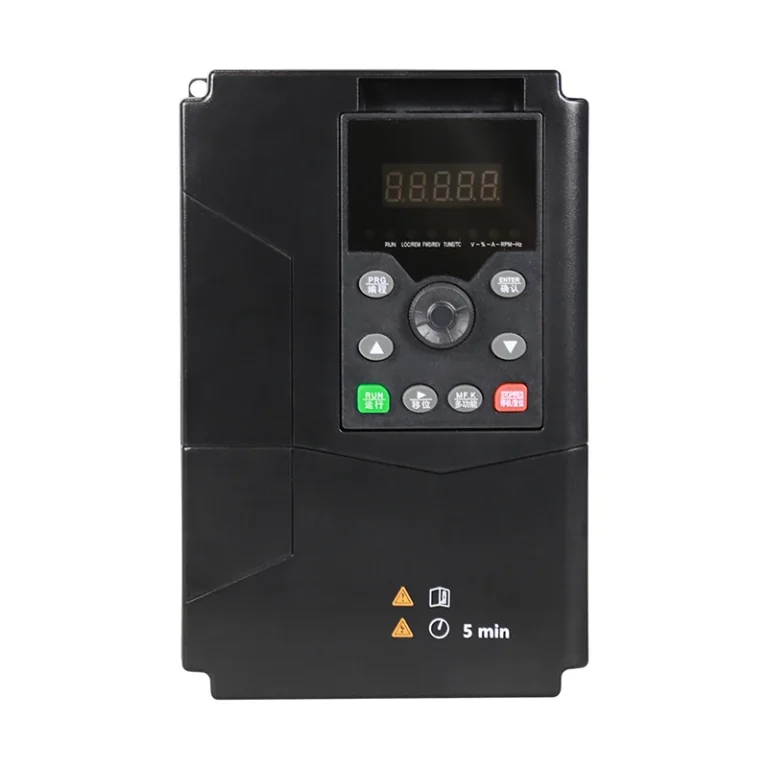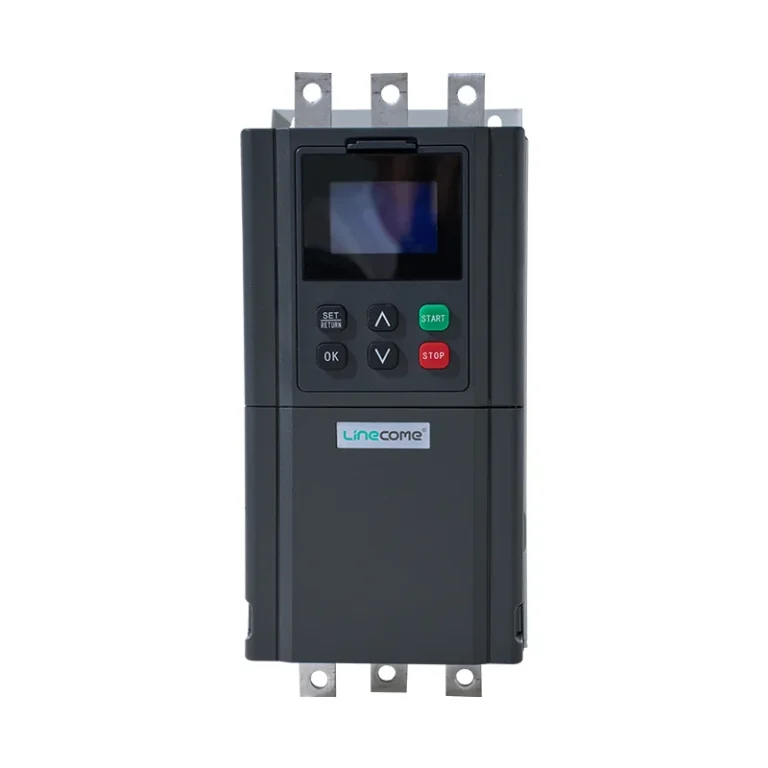

A soft starter motor not accelerating needs a controlled investigation of the load, supply and starting configuration. Stop repeated attempts, preserve the event record and establish whether the shaft never moves, turns slowly without gaining speed, or accelerates before another fault interrupts it. A longer ramp cannot create torque that the motor and available voltage cannot supply. The useful outcome is an approved starting envelope: enough accelerating torque, acceptable supply disturbance and a start completed within the motor and starter thermal limits.
This guide concerns fixed-speed induction-motor starting. It does not provide universal parameter values or permission to defeat protection. Inspection and measurements belong to qualified personnel using the exact equipment instructions and the site’s safe-work procedure.
Establish what actually failed
A report that the motor “will not start” can describe several different events. A missing run permission produces no commanded start. A brake that remains applied can prevent rotation. A loaded machine may turn but stop gaining speed. A protective trip can terminate an otherwise healthy acceleration. Record these separately before replacing a starter or changing settings.
Collect the starter model, motor nameplate, connection diagram and process state. Save the exact displayed fault, its timestamp, the active parameter set and any current history before resetting. Ask what changed: a repaired motor, a new pump impeller, colder material, a supply transformer change or a parameter download. A fault that appears only on the first morning start may have a different cause from one that appears after frequent production interruptions.
Observe existing speed or process feedback where available. Starter ramp completion is a controller event; it should not automatically be treated as proof that the machine reached its required operating state. Define the evidence that demonstrates successful acceleration for this particular installation.
Check the load before adding electrical stress
Mechanical resistance may have increased while the electrical settings stayed unchanged. Investigate seized bearings, a jammed conveyor, an incorrectly applied brake, a blocked pump or an unintended starting load. Do not assume a shaft is safe to touch or rotate because the starter is stopped. Stored pressure, gravity and connected machinery can all create movement.
HSE’s maintenance guidance calls for planned work, competent personnel and safe isolation of relevant energy sources. Use that principle to establish the inspection boundary. Follow the machine procedure for releasing pressure, securing moving parts and controlling access. An electrical stop command is not the complete isolation plan.
A comparison with a previously successful start is particularly useful. Establish whether the load was empty, primed, pressurized or already moving, and whether those conditions were intended. Testing an unloaded motor can help isolate a problem only where the machine supplier permits that test and the uncoupling work is properly controlled. It does not prove the coupled system will start.
Understand the current and torque trade-off
A conventional soft starter controls applied voltage during starting rather than providing the same starting behavior as a frequency-controlled drive. Reducing electrical stress can also reduce the torque available to overcome the load. If the operating point leaves insufficient accelerating torque, extending the ramp may merely prolong a hot, slow start.
Natural Resources Canada’s electric motor guide explains why starting equipment must provide adequate torque under the relevant supply and load conditions. That principle is more useful than copying a percentage from another installation. A successful setting on an unloaded fan does not establish a suitable limit for a loaded conveyor.
Review motor current entry, starting mode, initial-voltage or torque-related settings, current-limit interpretation and maximum-start timing against the exact manual. Parameter labels are not standardized across manufacturers. Confirm whether a displayed percentage refers to motor rated current, starter rated current or another internal reference. Preserve the original values so that the review can explain what each proposed change is intended to achieve.
Use symptoms to choose the next investigation
The following table is a diagnostic planning aid, not a list of confirmed causes. It combines the starting-torque principle above with safe maintenance practice. Measurements and permissible tests must be selected by the responsible engineer.
| Observed behavior | Evidence to collect | Next review | Avoid |
|---|---|---|---|
| No commanded output or rotation | Run permissions, control state and event log | Interlocks and approved control sequence | Bypassing a safety permission |
| Shaft remains stationary with current present | Mechanical state, brake release and phase observations | Breakaway load and supply path | Repeated attempts to force movement |
| Speed rises then levels off | Speed and current on a common timeline | Available torque across acceleration | Increasing ramp time without evidence |
| Start works unloaded but fails in service | Actual coupled load and process conditions | Load envelope and starter suitability | Accepting the unloaded test as final proof |
| Start succeeds cold but fails after interruptions | Start history, cooling intervals and thermal indications | Permitted duty and thermal recovery | Treating every reset as a fresh cold start |
| Acceleration ends at a protection event | Exact trip code and preceding trends | The protection’s specific detection conditions | Disabling protection to complete the start |
Investigate supply behavior at the same time
The starter cannot compensate for every upstream problem. Review the supply arrangement, conductor path and any recent work. Qualified personnel should determine whether voltage observations during the attempted start are required and how to obtain them safely. A normal idle voltage does not describe the supply while starting current flows.
Compare the time of any voltage depression with speed and current. If other large loads start simultaneously, document that sequence too. Record measurement locations and instrument suitability; readings from different locations or time windows can create a misleading explanation. Investigating phase loss is a separate branch when the evidence supports it, rather than an assumption attached to every failed acceleration.
Avoid interpreting distorted starting waveforms using an unsuitable meter. State what the instrument measured and what remains unknown. An on-screen current indication and an independently logged trace may serve different purposes. Differences should prompt a review of bandwidth, measurement point and scaling before either result is discarded.
Separate a current-limit problem from an application mismatch
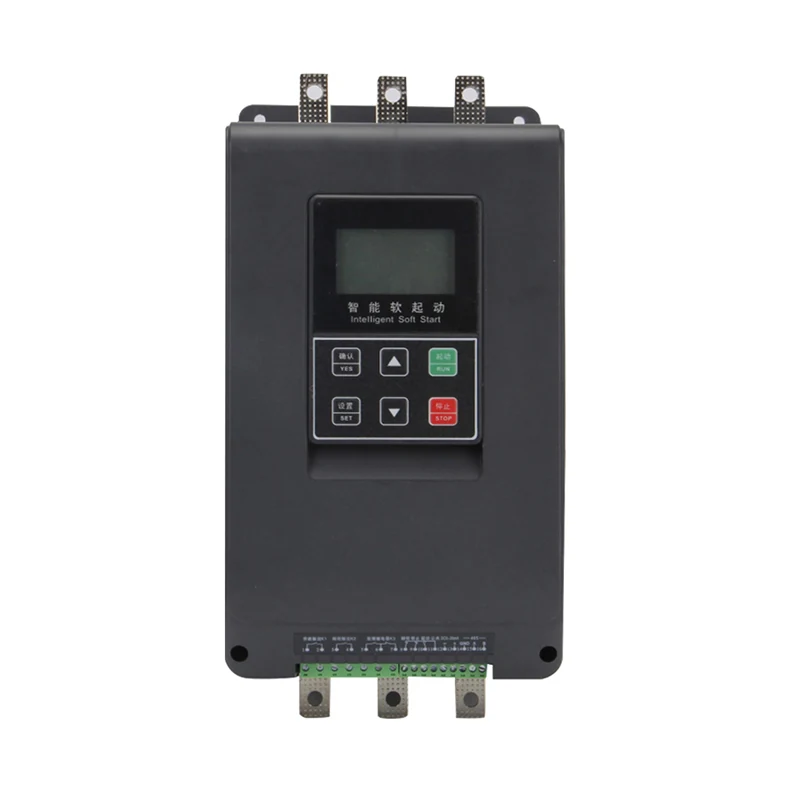
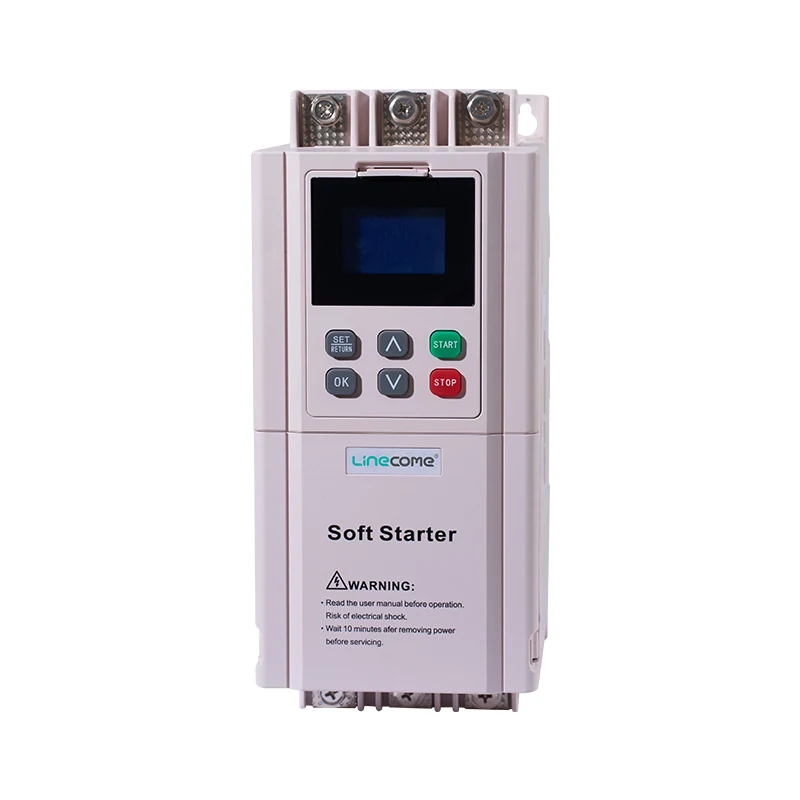
The ZR600 online soft starter is one example of the site’s fixed-speed starting equipment. Its catalog identity does not establish the correct configuration for an unknown motor and load. Ask for the exact manual, connection arrangement and duty confirmation for the supplied unit. Product photographs identify the equipment family; they do not demonstrate a permitted starting current or acceleration time.
If the load needs more starting torque than the permitted supply disturbance allows, a parameter adjustment may not resolve the conflict. The project may require a different starting method, a different mechanical starting condition or a revised supply design. Evaluate those options with the motor, machine and electrical suppliers. Do not assume that choosing a larger starter alone increases the motor torque available from the same constrained supply.
The soft-starter operating sequence explains ramp and running stages. Use it to keep the present investigation focused on acceleration. A bypass-transfer issue after satisfactory acceleration needs its own evidence rather than being merged into the initial breakaway problem.
Build one controlled retest
Agree the hypothesis before restarting. For example, an inspection may identify an unintended mechanical restriction, or the parameter review may find motor current entered against the wrong reference. Record the finding, proposed correction and acceptance evidence. Change one justified item at a time where practical so the result remains interpretable.
The retest plan should name the operator, observers, measurement arrangements, safe stopping method and conditions that require immediate termination. Confirm that the machine area is clear, protective functions are available and any temporary inspection arrangements have been removed. Allow the recovery required by the actual motor and starter instructions. A reset button does not erase thermal history.
Record the complete start through stable operation. Capture whether acceleration is continuous, whether expected process feedback appears and whether the running current and supply recover appropriately. Do not repeatedly restart simply to improve the appearance of a trace. An unsuccessful test is information; stop and reassess the hypothesis before adding another thermal event.
Document acceptance and remaining limitations
Acceptance should cover the credible starting conditions, not only the easiest demonstration. Establish who approves the worst intended load, lowest intended supply condition and restart sequence. A single successful start does not certify every process variation, but it can support a bounded release when the remaining conditions are clearly documented.
Keep the original and final parameter records, event traces, motor information, load description and reasons for changes together. Include the protection configuration and any manufacturer correspondence. Our soft starter overload-trip guide addresses trips that need a protection-focused investigation, while the starts-per-hour checklist explains why restart duty must be reviewed separately.
For a purchase or retrofit inquiry, provide the starting load, motor current and connection, supply constraints, normal and abnormal restart frequency, ambient conditions and the available start record. Ask the supplier to confirm suitability against those inputs. An inquiry containing only motor kilowatts leaves the central acceleration question unanswered.
Further learning: induction-motor behavior
The educational video below introduces the rotating field and slip behind induction-motor operation. It helps explain why observing rotation alone is insufficient to prove successful acceleration. It is background learning, not a commissioning procedure or a settings recommendation for a LINECOME starter.
Video by Sabin Civil Engineering. Watch How does an Induction Motor work ? on YouTube.
The ASHRAE electrical-considerations chapter discusses reduced-voltage starting and its effect on available torque. Its examples explain the principle; they are not parameter recommendations for a LINECOME starter.
Frequently asked questions
Should I increase the ramp time when the motor stalls?
Not without evidence. A longer ramp may extend heating if available accelerating torque is insufficient. First establish the load condition, supply behavior, active starting mode and permitted thermal duty, then approve a specific correction and controlled retest.
Does a larger soft starter guarantee acceleration?
No. Starter capacity is only one part of the system. Motor torque, applied voltage, load resistance and supply restrictions still govern whether the machine accelerates. Ask for application confirmation using the actual motor and start record.
Can I keep resetting until the motor starts?
Repeated attempts can accumulate heat and obscure the original evidence. Preserve the fault record, stop uncontrolled retries and follow the motor and starter recovery requirements. Resume only under an approved test plan with clear stopping conditions.