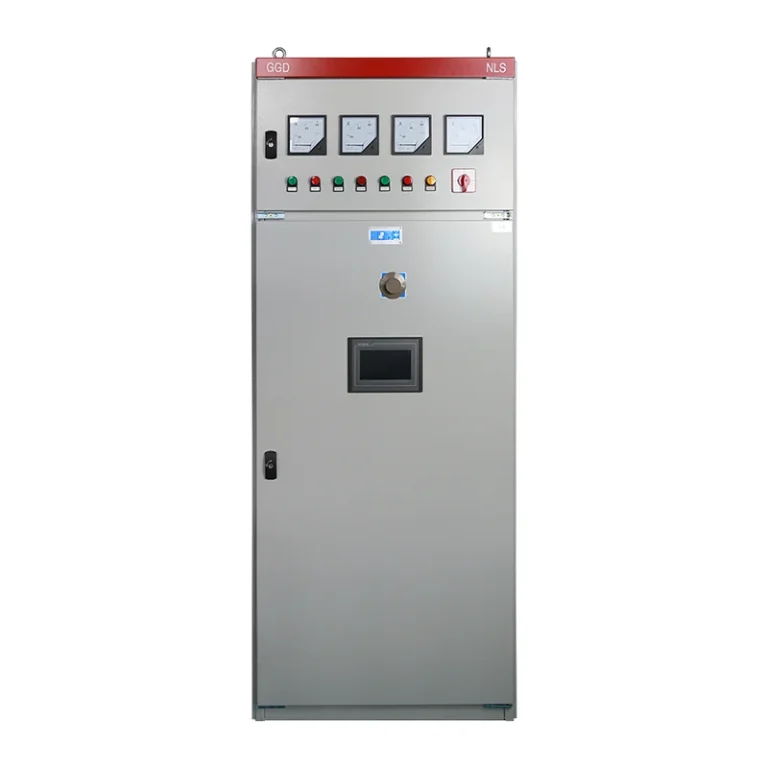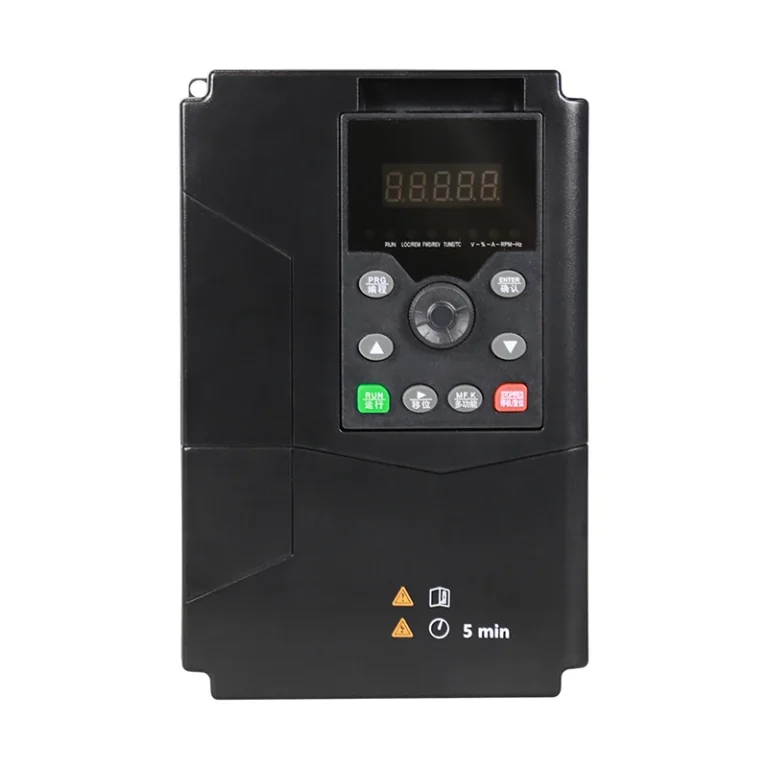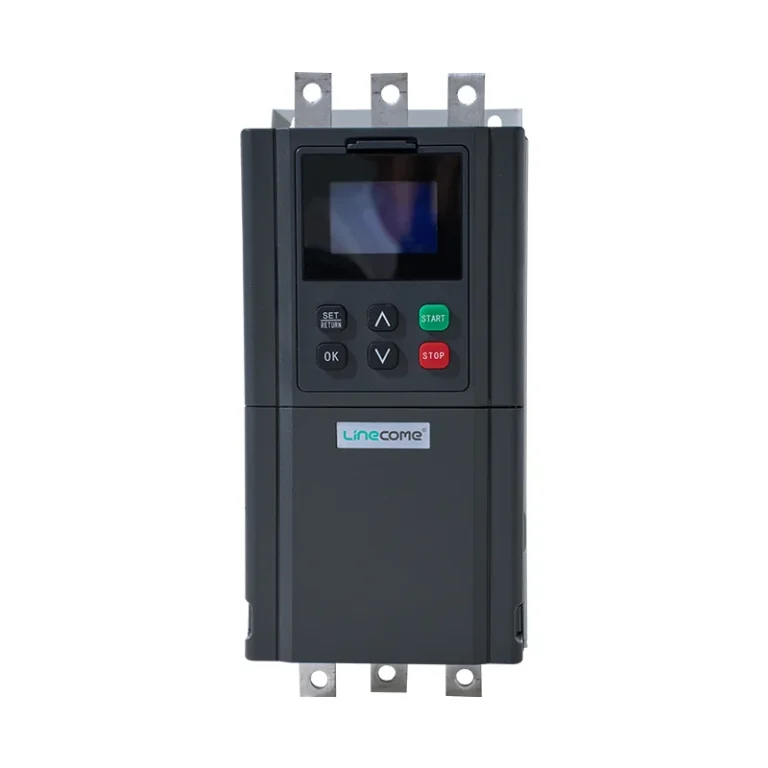

A high frequency to low frequency converter search can mean two incompatible procurement jobs: lowering motor output Hz on standard 50/60 Hz plant power with a general-purpose drive, or finding specialty hardware that accepts a high-frequency input bus such as 400 Hz aircraft ground power. A high to low frequency inverter search and lower output frequency drive quote often describe the same utility-feed job as high frequency to low frequency converter wording—yet input frequency class on the data sheet still gates approval. High frequency to low frequency converter buyer guides must separate those axes before any catalog row is approved.
If your plant feed is normal industrial 60 Hz or 50 Hz utility and the process needs a lower motor speed, a VFD that rectifies utility AC and synthesizes lower output frequency often fits—after motor nameplate review. If the upstream supply itself is a 400 Hz bus, utility-grade drives that only publish 50/60Hz input on their product pages are the wrong tool until input frequency is proven in writing.
Cross-read low frequency vs high frequency inverter efficiency when the confusion is motor output Hz versus PWM switching frequency, not high→low conversion direction. Read frequency converter how it works for rectifier–link–inverter power stages under buyer naming. Hz-pair import guides remain on 50 to 60 Hz frequency converter and frequency converter from 60 Hz to 50 Hz; aircraft input work stays on 400 Hz to 60 Hz frequency converter.
Browse the Variable Frequency Drive hub before you lock a series on the motor schedule.
 .
Two meanings of high→low frequency in industrial RFQs
High frequency to low frequency converter language fails when buyers mix input bus Hz with motor output Hz. Encyclopedia articles on utility frequency describe land plants at 50 Hz or 60 Hz nominal; aircraft ground power summaries describe 400 Hz upstream classes. A general-purpose VFD lowers output frequency relative to its input rating—it does not automatically accept every high-frequency bus simply because marketing lists 0–500 Hz output programming.
| RFQ phrase (plain language) | Usually means | First gate |
|---|---|---|
| “Run motor at 40 Hz on 60 Hz plant” | Lower output on standard utility input | Motor nameplate + drive sizing |
| “Convert 400 Hz GPU to 60 Hz load” | High input bus specialty | Published input frequency includes 400 Hz |
| “High frequency to low frequency inverter efficiency” | Often PWM vs motor Hz confusion | Read disambiguation sibling first |
When a general-purpose VFD qualifies as high→low on the output side
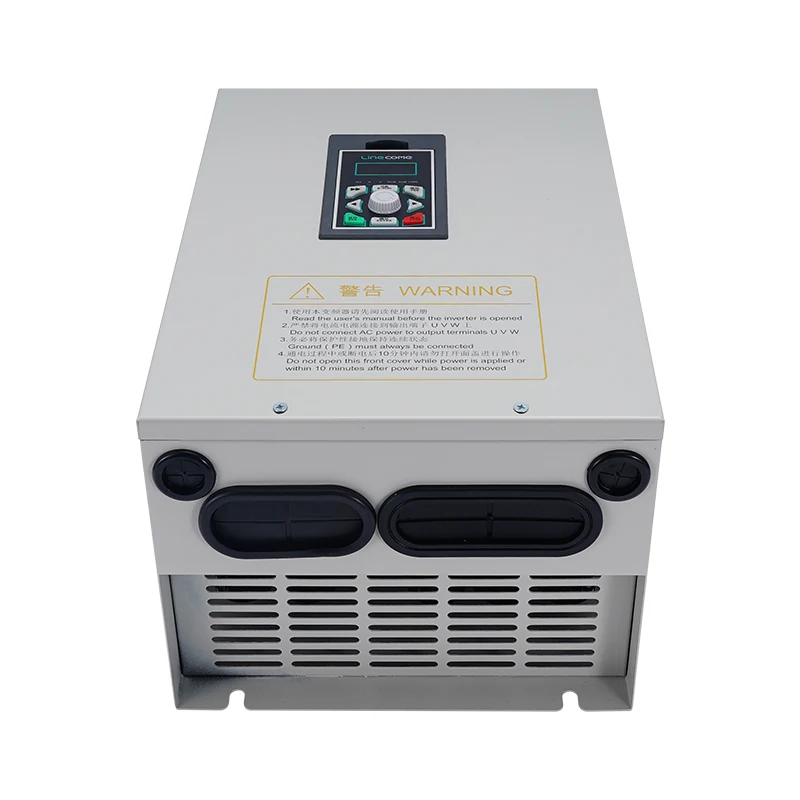
On 50/60 Hz industrial feeds, a drive rectifies incoming utility power, holds a DC link, and inverts to a lower fundamental frequency at the motor terminals for variable-torque or properly derated constant-torque loads. That is the everyday high frequency to low frequency converter outcome buyers want when they mean “slow the motor below line synchronous speed,” not “attach to an aircraft cart.”
Variable-frequency drive articles describe this as adjustable-speed operation: speed tracks the commanded output frequency subject to volts-per-hertz or vector limits. The converter function is real, but it is bounded by input voltage class and input frequency class on the exact model row—not by output range alone.
 .
When catalog VFD rows fail as high-frequency-input converters
Specialty input buses require explicit input-frequency proof on the published line-side table.
Specialty high frequency to low frequency converter hardware for 400 Hz feeds must document input frequency tolerance explicitly. Community threads on aircraft ground power repeat that rectifier and DC link stress differ from 50/60 Hz plant feeds even when downstream targets are 60 Hz motors.
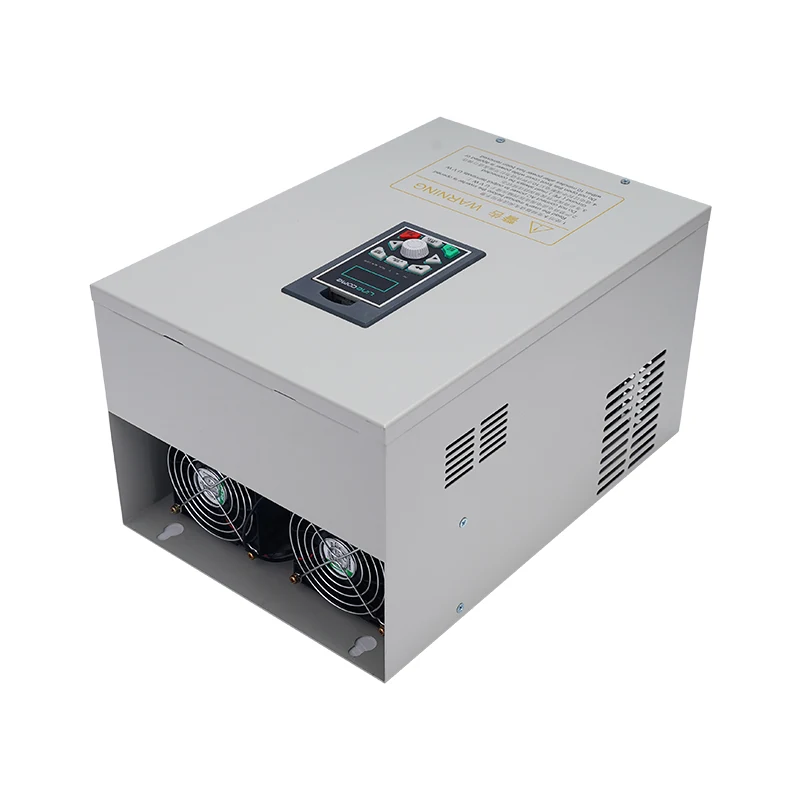
The public LNC610 general-purpose VFD series page lists 50/60Hz three-phase input on its specification table—appropriate for standard utility, not a published 400 Hz input claim. Do not infer aircraft-bus qualification from 0–500 Hz output tables or from the words high frequency to low frequency converter in a Google query.
Important: Output programming down to 0 Hz (subject to drive and motor limits) is not proof that the line terminals accept 400 Hz input. (Source: Aircraft ground power — Wikipedia; research C-03.)
Decision matrix: pick the correct conversion story before sourcing
Start with measured upstream bus frequency at the terminals.
Pick the conversion story only after you measure upstream bus frequency at the connection point—output-side high→low programming on 50/60 Hz utility feeds uses different catalog gates than specialty 400 Hz input hardware. Use this matrix before you email suppliers.
| Upstream supply (measured) | Target at motor/load | Likely equipment class | vfdelec.com next read |
|---|---|---|---|
| 60 Hz or 50 Hz utility | Lower output Hz for speed control | General-purpose VFD after nameplate review | This page + hub |
| 60 Hz utility | 50 Hz nameplate motor | VFD programmed to 50 Hz output or alternate converter | 60 Hz to 50 Hz guide |
| 400 Hz bus | 60 Hz load equipment | Dedicated 400 Hz input converter | 400 Hz to 60 Hz guide |
| Unclear “high frequency” wording | Unknown | Stop and measure bus Hz | Field measurement before SKU |
 .
Nameplate and commissioning checks for output-side high→low plans
Collect motor rated frequency, full-load amps, insulation class, and minimum continuous speed before you treat any drive as a high frequency to low frequency converter on the output axis. Acceleration ramps, braking options, and thermal limits still apply when you command 40 Hz on a 60 Hz nameplate class motor—output frequency changes do not remove thermal duty requirements.
Integrators should record whether the application needs long-term throttling or only occasional slow-down. Fans and pumps often benefit from variable output frequency; constant-torque loads may need derating analysis at the lowest Hz setpoint. None of that work replaces verifying input phase and voltage on the drive table.
Document the commanded output frequency setpoints in the commissioning log so future troubleshooting distinguishes “high→low” speed changes from supply-quality events on the utility feed. That discipline helps when two vendors use overlapping frequency converter language on proposals but only one measured bus Hz at the terminals.
Integrators comparing bids should ask whether each vendor measured the same bus frequency at the line terminals—mixing high frequency to low frequency converter language across 400 Hz hangar carts and 60 Hz plant panels is a common reason RFQs return incompatible SKUs.
Boundaries versus same-day and Hz-pair sibling articles
Same-day frequency converter how it works teaches rectifier–link–inverter stages under buyer naming; this page decides whether your high→low wording is output-side programming on utility feeds versus input-side specialty buses. 50 to 60 Hz frequency converter and frequency converter from 60 Hz to 50 Hz own bidirectional utility mismatch matrices—not PWM carrier discussions and not aircraft input gates.
 .
LNC820 and LNC610 recommend path for utility-feed output high→low
Recommend catalog VFD rows only when the measured plant feed matches published utility input classes.
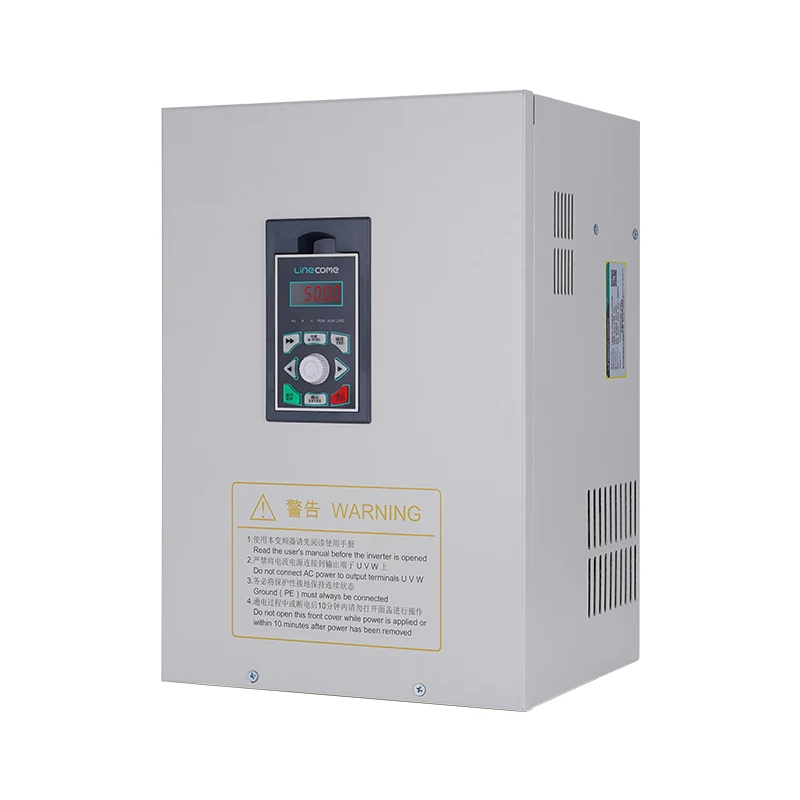
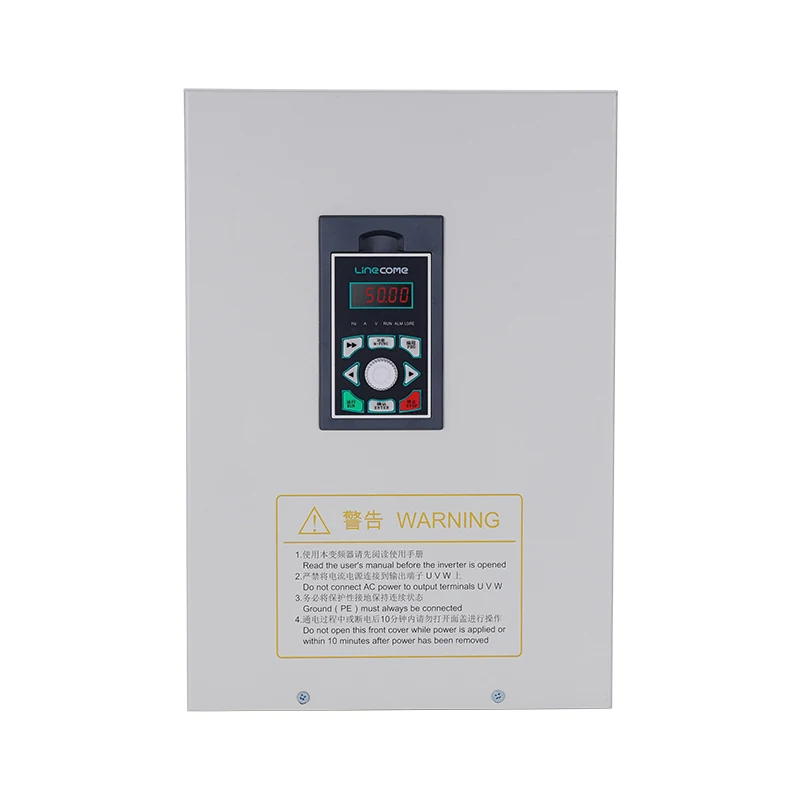
When measurement confirms 50/60 Hz plant input and the application needs lower motor output frequency—not 400 Hz upstream conversion—public catalog rows may fit after nameplate review. The LNC820 general-purpose VFD series page documents 0–500 Hz output frequency span, V/F control, SVC vector control, and Modbus RS485 on its overview-style listing. The LNC610 general-purpose VFD series page shows 50/60Hz input classes and the same 0–500 Hz output span on published tables.
Recommend LNC820 or LNC610 only after you confirm voltage class, kW row, and motor data on the live pages—not when the measured upstream bus is 400 Hz unless future published input data says otherwise. This recommend path is intentionally silent on invented efficiency percentages or unverified high-frequency input ratings.
| Scenario on measured plant feed | Catalog boundary on public pages |
|---|---|
| 60 Hz utility, lower motor speed | 50/60Hz input + programmed lower output Hz |
| 400 Hz GPU or shipboard bus | Do not use 50/60Hz input rows as automatic fit |
| Imported 50 Hz motor on 60 Hz utility | Follow Hz-pair sibling guides after output-side check |
 .
Frequently asked questions
Short answers below mirror the research FAQ map. Each reply stays at selection and compatibility depth—power-stage tutorials and aircraft input proof stay on linked siblings.
What is a high frequency to low frequency converter in a factory?
Usually a drive or converter that lets a motor run below line synchronous speed by lowering output frequency on a standard utility feed—after nameplate review.
Can a VFD be a high frequency to low frequency converter?
Yes for output frequency on published 50/60 Hz input classes; not automatically for specialty high-frequency input buses.
Does 0–500 Hz output range prove high-frequency input tolerance?
No—verify input frequency on the exact model row; output span alone is not an input bus certificate.
Is this the same as a 400 Hz to 60 Hz converter?
No—400 Hz upstream requires documented 400 Hz input compatibility; see the dedicated sibling page.
How is this different from low vs high frequency inverter efficiency?
That sibling separates motor output Hz from PWM switching frequency; this page separates input bus Hz from output programming.
What should I measure before sourcing?
Bus Hz and voltage at the connection point, motor nameplate frequency, load type, and starting method.
When should I read frequency converter how it works instead?
When you need rectifier–link–inverter power-stage naming under that exact search phrase.
Are LNC610 or LNC820 rated for 400 Hz input?
Public pages list 50/60Hz input classes—not 400 Hz input—so do not specify them on 400 Hz feeds without new published data.