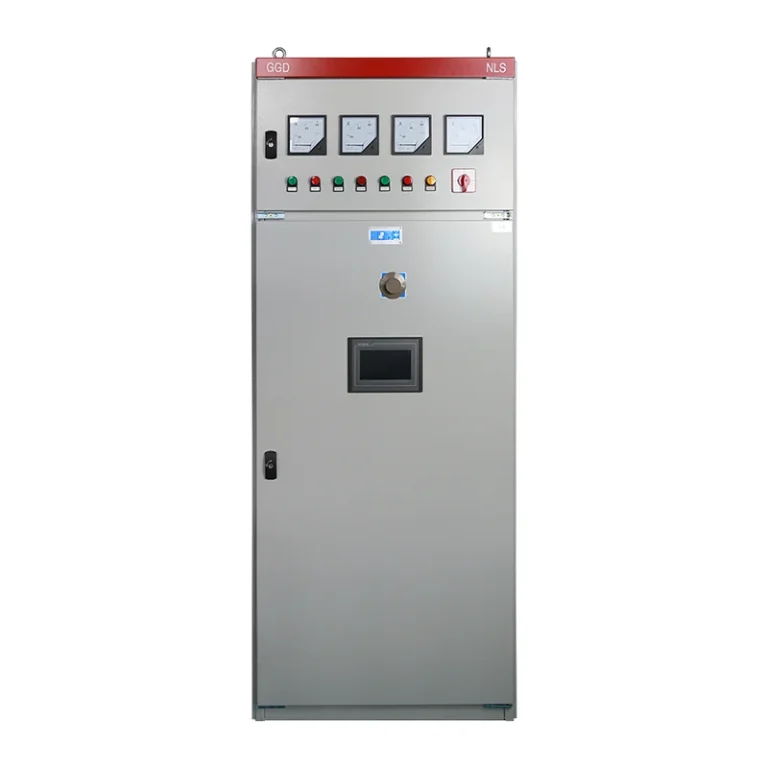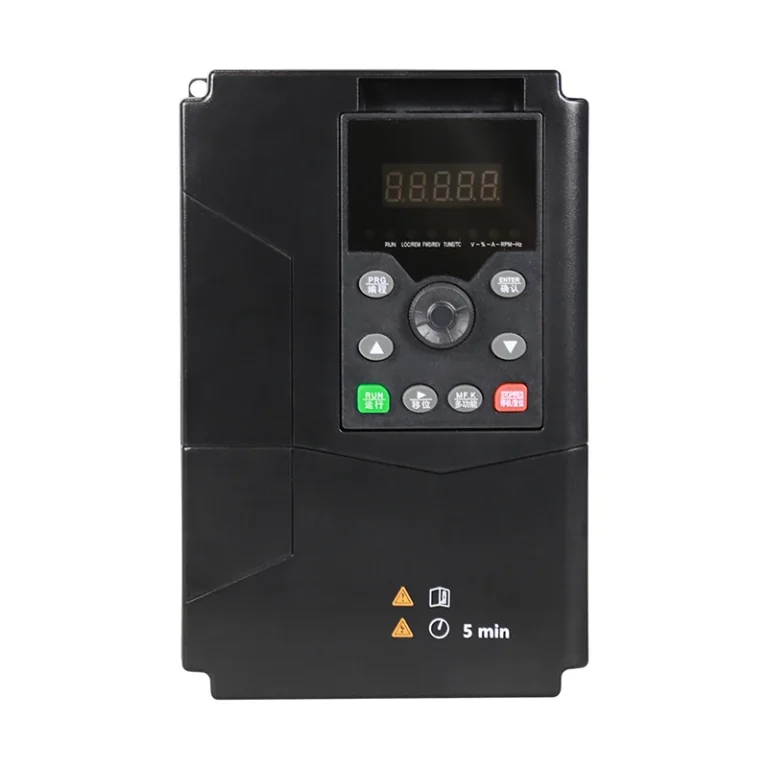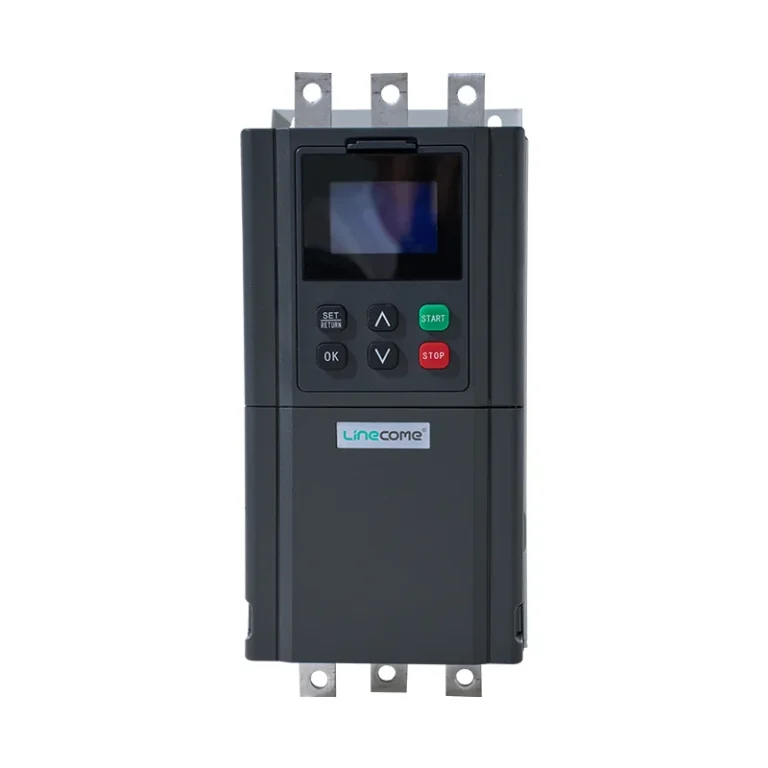

Low frequency vs high frequency inverter efficiency only lines up once you separate motor output frequency in hertz—which sets speed—from inverter switching (PWM/carrier) frequency, which shapes the waveform and influences whine, filtering, and heat in the drive cabinet.
Facility engineers comparing low frequency vs high frequency inverter efficiency on the plant floor often discover half the room means throttling a fan to 35 Hz while the other half means nudging a carrier parameter to quiet an audible whine near the panel—classic motor output frequency vs carrier frequency confusion before anyone mentions pwm frequency vfd efficiency myths.
Use the Variable Frequency Drive hub after you decide which frequency axis drives your symptom. Mechanism depth lives in how a VFD works; utility nameplate conversion lives in 50 to 60 Hz frequency converter and frequency converter from 60 Hz to 50 Hz—here the focus stays on motor output Hz versus PWM switching when you discuss efficiency, heating, and noise.
 .
Motor output frequency vs inverter switching frequency — do not mix the two
Motor output frequency is the fundamental electrical frequency the drive commands at the motor terminals during run—it sets synchronous speed together with pole count. Inverter switching frequency is how fast power semiconductors pulse in the PWM stage to synthesize that waveform.
Variable-frequency drive summaries describe speed control through output frequency and inverter action through switched devices—the two numbers appear in different menu trees and answer different buyer questions.
Confusing them leads to bad decisions: lowering motor output frequency to save energy on a constant-torque conveyor held at 8 Hz is not the same operation as raising carrier frequency to reduce audible PWM whine near an air-handling unit.
| Frequency axis | What you are changing | Primary efficiency or comfort lever | Typical mistake |
|---|---|---|---|
| Motor output Hz | Motor speed reference | Part-load power on variable-torque duty; thermal risk at very low speed | Treating all loads like throttled fans |
| Switching / PWM rate | Inverter pulse timing | Audible noise vs inverter switching loss and heat | Expecting carrier changes to throttle process flow |
Community Q&A on drives repeats the same vocabulary collision—parameter sheets label both concepts “frequency” even though one is motor speed and one is modulation rate.
Low motor output frequency: load power, torque, and cooling effects on efficiency
Lower motor output frequency can reduce electrical power demand on variable-torque loads—fan/pump load class equipment—because torque and power requirements drop with speed when the process truly throttles flow instead of wasting energy across a damper or valve.
Department of Energy material on adjustable-speed drives emphasizes matching motor speed to load requirements in fan and pump duty—that motivation belongs to motor output frequency, not to carrier menus.
On constant-torque or poorly ventilated motors, holding a very low output frequency can increase thermal stress because the motor’s shaft-mounted fan moves less air even though torque demand remains high.
Volts-per-hertz profiles attempt to keep flux in a workable range as output frequency drops, but they do not replace mechanical checks: a belt conveyor commanded to crawl at 5 Hz may still need external cooling, a larger motor, or a gear ratio change rather than an aggressive low-speed setpoint.
Important: Induction motor references tie synchronous speed to supply frequency—when output frequency falls, airflow from the integral fan falls too, so “efficiency” at low Hz is never only an inverter question.
 .
Pump operators sometimes lengthen acceleration times when lowering output frequency to reduce water hammer—separate from PWM settings, that ramp lives in the same drive but addresses mechanical transients rather than switching whine.
Higher motor output frequency: speed headroom within catalog limits
Raising motor output frequency increases synchronous speed until insulation, bearings, balance, or catalog limits intervene—buyers use higher output Hz when the process needs more RPM from the same pole count, not when they want a quieter inverter.
Encyclopedia-level motor notes remind readers that torque and cooling change as speed rises; overspeeding a fan or pump without revisiting mechanical design can move a efficiency conversation into failure mode instead of savings.
Public drive catalogs document wide output frequency ranges so integrators know the controller can command high Hz—whether the motor and load should run there still comes from nameplate, mechanical, and vendor guidance outside this comparison.
 .
Inverter switching (PWM) frequency: losses, cabinet heat, and audible noise
PWM explanations note that higher modulation rates can reduce current ripple seen by the motor but increase switching activity in the inverter stage—translated for buyers, a higher carrier setting often trades audible whine for more switching-related heat in the drive.
Variable-frequency drive articles link inverter switching to harmonic content and audible effects at a summary level without promising a single “best” carrier for every cabinet temperature and cable length.
Field teams near open drives sometimes raise carrier frequency to reduce whine in occupied spaces, then discover heat rise or nuisance trips unless airflow and heat-sink paths stay clean—efficiency here means balancing comfort, thermal headroom, and filter stress, not chasing a universal maximum.
Long motor cables and certain filter configurations react differently to carrier changes; commissioning notes should record both motor output frequency limits and the carrier value that produced acceptable noise and stable thermal behavior on that tag.
 .
Low vs high frequency effects — comparison matrix for buyers
Use the matrix when a stakeholder says “high frequency is more efficient” without stating which frequency they mean.
| Buyer symptom or goal | Likely axis to adjust first | Efficiency or energy angle (bounded) | Heating / noise angle |
|---|---|---|---|
| Throttle fan or pump flow | Lower motor output Hz | Part-load power can fall on variable-torque duty when speed truly drops | Motor fan airflow drops at low speed—watch thermal margin |
| Need higher RPM from same motor poles | Raise motor output Hz within mechanical limits | Not automatic savings—power may rise with speed | Mechanical stress and cooling demand rise |
| Audible whine near drive or motor | Raise switching / carrier frequency (if manual allows) | Switching losses tend to rise—not a process throttle | Whine often falls; inverter heat may rise |
| Fixed-speed plant, harsh starts only | Neither axis—see soft starter boundary | Soft start limits inrush, not run-frequency throttling | SCR heat during start, not PWM whine tuning |
Pulse-width modulation references frame the switching trade-off as ripple versus switching effort—keep that language separate from fan-law discussions tied to motor output Hz.
When to prioritize lower motor Hz, higher motor Hz, or a switching frequency change
Start from the process: if the load is a throttled fan or pump, motor output frequency belongs in the first conversation because adjustable-speed drives exist to match speed to demand on those duties.
If the process already runs at the needed speed but occupants complain about whine, investigate switching frequency, mounting, and cable routing before you lower motor Hz and accidentally starve the process.
If the load is constant-torque at very low speed, prioritize motor cooling, gear ratios, or drive sizing—not carrier tweaks that cannot fix insufficient torque or airflow.
When stakeholders ask for “efficiency numbers,” redirect to measured input power at defined speed points on your motor and load rather than generic claims—this article stays at mechanism and catalog-bound planning.
For cross-industry benefit framing without duplicating this comparison, see advantages of VFD after you know which frequency axis you are adjusting.
Fixed-speed duty: where soft starters fit instead of output-frequency tuning
Soft starters and reduced-voltage ramps address inrush and mechanical shock at fixed line frequency—they do not provide adjustable run frequency for throttling, so they sit outside motor-output Hz efficiency comparisons except as a boundary case.
If speed never changes and the only pain is starting torque spikes, a soft starter may be simpler than commissioning output-frequency profiles you will never use during run.
That boundary keeps this page distinct from general VFD benefit lists and from grid-frequency conversion guides that focus on 50 Hz versus 60 Hz nameplate matching.
Which LNC610 and LNC820 drives fit extended output-frequency projects — product recommend
After you map motor output Hz versus PWM switching to your symptom, use public catalog rows to shortlist drives whose output frequency range and control modes match the project—mechanical overspeed and motor insulation still gate the final setpoint.
The published LNC610 2.2kW–5.5kW general-purpose VFD page lists output frequency 0–500 Hz, V/F and sensorless vector (SVC) modes, Modbus, built-in PID, and acceleration/deceleration times from 0.1–6500.0 s on the public specification table—planning bounds for integrators, not a promise every attached motor may run at 500 Hz.
The LNC820 0.75–2.2 kW general-purpose VFD series page lists output frequency 0–500 Hz with V/F and SVC and documents RS485 plus built-in braking unit themes on many kW rows in the same catalog family when deceleration or fieldbus matters alongside frequency range.
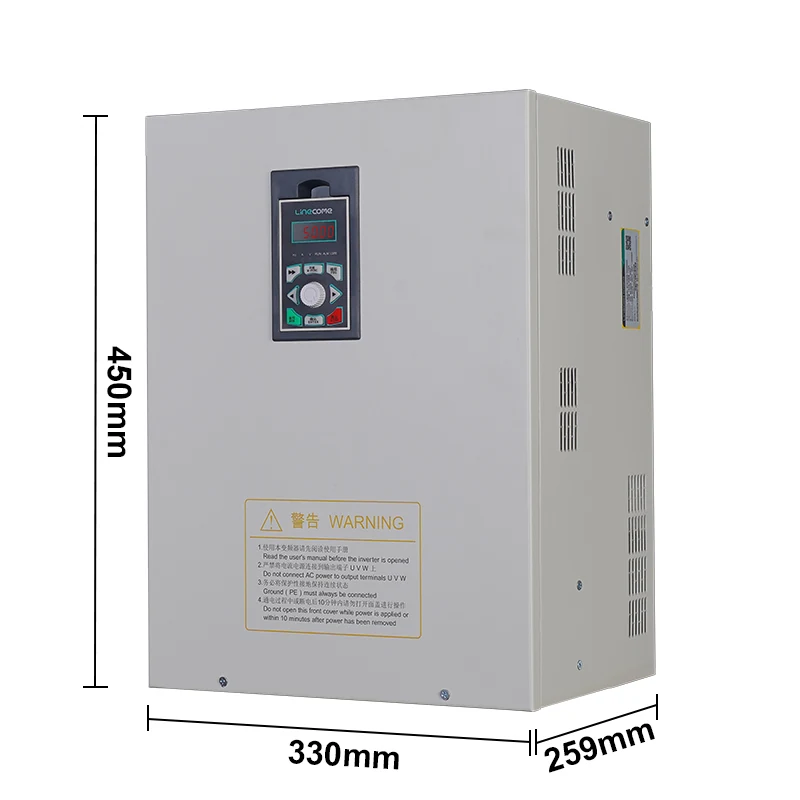
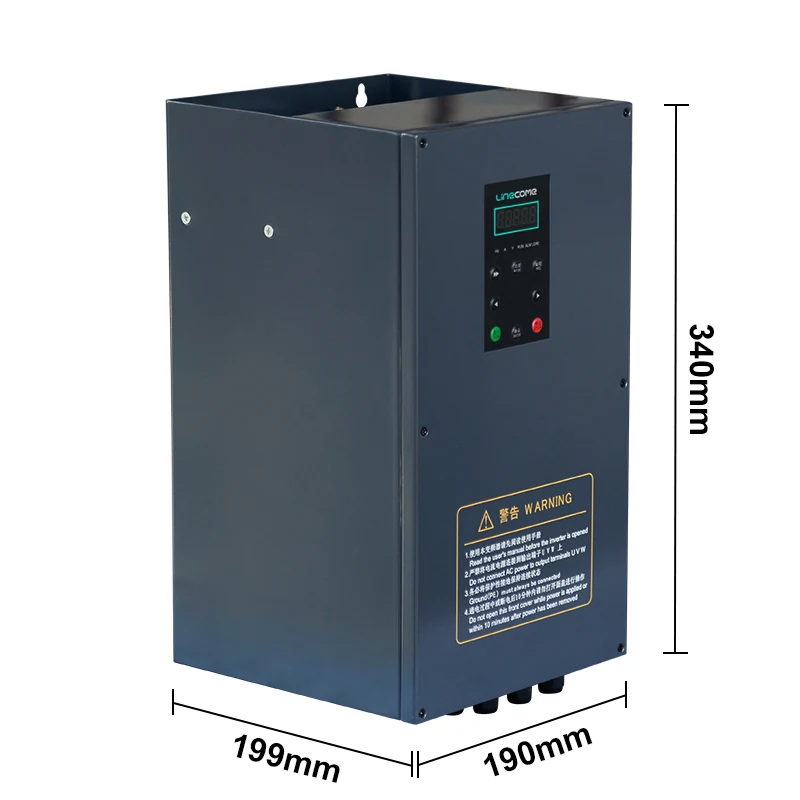
Catalog photos below show LNC820D high-protection hardware often chosen when output-frequency projects also need tougher enclosure ratings—still verify the exact SKU against motor nameplate and duty.
 .
| Public catalog theme | Relevance after frequency-axis comparison | Your project still verifies |
|---|---|---|
| 0–500 Hz output on LNC610/LNC820 tables | Controller can command wide speed range | Motor mechanical overspeed and insulation |
| V/F and SVC modes | Flux control as output frequency changes | Load type (variable vs constant torque) |
| LNC610 Modbus + PID | Process loops at reduced motor Hz | Sensor scaling and tuning time |
| LNC820 RS485 / braking rows | Integration and stop energy on some kW bands | Braking resistor sizing where applicable |
Share motor nameplate frequency, voltage class, and whether the complaint is whine, low-speed heat, or part-load throttling before you lock an LNC610 versus LNC820 row.
Frequently Asked Questions
Quick answers below restate the dual-axis comparison: motor output Hz for speed and load context, switching frequency for PWM whine and inverter heat—without inventing efficiency percentages.
What is the difference between motor output frequency and VFD switching frequency?
Motor output frequency sets the commanded speed reference at the motor terminals during run, while switching or carrier frequency sets how fast the inverter pulses in PWM to build that waveform—different menus, different symptoms, different fixes.
Does lower motor output frequency always improve efficiency?
No. It often reduces power on variable-torque fan and pump duty when speed truly drops, but constant-torque loads at very low Hz can draw heavy current relative to cooling airflow, which raises thermal risk without guaranteed energy savings.
Why does raising PWM or carrier frequency change audible noise?
Higher switching rates change how the motor and cabinet perceive PWM ripple, which often reduces audible whine even though switching activity in the inverter can increase heat and switching-related losses.
Is higher switching frequency always better for inverter efficiency?
No. Higher carrier settings can trade whine reduction for more switching loss and heat in the drive—there is no single best value for every cable length, filter, and ambient temperature.
What happens to motor cooling when output frequency is very low?
Shaft-mounted motor fans move less air as speed drops, so the same torque demand at very low output frequency can overheat the motor even when the inverter is technically delivering a valid V/Hz profile.
Do LNC610 and LNC820 drives support 0–500 Hz output per public specs?
Yes on the public specification tables for the cited LNC610 and LNC820 product pages—use that as a catalog planning bound and still confirm the motor and load may safely operate at your commanded frequency.
When is a soft starter enough instead of tuning output frequency?
When run speed never changes and the only requirement is controlled starting at line frequency, a soft starter addresses inrush without adjustable run frequency—see the Soft Starter hub and sibling selection articles instead of motor-output Hz tuning.
How is this different from 50 Hz vs 60 Hz conversion articles?
Grid and nameplate conversion guides focus on matching utility or export frequency to motor stamps; this comparison focuses on low versus high commanded output frequency and PWM switching while the plant feed may stay at fixed utility frequency.
References
- Variable-frequency drive (output frequency and inverter switching summary).
- Pulse-width modulation (switching-rate trade-offs).
- Induction motor (speed, slip, and cooling context).
- Adjustable speed drives (fan and pump load matching).
- Electrical Engineering Stack Exchange — VFD discussions (motor Hz vs carrier confusion).