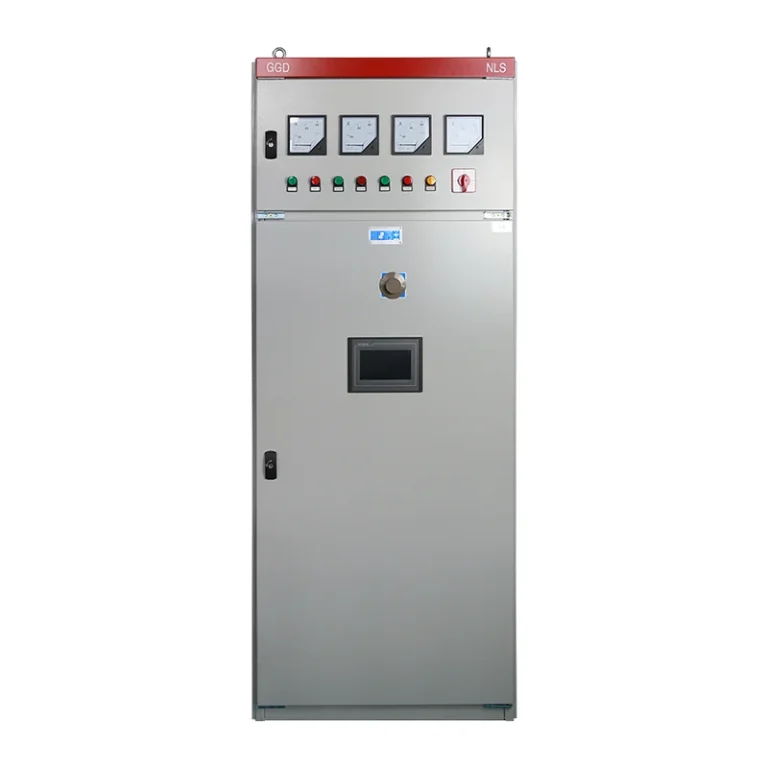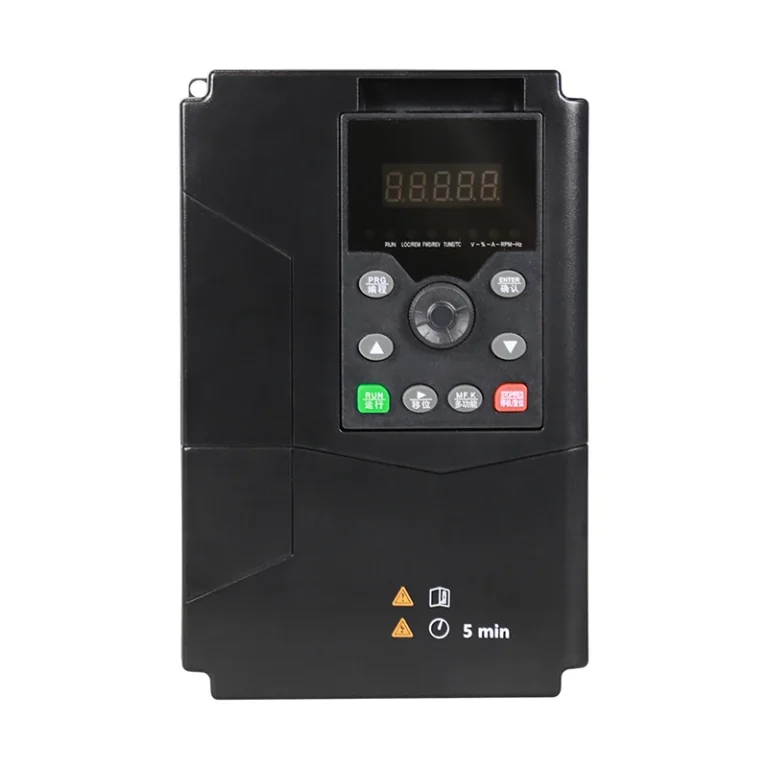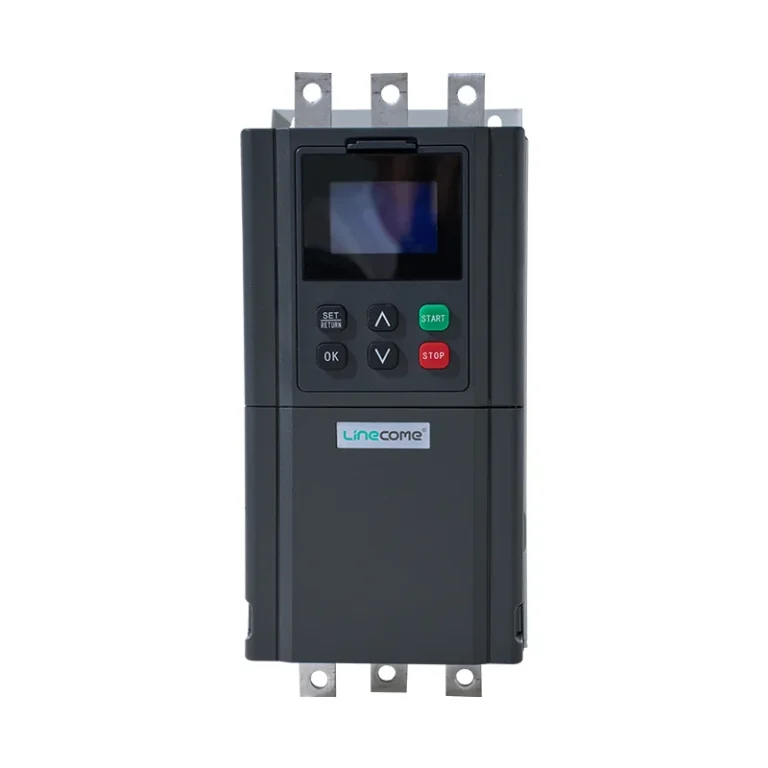

How star delta starter works on a six-lead induction motor is a contactor-driven sequence: wye (star) start at reduced line stress, a star delta transition interval, then delta run at full line voltage and fixed synchronous speed—not adjustable Hz during production.
Buyers searching how star delta starter works need that wye-delta starter sequence and working sequence spelled out for panels and maintenance rounds, while pros, cons, and plant application matrices stay on advantages and disadvantages of star delta starter and application of star delta motor starter—cross-link those cousins; do not copy their H2 stacks here.
Compare reduced-voltage methods on the Soft Starter hub and how soft starter works when transition torque dip or winding access pushes the RFQ away from wye-delta contactors.
 .
De-energized to delta run: the full wye-delta working sequence
Encyclopedia descriptions of the star-delta starter describe connecting stator windings in wye during start, then reconfiguring to delta for run at rated voltage on the windings—classic schemes assume six motor leads and a switching interval between configurations.
The full working sequence buyers audit looks like this at a high level:
| Phase | Contactor / winding state (conceptual) | Motor electrical experience | Operator focus |
|---|---|---|---|
| Off | Starters open; safe to work if locked out | No torque | Lockout verification |
| Pre-start checks | Control armed; interlocks satisfied | Still de-energized | Lead and nameplate gates |
| Star (wye) start | Windings in wye; reduced stress start | Acceleration from rest | Start lamp; current rise |
| Transition | Timed or synchronized changeover | Brief interval—method matters | Transition lamp or timer |
| Delta run | Windings in delta; line voltage on windings | Full-speed fixed-frequency run | Run lamp; no Hz throttling |
| Stop | Contactors open per stop mode | Coast or brake per machine design | Stop versus emergency paths |
This page owns sequence timing and visibility; cousin pages own trade-off tables and application branches.
Six-lead motor and nameplate gates before the sequence can start
Wye-delta starting requires motor winding access that supports the switch—typically six leads brought out or dual-voltage nameplate arrangements documented in the manual for that frame.
If retrofit motors hide the necessary leads inside the terminal box, the sequence never becomes valid even when contactors are on the BOM—maintenance teams then route to SCR soft start or VFD paths per sibling articles rather than forcing wye-delta logic.
Talk:Star-delta starter discussions repeat that nameplate dual-voltage notation must match the starter diagram actually wired—sequence acceptance starts with lead identification photos in the project folder, not with assuming “star-delta” on the one-line.
 .
Star (wye) start phase: what the motor and panel show
During star (wye) start, contactors connect windings so each phase sees a wye configuration; the motor accelerates from rest with reduced starting stress compared with full-voltage delta—encyclopedia wording stays qualitative; this page does not publish fixed “one-third current” or torque percentage tables.
Panel indicators typically show starting while the wye contactor set is active. Maintenance should note whether the timer is open transition or closed transition because the next interval behaves differently even when lamps look similar.
Cross-read does soft starter reduce starting current only when comparing methods, not when deriving wye-delta ratios from blog prose.
Open transition versus closed transition in the middle of the sequence
The transition interval is where many field issues appear: open transition schemes briefly disconnect windings during changeover; closed transition schemes attempt overlap or controlled handoff per the engineered diagram.
Buyers should ask which transition type is on the submittal because operator training differs—open transition can produce a visible torque dip or speed sag that matters on elevators, compressors, or high-inertia fans even when the motor eventually reaches delta run.
Important: Star-delta summaries warn that transition behavior is not interchangeable between manufacturers’ timing diagrams—commissioning must follow the specific ladder, not a generic three-step cartoon.
 .
| Transition style | Sequence characteristic | Buyer question for the vendor |
|---|---|---|
| Open transition | Brief off or dead interval possible | How long is windings off? |
| Closed transition | Overlap or resistor/aux paths may apply | What proves safe handoff? |
| Timer-based | Fixed delay between wye and delta | Is delay adjustable on site? |
| Synchronous | Contactor logic tied to current or speed | What feedback prevents early delta? |
Delta run phase: full voltage and fixed-speed operation
After successful transition, delta run applies full line voltage to the windings in delta configuration; the motor runs at synchronous speed determined by line frequency and pole count, minus slip—there is no continuous speed adjustment during production.
Operators should see run indication with contactors in the delta run state. If the process needs throttling, the sequence choice was wrong for the duty—route to how VFD works rather than expecting wye-delta to modulate Hz.
Operator indicators and maintenance rounds during each sequence step
Operator indicators—lamps, HMI states, or DCS bits—should map one-to-one to sequence steps on the posted card: off, star start, transition, delta run, fault.
Maintenance rounds that only listen for “motor sound normal” miss stuck transition timers or delta contactor weld symptoms until a hard fault occurs. Logging which step was active when a trip happened speeds replacement of the correct contactor or timer block.
When wye-delta disadvantages dominate—transition dip, contactor maintenance, lead count—compare when to use a soft starter and the SCR sequence article how soft starter works before re-specifying the same motor tag.
 .
When SCR soft-start sequence replaces wye-delta contactors
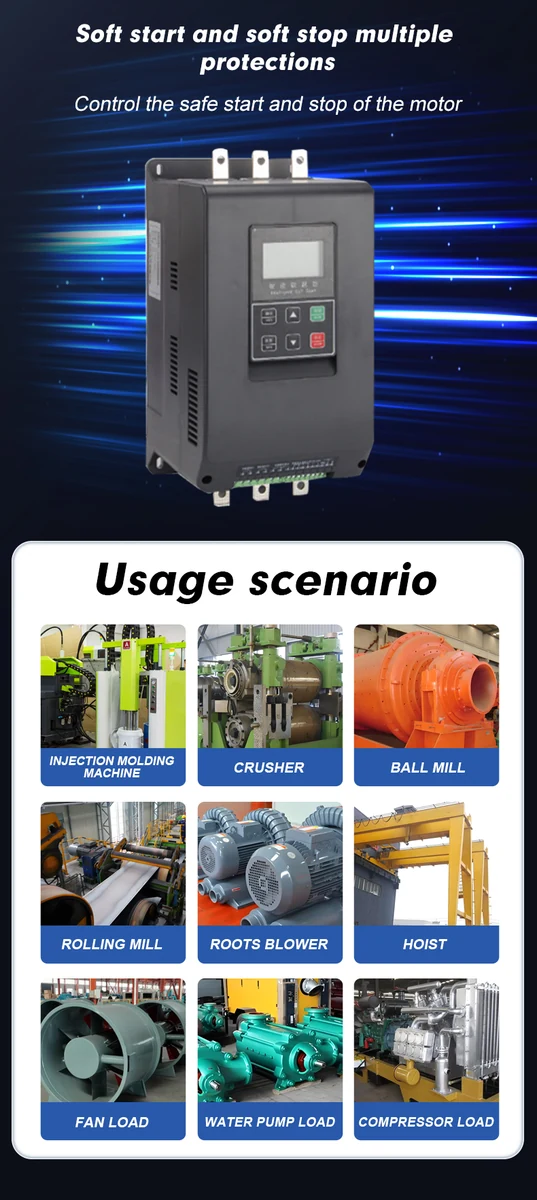
Motor soft starter paths use thyristor ramps on fixed leads without wye-delta reconfiguration—attractive when six-lead access is missing or when transition dip is unacceptable, provided fixed-speed run after start still satisfies the process.
This is a method sequence swap, not a claim that SCR always beats contactors on every kW band: public catalog rows still bound what you can quote without a motor study.
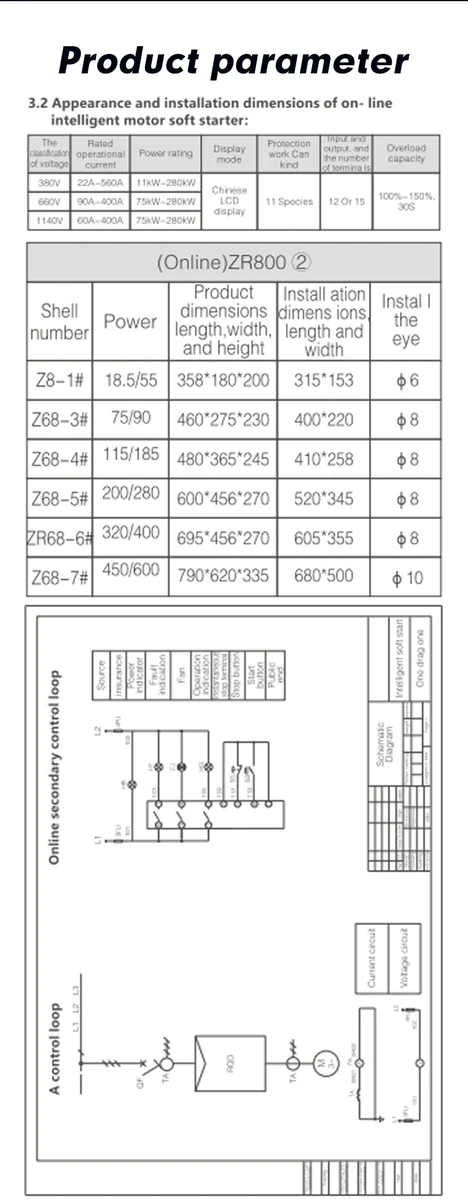
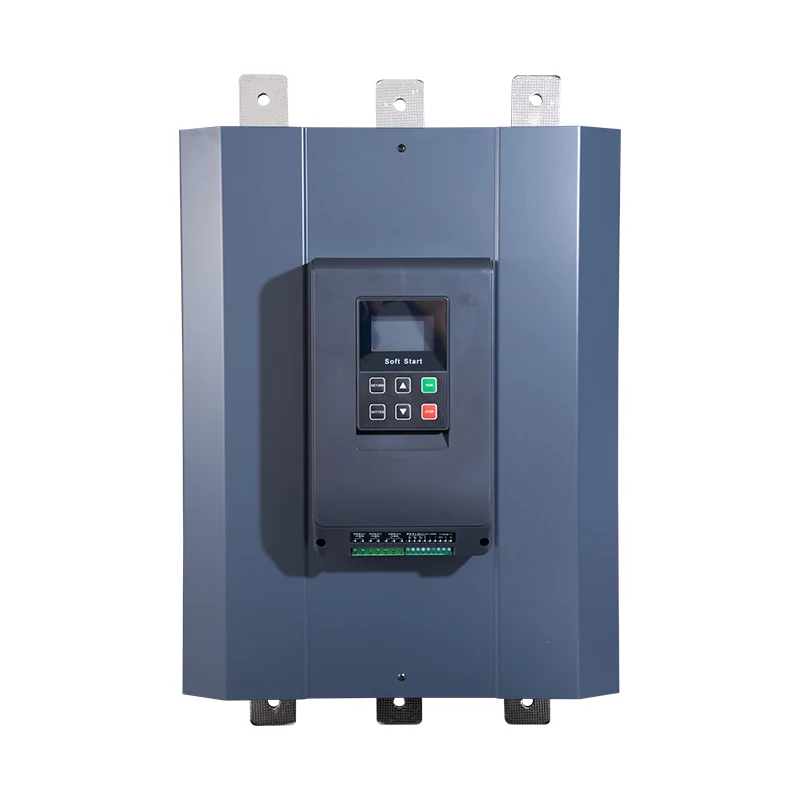
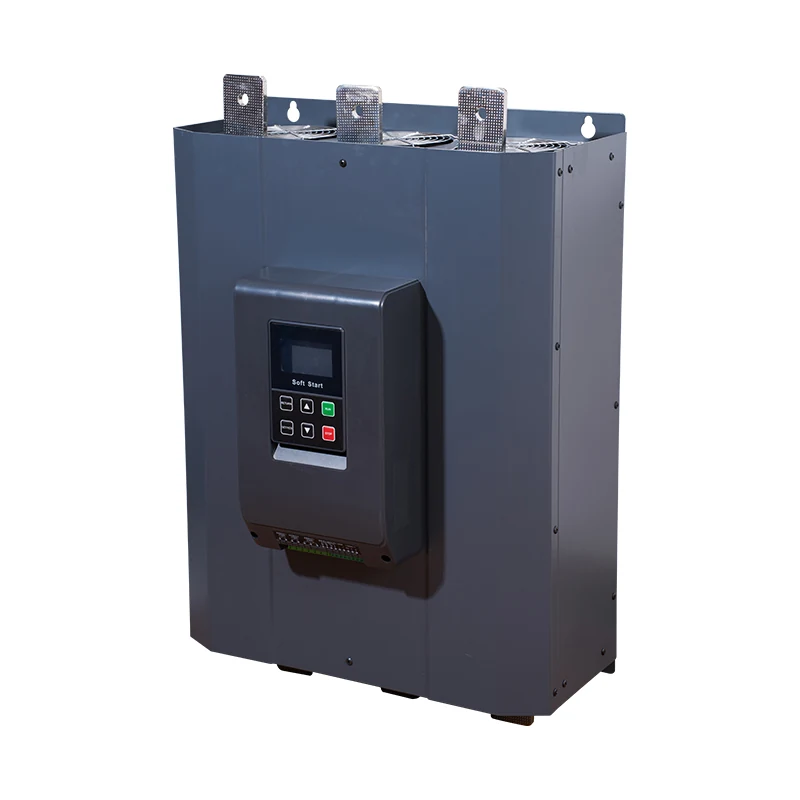
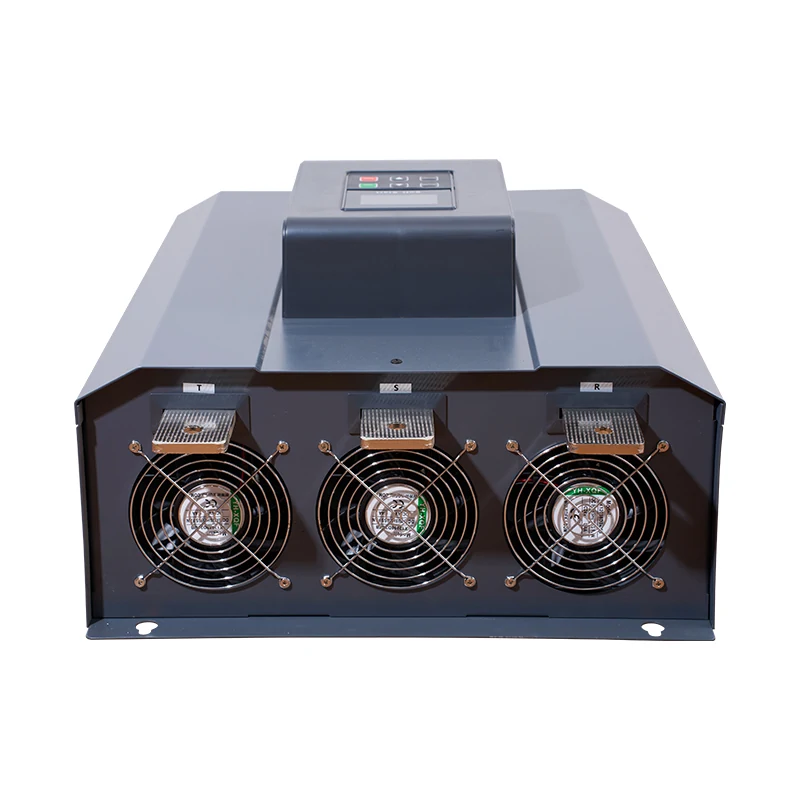
ZR800 online soft starter series — product fit when transition torque dip is the problem
When transition torque dip or contactor timing drives the RFQ away from wye-delta but fixed-speed run remains acceptable, review the public ZR800 online soft starter family as a solid-state reduced-voltage sequence alternative on standard LV leads.
The published ZR800-18.5-90KW online soft starter series page lists 12 protection functions and electrical monitoring on the features list—useful when you need supervised starts without wye-delta switching.
The same public page documents 4–20 mA output with 0.5% linear accuracy on the features list for optional feedback after ramp and bypass prove on site—parallel to the operator-sequence themes on how soft starter works.
 .
| Public ZR800 theme | When wye-delta sequence fails the RFQ | Your project still verifies |
|---|---|---|
| SCR ramp start (method contrast) | Transition dip or lead access blocks wye-delta | Motor nameplate and leads |
| 12 protection functions (features list) | Need trip visibility on repetitive starts | Fault policy |
| Rated Voltage 220V/380V/460V/525V/660V rows | LV class match before quoting | Exact kW band |
| Monitoring and 4–20 mA (features list) | Instrument tie-in after start proof | Loop calibration |
Frequently Asked Questions
Answers assume cousin pages for pros/cons and applications; they stress working sequence only.
How star delta starter works from the first start command to delta run?
Control energizes wye contactors for the start interval, executes the engineered transition, then holds delta contactors for fixed-speed run—log lamp times per your ladder.
Is this the same page as advantages and disadvantages of star delta starter?
No—that cousin owns trade-offs; this URL owns step sequence and transition behavior without copying its H2 titles.
Where are pump and fan application lists for wye-delta?
On application of star delta motor starter—link outward; this page stays on sequence mechanics.
Does star-delta reduce starting current to one-third?
Do not use fixed ratio tables from blog prose—starting stress depends on motor design, transition type, and load; measure on site or use engineering studies.
What is the difference between open and closed transition?
Open transition may de-energize windings briefly during changeover; closed transition uses engineered overlap or aux paths—confirm on the submittal ladder, not from memory.
Can a soft starter replace the same sequence duty?
Often when leads or transition dip block wye-delta—compare how soft starter works for SCR timeline and how to work soft starter for ramp detail.
When is a VFD required instead of completing the wye-delta sequence?
When the process needs adjustable run Hz—not just a gentler start—see how VFD works.
What ZR800 rows help when transition dip dominates?
Public ZR800 protection, monitoring, and voltage class rows—after you confirm LV nameplate match and fixed-speed run still fits.
References
- Star-delta starter (wye start, transition, delta run sequence).
- Motor soft starter (SCR ramp alternative without winding reconfiguration).
- Direct-on-line starter (full-voltage baseline versus reduced-voltage sequence).
- Variable-frequency drive (when run-speed control replaces fixed-frequency wye-delta run).
- Electric motor (six-lead and dual-voltage nameplate context).
- Talk:Star-delta starter (field sequence and lead-access themes).