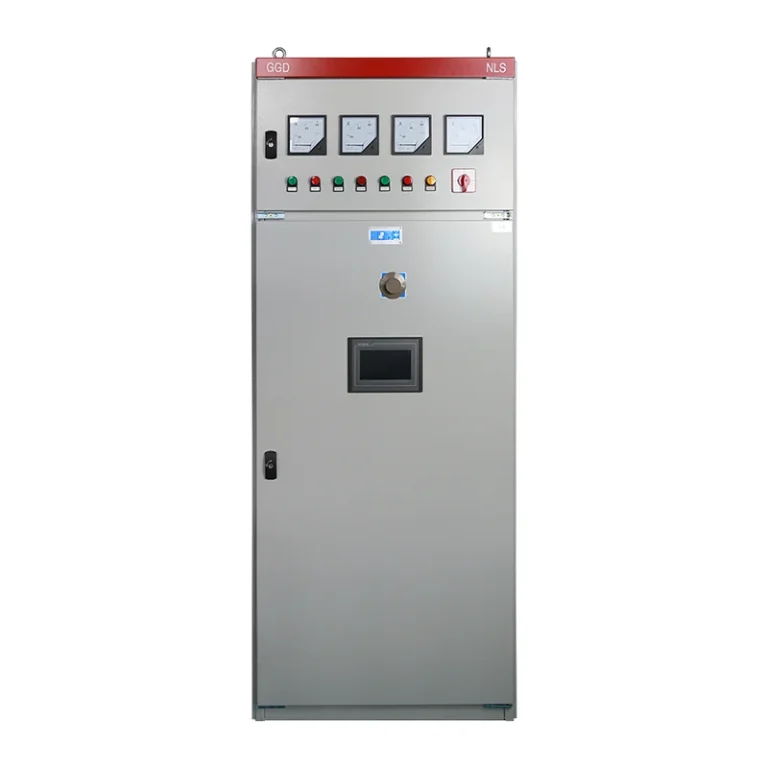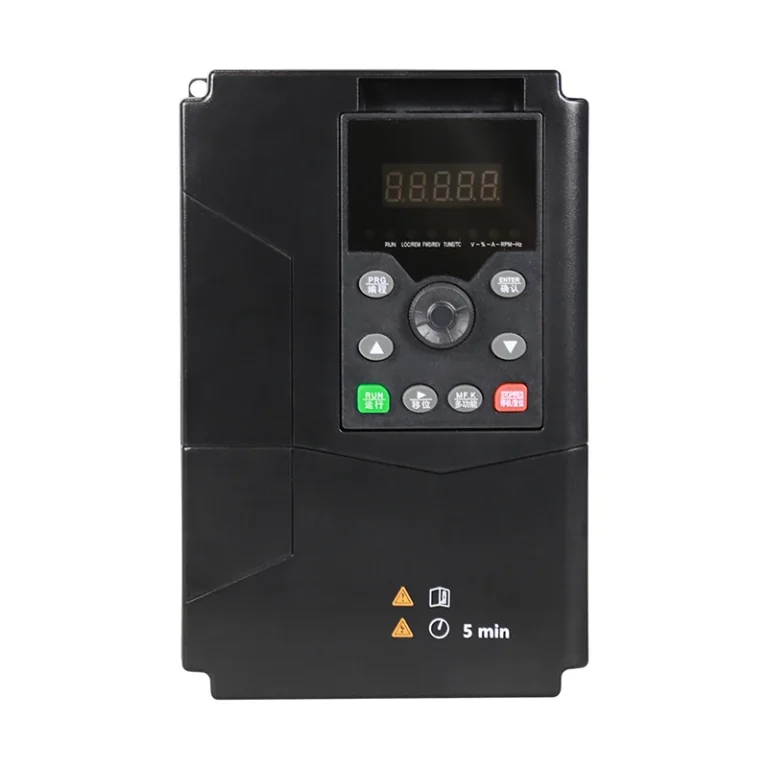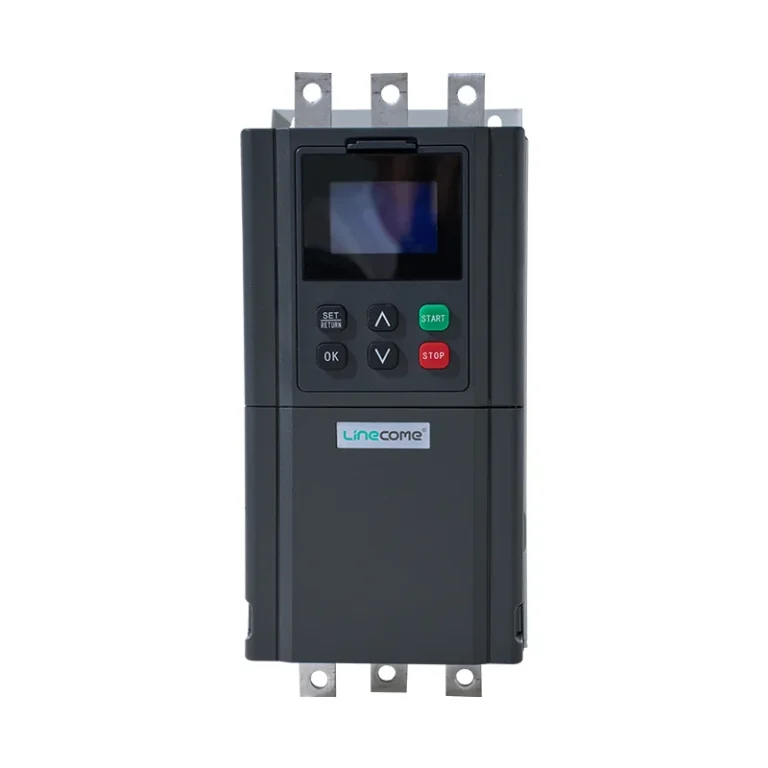

How soft starter works on the plant floor is a timed sequence—start command, SCR conduction interval, bypass proof, line-frequency run, then a model-specific stop—not a single invisible “soft start” moment.
Operators and procurement readers searching how soft starter works need that motor soft starter sequence and control-sequence view: which status lamps change as SCR / thyristor pairs conduct, when the motor line is still on semiconductors versus the bypass path, and what soft starter bypass proof records require, and what to log before you trust the next automatic start. Ramp physics and SCR angle detail stay on how to work soft starter (Post 2950); benefit, limitation, and current-reduction angles stay on soft starter benefits, disadvantages of soft starter, does soft starter reduce starting current, when to use a soft starter, and current limit versus soft starter—this URL owns sequence and operator visibility.
Use the Soft Starter hub when you compare starter families before you lock sequence cards on the motor schedule.
 .
How this sequence page differs from how-to-work-soft-starter (Post 2950)
Post 2950 explains voltage ramp, bypass contactor mechanics, and stop profiles with mechanism-first H2s; how soft starter works here tracks what the panel and motor branch show step by step during the same duty.
| Topic | Post 2950 (how to work soft starter) | This page (how soft starter works) |
|---|---|---|
| Primary lens | SCR ramp and bypass hardware behavior | Start-to-run timeline and status signals |
| Typical reader | Engineer tracing power path | Operator or maintenance lead proving sequence |
| Deep ramp math | Owned on Post 2950 | Cross-link only—no duplicated H2 titles |
| Stop behavior | Coast versus ramp-down profiles | Stop sequence from run permissive to de-energized |
If your RFQ still asks “what happens inside the SCR stage,” read Post 2950 first, then return here to build acceptance checklists.
Start command to run permissive: buyer-visible timeline
A normal automatic start sequence begins when control logic sees a start command—hardwired input, fieldbus command, or local keypad depending on the model—and ends when run permissive is true and the motor is on line frequency with bypass proved where the design requires it.
Encyclopedia summaries of motor soft starters describe increasing applied voltage over time during start and transfer to bypass for efficient run; the buyer-visible timeline names those phases as discrete steps you can witness on indicators or a basic HMI trend.
| Step | What operators usually see | Power-path idea (detail on Post 2950) |
|---|---|---|
| 1 — Idle | Ready lamp; no start active | Control armed; motor may be off or coasting |
| 2 — Start accepted | Start lamp; “starting” state | SCR stage begins; voltage rises over ramp |
| 3 — Ramp in progress | Current or “starting” indication | Semiconductors modulate each phase |
| 4 — Bypass proving | Brief transition; bypass aux feedback | Contactor closes; SCRs leave continuous duty |
| 5 — Run | Run lamp; full line frequency | Motor at synchronous speed minus slip |
| 6 — Stop (when commanded) | Stop state per manual | Coast, ramp-down, or contactor drop per config |
From the field: Talk:Motor soft starter notes that teams misdiagnose “failed starts” when they watch only the motor shaft and ignore bypass auxiliary feedback—sequence acceptance should include aux state, not sound alone.
 .
Control signals and status bits operators watch during a start
Control signals during start typically include the start command input, run feedback, fault reset, and optional interlocks from upstream contactors or safety PLCs.
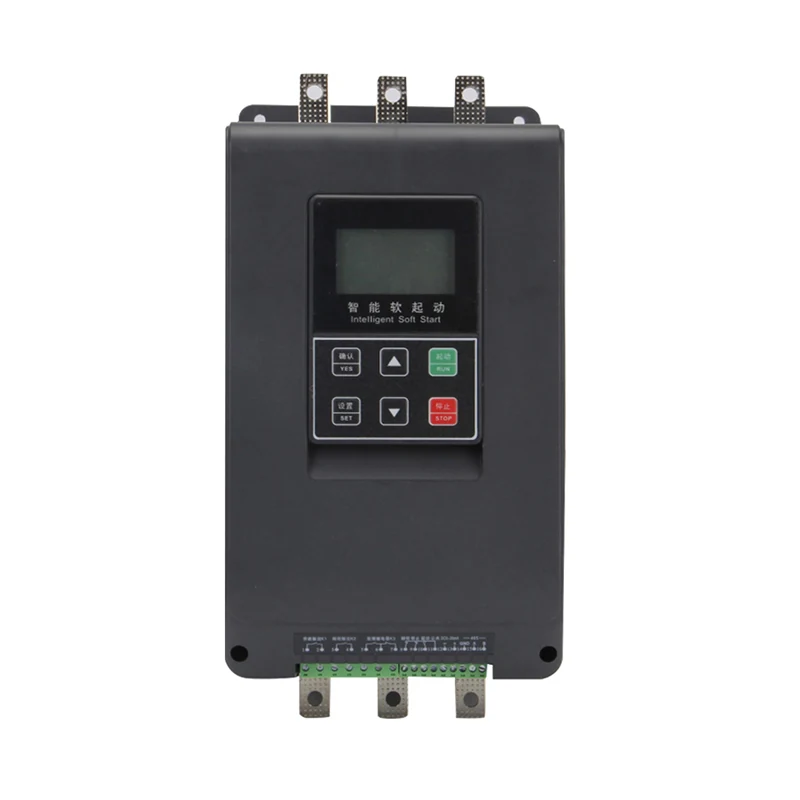
Status bits or lamp colors map to internal states: starting, bypass pending, run, fault, and sometimes coast stop active. Integrators should document which bits are wired to the plant DCS versus which exist only on the starter HMI.
Field acceptance for how soft starter works in practice means tracing one loaded start while someone calls out lamp changes in real time and compares them to the sequence card in the electrical folder—not assuming the factory default matches your pump inertia.
SCR stage versus bypass stage: what changes on the motor line
During the SCR stage, the motor terminals receive phase-controlled AC—the current and torque rise with the ramp rather than in one DOL step. During the bypass stage, a contactor (internal or external per design) carries run current and the motor sees essentially full line voltage at utility frequency.
Operators do not need oscilloscope literacy to validate the handoff: they need consistent timing between “starting” clearing and “run” asserting, plus confirmation that bypass auxiliaries match the wiring diagram. Thermal trips on the second start often trace to bypass never proved while the HMI still showed run.
Cross-read Post 2950 for phase-angle behavior; cross-read soft starter installation when aux wiring is still open on a new skid.
 .
Sequence timers, current feedback, and when bypass logic fires
Bypass logic usually combines a ramp timer, a voltage or current threshold, or both—exact priority is model-specific and must come from the manual on the nameplate, not from blog prose.
Maintenance should capture the configured ramp time and current limit at commissioning because those settings shift where bypass fires relative to operator expectations. A longer ramp keeps semiconductors in the path longer; a shorter ramp may reach bypass quickly on light loads but still extend on high inertia.
| Sequence input | Typical role in bypass decision | What to log once per tag |
|---|---|---|
| Ramp timer | Ends start interval even if load is light | Seconds programmed |
| Current feedback | Holds SCR stage until current falls | Limit parameter and trend |
| Voltage feedback | Confirms motor terminal rise | Not a substitute for aux proof |
| Bypass aux contact | Proves contactor actually closed | Aux state at first successful start |
Stop sequence variants on the same hardware
Stop is not one universal profile: some configurations coast when control drops; others ramp voltage down; still others require a separate stop command before removing run permissive.
Compare stop sequence to VFD deceleration on how VFD works only when throttling is in scope—soft starter stops remain fixed-frequency events. Vertical pump tags should document whether coast stop is allowed before remote operators use the same stop button as on a fan.
Emergency circuits from safety PLCs remain outside the soft-stop feature; sequence cards should show both process stop and category-rated emergency paths without conflating them.
Commissioning proof: logging a healthy start sequence
Commissioning proof for how soft starter works acceptance is a time-stamped log of one successful loaded start and one intentional stop: start command time, bypass prove time, run permissive time, stop command, and final state.
OEM skids should ship a one-line sequence card aligned with lamp labels on the door. If field edits change ramp or current limit without updating the card, the next shift will “fix” parameters based on noise rather than sequence data.
When repeated faults occur, route component isolation to soft starter repair; this section stays on healthy sequence baselines.
 .
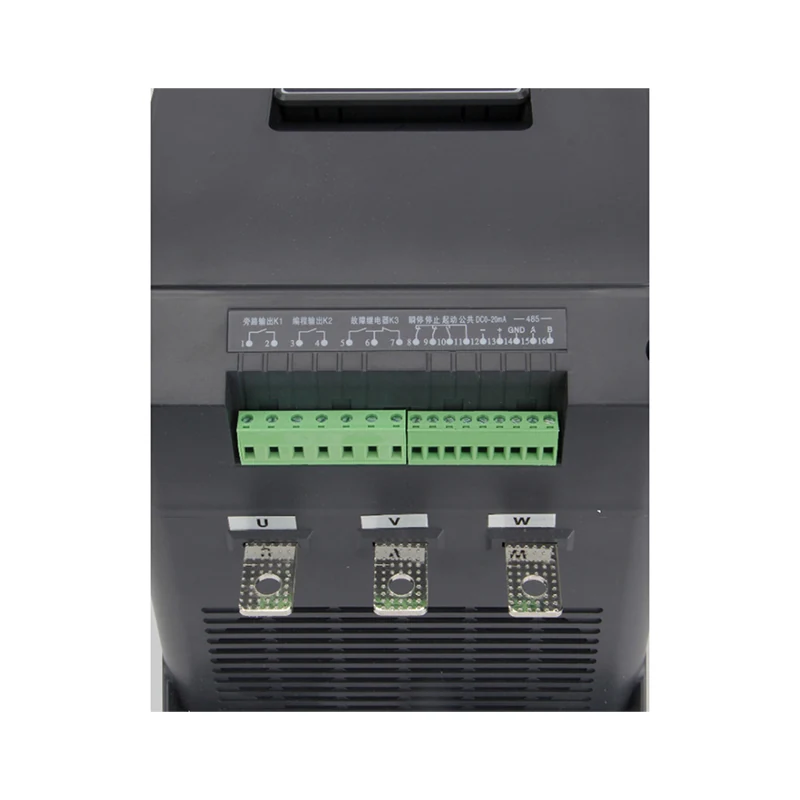
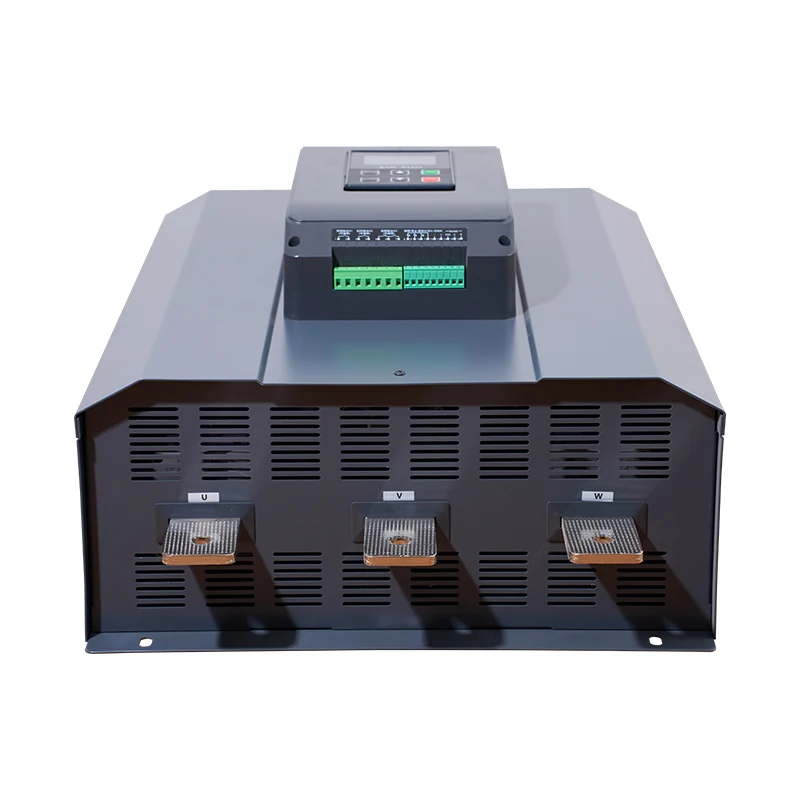
ZR800 online soft starter series — product fit when sequence monitoring matters
When sequence logging and supervised pump or fan duty matter after you understand the timeline, align motor band and voltage class with the public ZR800 online soft starter family.
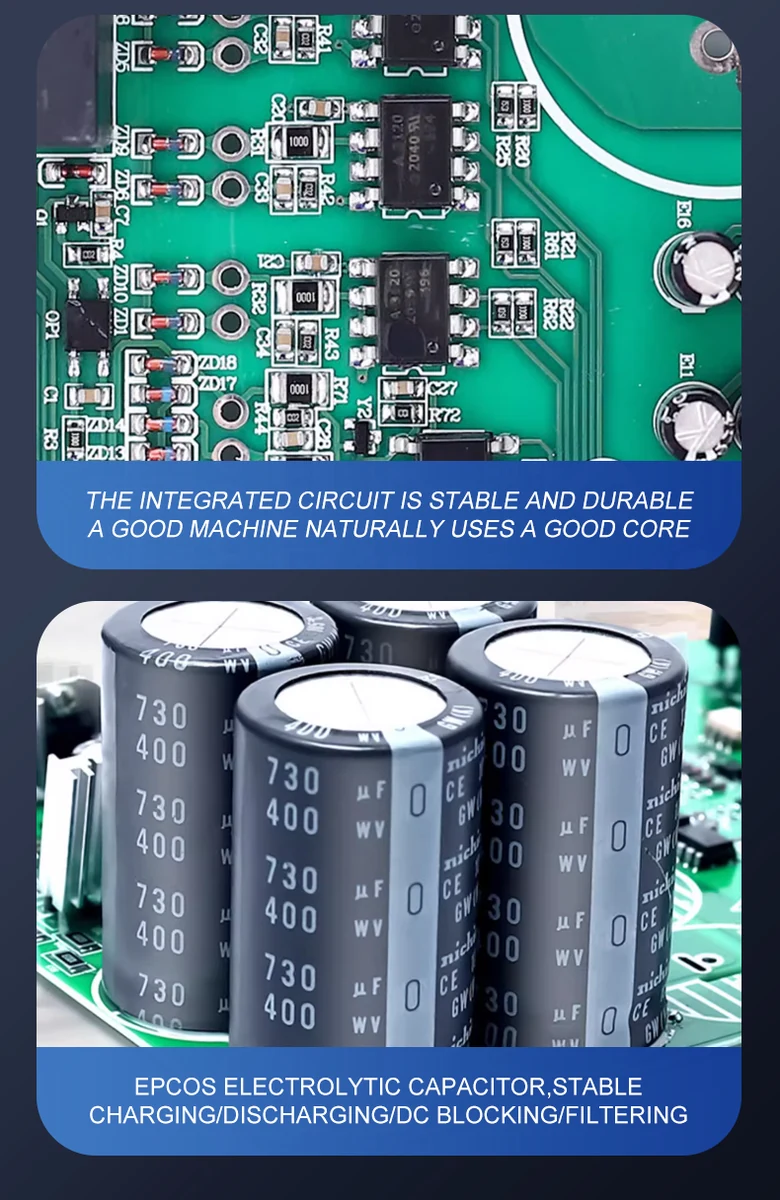
The published ZR800-18.5-90KW online soft starter series page lists 12 protection functions on the features list plus monitoring of current, voltage, phase sequence, frequency, and runtime—useful when bypass proof and start trends must be visible without inventing bench measurements.
The same public page documents 4–20 mA output with 0.5% linear accuracy on the features list for optional process feedback after bypass is proved on site.
 .
| Public ZR800 theme | Sequence-focused buyer use | Your project still verifies |
|---|---|---|
| 12 protection functions (features list) | Trip visibility after failed bypass | Fault enable policy |
| Electrical monitoring | Trend starting interval | Comms path to DCS |
| 4–20 mA, 0.5% linear accuracy (features list) | Loop tie-in after run proved | Loop power and calibration |
| Rated Voltage rows 220V/380V/460V/525V/660V | Match nameplate class before copying ramp | Exact kW row on submittal |
Frequently Asked Questions
Short answers below assume Post 2950 for ramp depth; they stress sequence visibility for operators and maintenance.
How soft starter works from the control room during the first start?
You should see start accepted, a starting interval while SCRs modulate voltage, bypass prove, then run at line frequency—log lamp times against the sequence card.
Is how soft starter works the same as how to work soft starter on vfdelec.com?
No—Post 2950 owns mechanism H2s (ramp, bypass hardware); this page owns timeline, signals, and commissioning proof with zero copied H2 titles.
What status signals prove bypass actually closed?
Bypass auxiliary feedback wired per the manual—not motor sound alone—should change state before run permissive is trusted for production starts.
Where do SCR ramp angles and phase control get explained?
On how to work soft starter and current limit versus soft starter for method naming—not repeated here.
Does a soft starter change speed during run after the sequence finishes?
No—after bypass, run stays at line frequency; adjustable speed needs a VFD path such as how VFD works.
What should maintenance log after an abnormal start sequence?
Start command time, bypass prove, fault code, ramp and limit parameters, and aux state—compare to the last healthy log, not to generic marketing curves.
When is a soft starter the wrong sequence choice entirely?
When the process needs continuous throttling or when reduced-voltage start still stalls the load—see when to use a soft starter and disadvantage trade-offs on disadvantages of soft starter.
What ZR800 catalog rows help sequence-heavy pump duty?
Public ZR800 pages list protection, monitoring, and optional 4–20 mA output—use after sequence proof, not before nameplate and voltage class match.
References
- Motor soft starter (ramp, bypass, and run sequence context).
- Silicon-controlled rectifier (phase control during the start interval).
- Direct-on-line starter (full-voltage step contrast for sequence timing).
- Variable-frequency drive (when run-speed control replaces fixed-frequency sequence).
- Electric motor (line-frequency run after bypass).
- Talk:Motor soft starter (field sequence and bypass feedback themes).