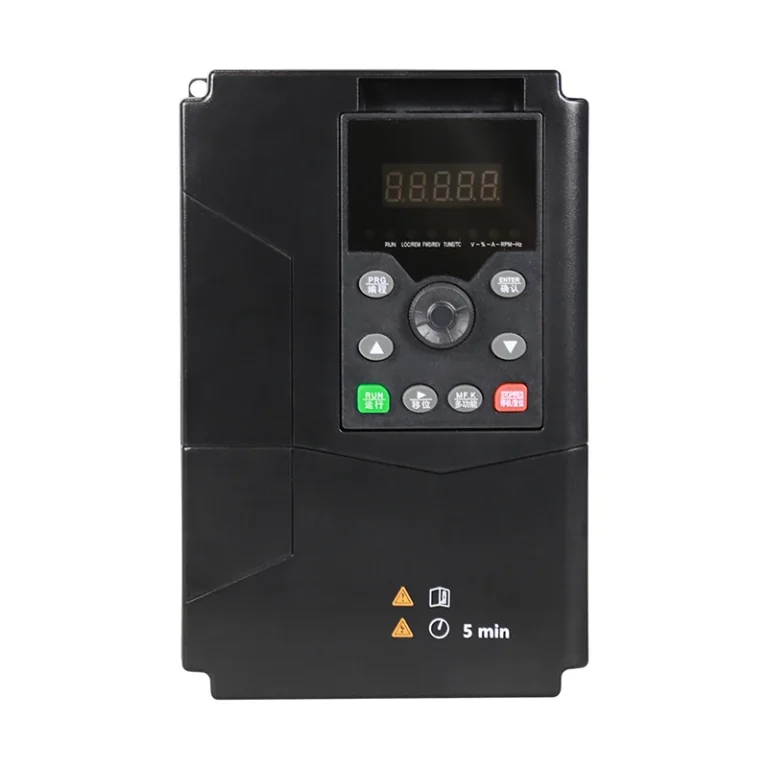

Industrial buyers who compare ac drive and dc drive options are usually deciding whether a new or modernized line should stay on legacy DC motor drive control or move to an AC induction motor plus variable-frequency drive stack—and those are different electrical architectures, not two labels on the same catalog row.
A compare ac drive and dc drive review at procurement level contrasts AC variable-frequency drives (VFDs) for AC motors against thyristor or analog DC drives feeding DC motors on legacy lines; vfdelec publishes LNC610 and LNC820 general-purpose AC VFDs only and does not sell DC drive controllers or DC motors.
Use the Variable Frequency Drive hub for series navigation. For inverter-stage behavior, see how a VFD works; for AC payoff themes, advantages of VFD; for VFD taxonomy, types of VFD; for definition-level vocabulary, what are VFD. When the project is already committed to DC-to-AC conversion mechanics, follow DC drive to AC drive retrofit—that page owns retrofit paths; this page owns head-to-head compare framing.
 .
Side-by-side decision table for AC VFD versus DC drive stacks
AC drives in industrial language usually mean variable-frequency drives on AC induction motors—rectifier, DC bus, and inverter stages that adjust output frequency and voltage to the motor.
DC drives regulate armature (and often field) voltage/current to a DC motor with commutator and brush maintenance on many legacy frames.
| Decision axis | AC drive (VFD on AC motor) | DC drive on DC motor |
|---|---|---|
| Typical greenfield default today | Common on new conveyor, pump, and fan tags | Rare unless process still standardized on DC |
| Motor spares ecosystem | AC induction motors widely stocked | DC motor parts and brush service where motor remains |
| Speed control method | Adjust output frequency to AC motor | Armature voltage/current control on DC machine |
| vfdelec catalog | LNC610 / LNC820 AC VFD families | Not offered—AC VFD lines only |
Neither row replaces a site-specific engineering study—overhauling loads, encoder feedback, and supply harmonics still belong on the RFQ.
Where AC drives win on greenfield and expansion projects
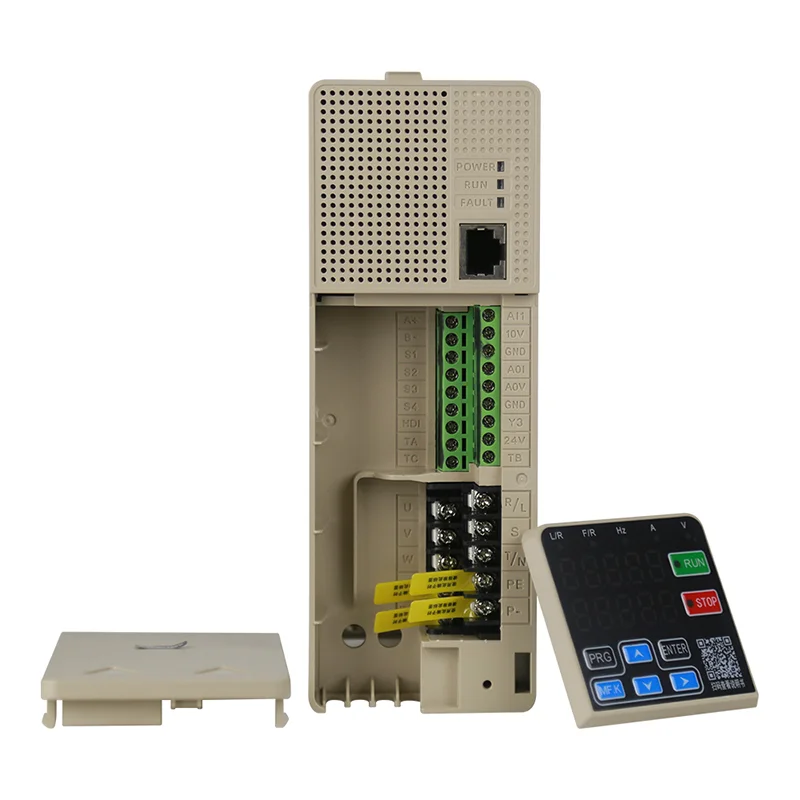
New lines and major expansions usually specify AC induction motors with general-purpose VFDs because motor OEM channels, panel builders, and maintenance training already align around AC plant standards.
Encyclopedic summaries of variable-frequency drives describe adjustable-speed control of AC motors by changing output frequency—buyers map that to fan, pump, and conveyor tags where the motor is already AC.
When corporate standards freeze on AC motor frames, the compare question collapses early: the DC drive stack is out of scope unless a legacy DC motor must remain for mechanical reasons.
 .
Important: Do not treat “AC drive” marketing on a VFD brochure as proof it replaces a DC drive cubicle while the DC motor stays in place—motor type and field wiring must match the controller class.
Where DC drives still appear on legacy production lines
Paper, steel, crane, and winder installations from earlier decades often still run DC motors with thyristor DC drives because the mechanical train was engineered around DC torque behavior and four-quadrant duty.
Commutator-equipped DC motors remain in service where rebuild cycles still pencil out versus full mechanical swap—maintenance teams budget brush inspection and field service that AC lines avoid.
Buyers compare ac drive and dc drive on these sites to decide whether the next outage refreshes DC electronics or funds AC motor plus VFD migration—not because DC drives are greenfield defaults.
Control and maintenance trade-offs at procurement level
DC stacks expose maintenance on motor commutators and brushes where those motors remain; AC induction motors shift wear to bearings and eliminate commutator service on the motor itself when DC frames are retired.
Control-room familiarity matters: technicians trained on DC armature loops may need commissioning support when a line flips to vector or V/f AC drives—budget training separately from hardware BOM lines.
Spares strategy differs: AC VFD and AC motor combinations pull from broader distributor inventory; legacy DC drive boards may be obsolete long before the motor fails.
Talk pages on electric motors remind readers that nameplate voltage, field wiring, and feedback devices must match the controller—comparison shopping across AC and DC classes without motor data produces mismatched quotes.
 .
Braking and four-quadrant duty—decision pointers only
Legacy DC drives often handled plugging and regeneration through armature control; AC drives need explicit braking choppers, resistor sizing, or active front-end planning depending on overhauling duty.
This compare page does not quote torque curves or efficiency percentages—those values are application-specific and require motor and load data from the integrator.
Flag four-quadrant needs on the RFQ so AC VFD proposals include braking hardware where public series documentation lists it; do not assume feature parity between a retired DC stack and a catalog AC drive row without a submittal review.
Retrofit path summary—and where detailed DC-to-AC steps live
When the decision tilts from “compare classes” to “execute conversion,” scope moves to motor swap feasibility, downtime windows, I/O migration, and brake/regeneration planning.
The dedicated DC drive to AC drive retrofit article walks those execution paths—motor swap versus DC drive refresh, harmonics, and panel cutover—without repeating that how-to structure here.
Stay on this page when stakeholders still need a head-to-head answer for capital committees; jump to the retrofit URL when engineering owns cutover checklists.
| Committee question | Answer on this compare page | Deeper steps |
|---|---|---|
| Greenfield default | Usually AC motor + VFD | Motor spec on RFQ |
| Keep DC motor? | Requires DC drive class—not AC VFD alone | Retrofit article path 1 |
| Standardize plant on AC | Favors AC drive catalogs such as LNC series | Retrofit article path 2 |
LNC610 and LNC820 product fit for new AC drive selection
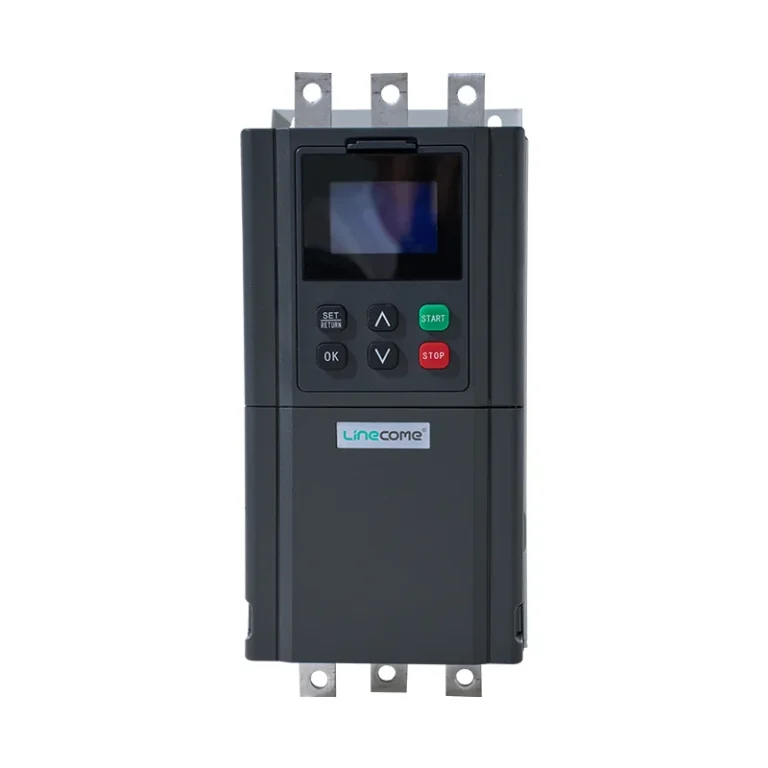
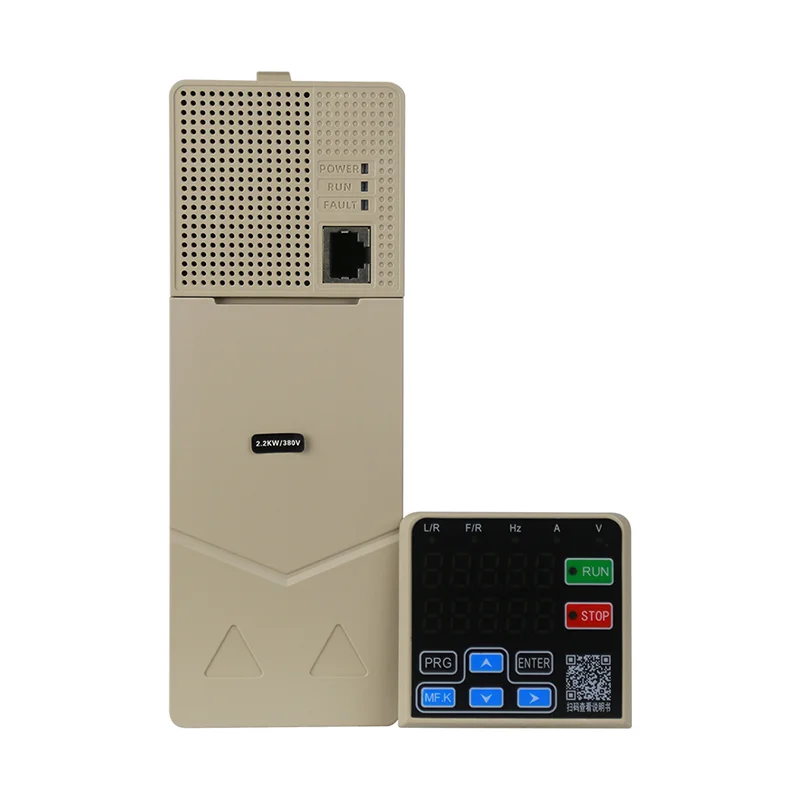
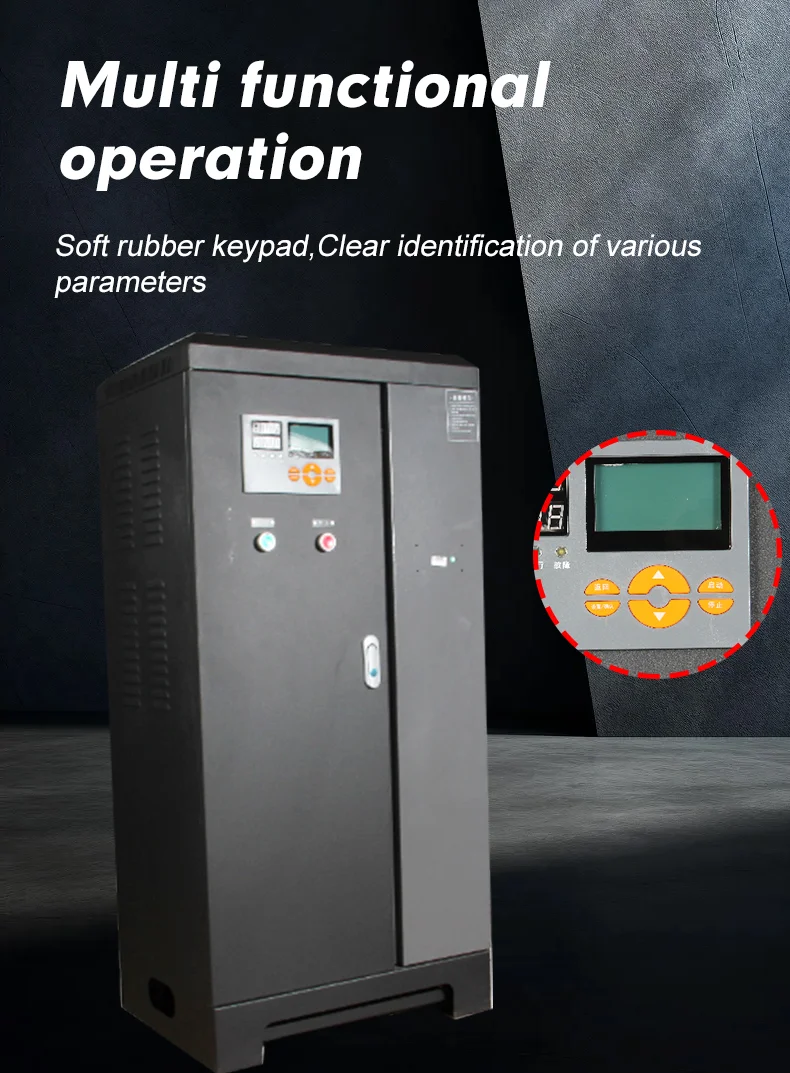
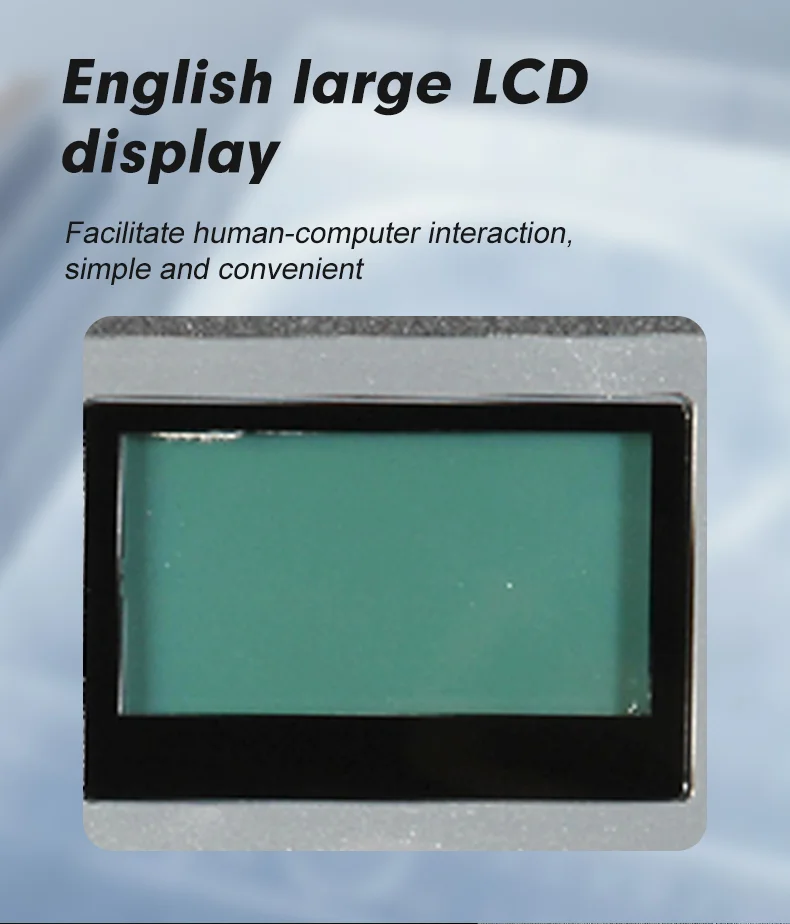
When the compare ac drive and dc drive outcome selects AC drives on AC motors, shortlist vfdelec general-purpose VFD rows from public LNC610 and LNC820 pages—vfdelec does not supply DC drives or DC motor controllers.
The published LNC610 general-purpose VFD series page lists output frequency 0–500 Hz, V/F control and SVC vector control, and Modbus RS485 on its overview copy for the series band.
The published LNC820 general-purpose VFD series page repeats 0–500 Hz output span, V/F and SVC modes, and RS485 on the same style of overview table—match the exact kW and voltage row to motor nameplate amps before purchase.
Public LNC610 overview text also notes the 610 series is not equipped with a braking unit by default—overhauling loads need a planned brake resistor or a series row with braking hardware documented on the product page you select.
Public LNC820 overview copy documents a built-in braking unit on 0.75–22 kW models in the published feature list—still subject to duty-cycle validation on your load.
 .
 .
| Public catalog theme | Why it matters after choosing AC drives | Your project verifies |
|---|---|---|
| 0–500 Hz output (LNC610 / LNC820 pages) | Speed range envelope on AC motor | Motor base speed and cooling |
| V/F and SVC modes | Commissioning path | Low-speed torque needs |
| RS485 on overview | Supervisory comms option | Protocol map |
| Braking unit notes | Overhauling duty | Resistor or chopper plan |
Share motor nameplate photos and required speed range when you request help picking the kW row inside LNC610 or LNC820—do not order AC VFD hardware to sit inside a legacy DC drive cubicle without re-engineering the branch.
Frequently Asked Questions
Short answers below stay at compare/decision depth; cutover checklists live on the retrofit sibling linked above.
Is an AC drive the same as a DC drive?
No—industrial AC drives here mean VFDs on AC induction motors; DC drives control DC motors. Controller and motor classes must match.
Can I replace a DC drive with an AC VFD without changing the motor?
An AC VFD requires an AC motor at the output—keeping a DC motor while swapping only the controller class is not a valid pairing. Motor swap or DC drive refresh are the usual branches.
When do new projects standardize on AC VFDs instead of DC drives?
Greenfield and many expansion projects default to AC motors with VFDs because spares, training, and vendor catalogs align with AC plant standards—unless a legacy DC motor must remain for mechanical constraints.
What maintenance differences matter between DC and AC drive lines?
DC motors with commutators introduce brush and commutator service where those frames remain; AC induction motors avoid that motor-side wear pattern when DC frames are retired—drive electronics maintenance applies to both classes.
Does vfdelec sell DC drives?
No—vfdelec publishes LNC610 and LNC820 AC VFD families for AC motor branches; DC drive controllers are out of catalog scope.
How does four-quadrant duty compare between DC stacks and AC VFDs?
Both classes may need explicit regeneration or braking plans on overhauling loads—DC historically via armature control, AC via braking units or front-end hardware. Specify duty on the RFQ; do not assume identical submittals without integrator review.
What should be on an RFQ for AC versus DC drive comparison?
Motor type (AC vs DC), nameplate amps and voltage, speed range, braking/regeneration duty, existing controller brand, downtime window, and whether the plant standardizes on AC—plus whether the outcome is compare-only or funded retrofit.
Where can I read DC-to-AC retrofit steps in depth?
See DC drive to AC drive retrofit for motor-swap paths, I/O migration, and braking notes—this FAQ only points there to avoid duplicating that page’s H2 structure.
References
- Variable-frequency drive — AC adjustable-speed drive role on induction motors.
- DC motor — commutator motor context on legacy DC drive lines.
- Electric motor — nameplate and motor-class discipline for controller matching.
- Electric power conversion — power electronic conversion context for drive stacks.
- Talk:Variable-frequency drive — community clarification themes on VFD terminology versus other drive names.